
How to Do Color Coordination for Men Without Looking Try-Hard

You open your closet, grab a blue shirt and green pants, and freeze. Does that work? Or does it look like you tried too hard?
Color coordination feels like a test you can fail, especially when your goal is matching without looking try-hard. So most guys fall back on black and gray and hope for the best.
Here is the good news. Outfits that look relaxed and put together follow one small formula. You use one base neutral, one second neutral, and one accent color. No color wheel. No fashion degree.
By the end of this guide, you will build a full outfit from clothes you already own. The formula works because neutrals never fight each other, and a single accent gives the eye one place to land. Nothing screams for attention, so nothing looks forced.
Be honest with yourself about time. Sorting your closet takes about 20 minutes the first time. After that, each outfit takes about 2 minutes. The skill is beginner level. You need your own clothes and a mirror. Grab a coffee and let’s get started.
Sort your clothes into neutrals and color pieces

Lay everything on your bed, then make two piles. Neutrals go in pile one: black, white, gray, navy, tan, and denim blue. Everything else goes in pile two. Seeing both piles side by side shows you what you actually own, which is the part most guys skip.
Most closets turn out to be mostly neutral already, and that is good news. Olive and burgundy are tricky, so put them in pile two for now. No bed space? Use a clean floor.
Pick one neutral as your outfit base
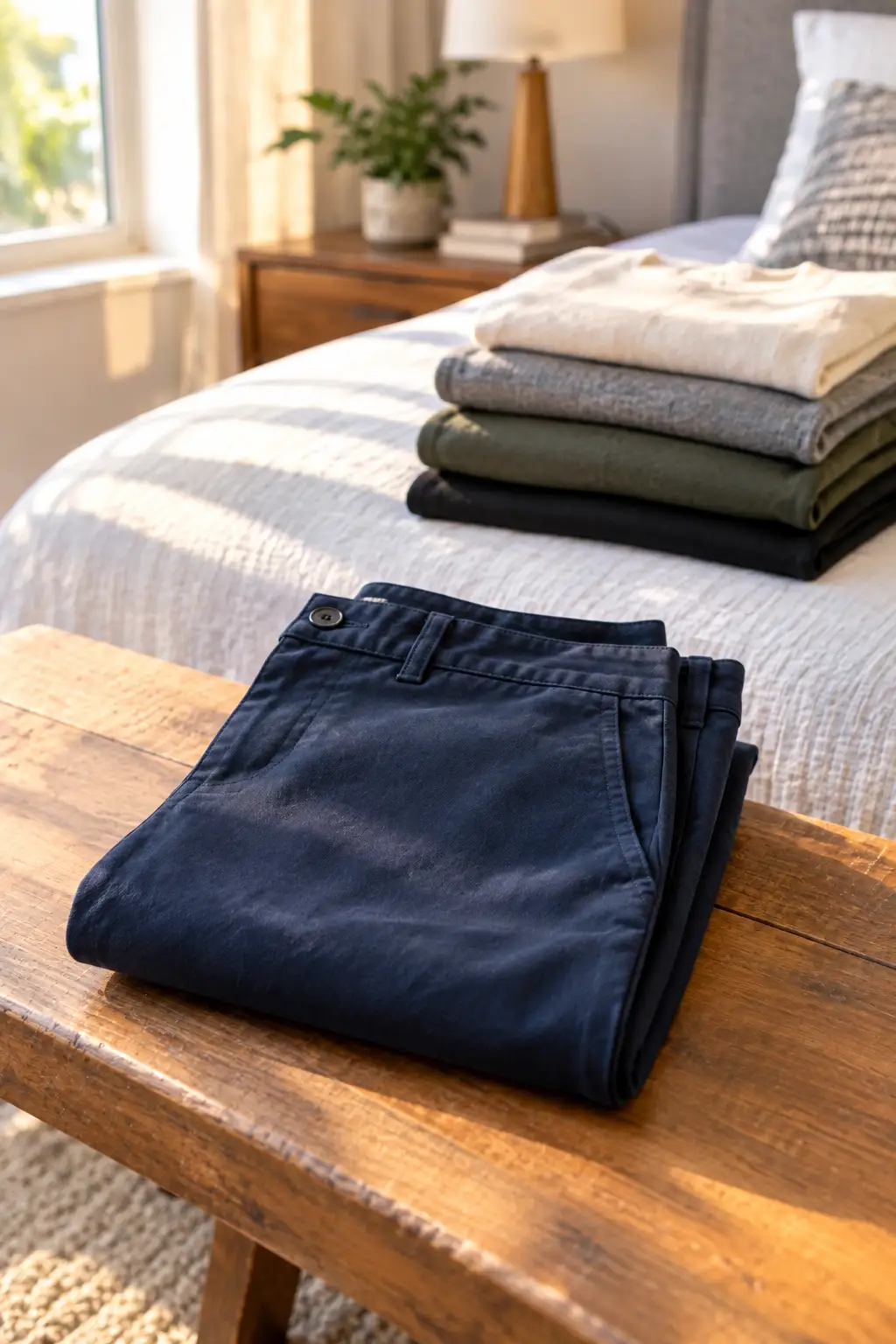
If you start with a loud shirt, you will spend the rest of the morning chasing it with other clothes. Start quiet instead. Your base is your biggest piece, usually pants or a jacket.
Choose one from your neutral pile and set it aside. Navy or tan pants are the safest place to begin, because they work with almost everything you own.
Pair it with a second neutral in a lighter or darker shade

Two pieces in the exact same shade look like a uniform, or like a mistake. A gap in shade gives the outfit depth.
Aim for a difference you can spot from 3 feet away, about two shades lighter or darker than your base.
Navy pants with a light gray tee works. Tan pants with a white shirt works. If every top you own is white, that is fine, because white counts as a neutral.
Choose one accent color from a safe list
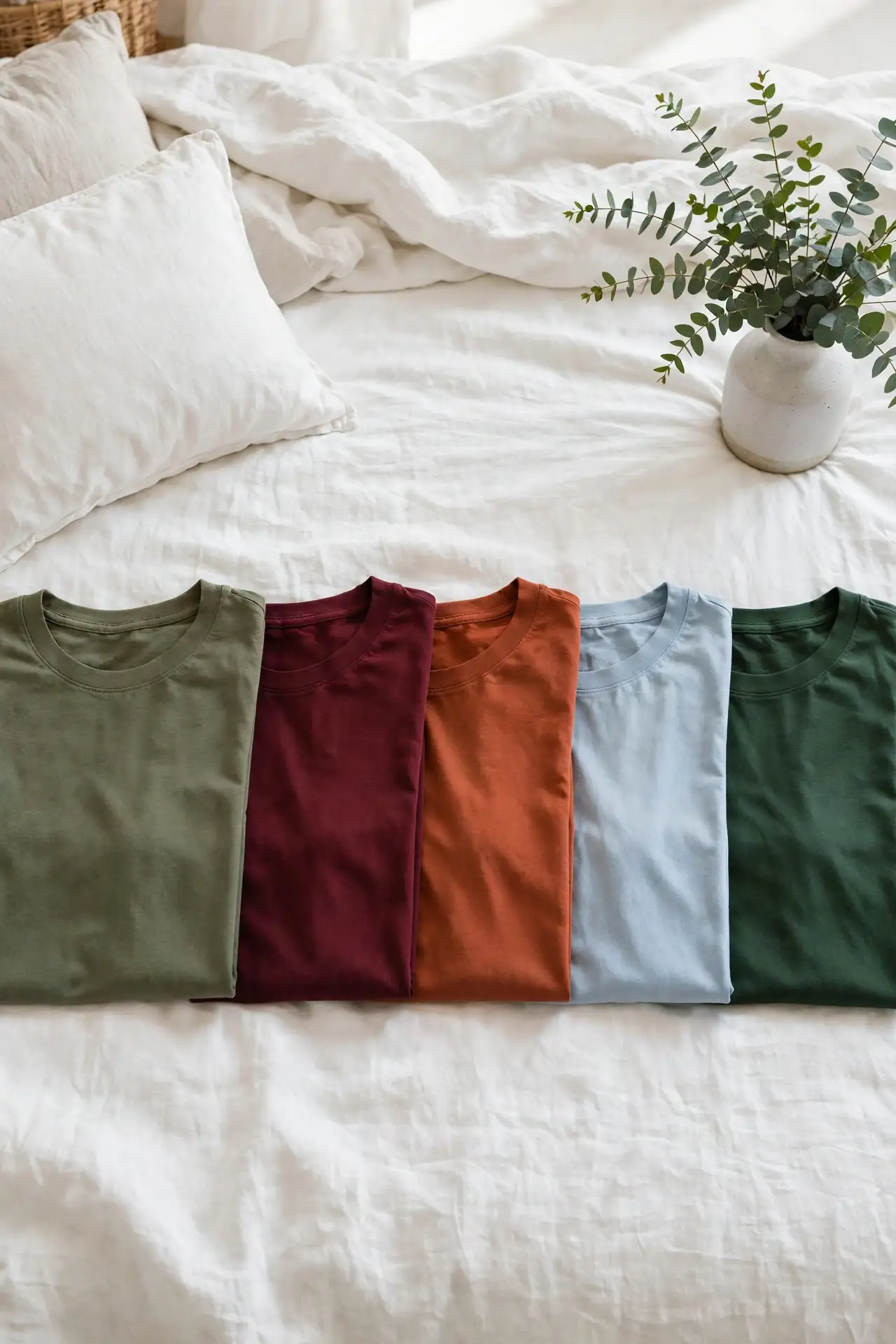
Four colors work with nearly every neutral, and you only need one of them. Pick the one you already own:
- Olive green
- Burgundy
- Rust orange
- Light blue
- Forest green
These shades are muted, so they read as calm instead of loud. Bright red or neon yellow pulls every eye in the room. Don’t own any of these colors? Skip to the next step with all neutrals, and add an accent when you find one you like.
Keep the accent to one or two pieces
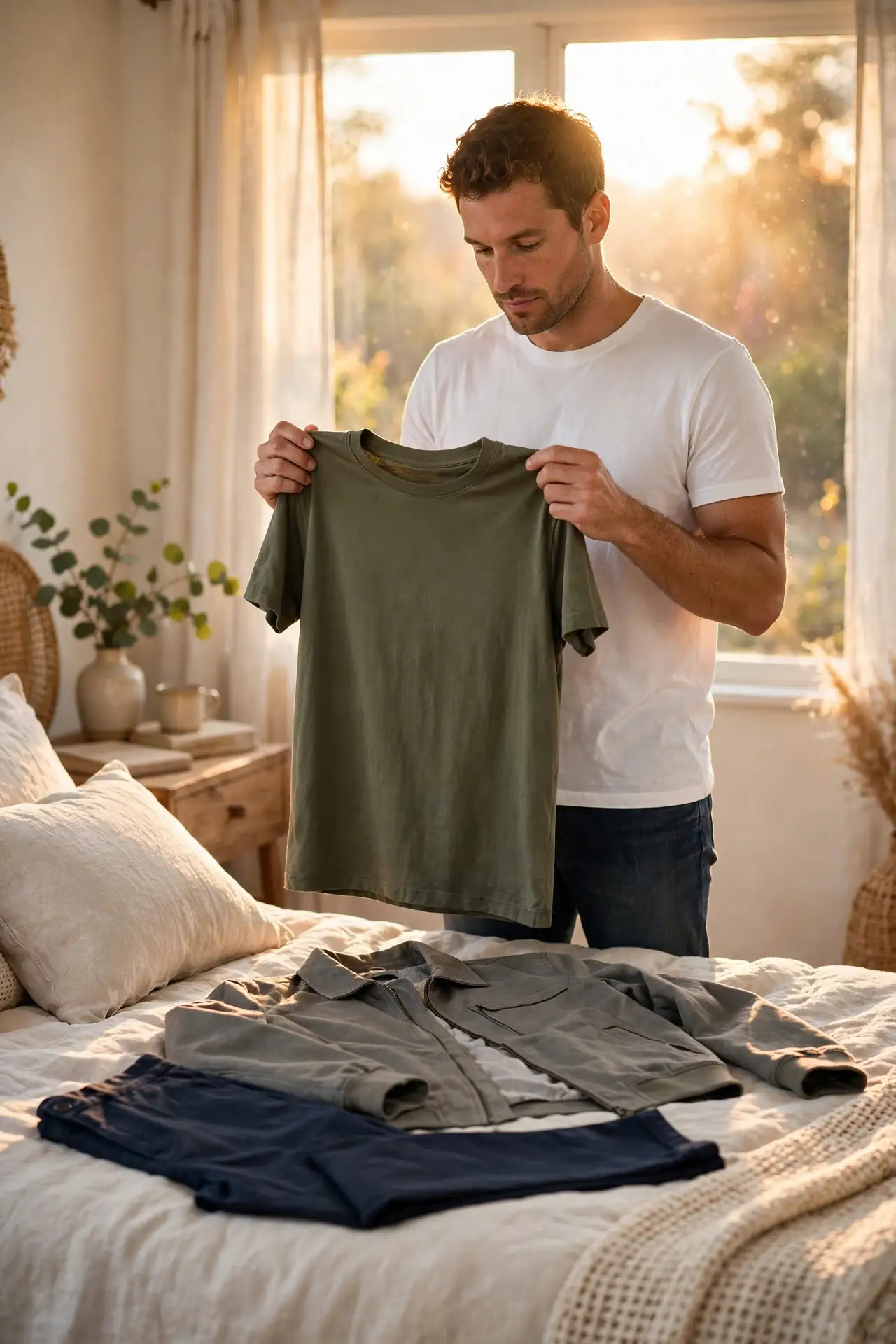
More than that, and the outfit starts to look planned. A shirt and a pair of socks is plenty. One piece is even better.
Match your belt to your shoes
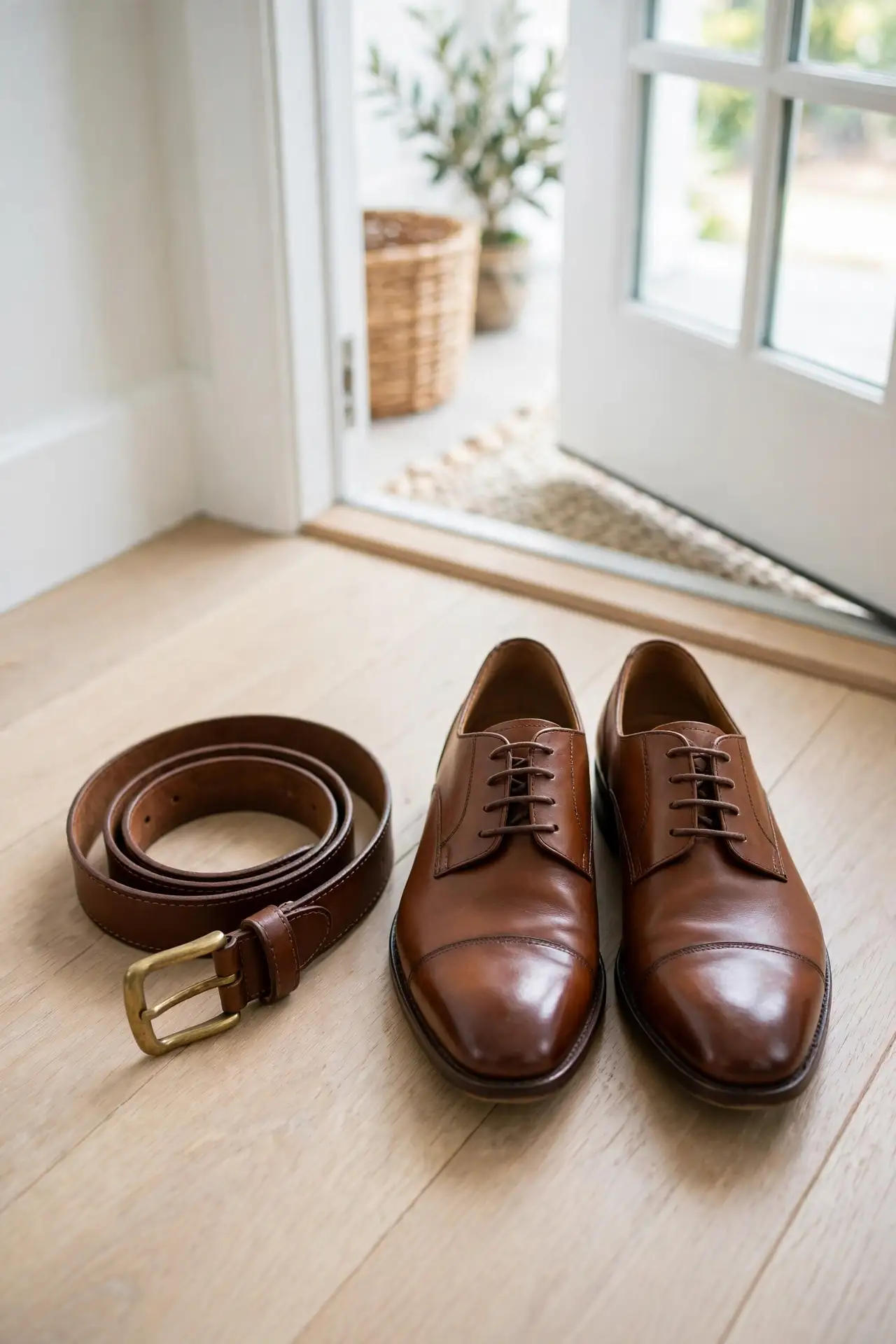
Leather is the one place where matching is expected, and people notice when it’s off. A brown belt goes with brown shoes, and a black belt goes with black shoes. The shades don’t need to be identical, but they should sit in the same color family.
Wearing sneakers instead? Skip the leather belt and wear a plain canvas one, or no belt at all. Sneakers don’t need to match a belt, and forcing it can look stiff.
Limit yourself to one pattern
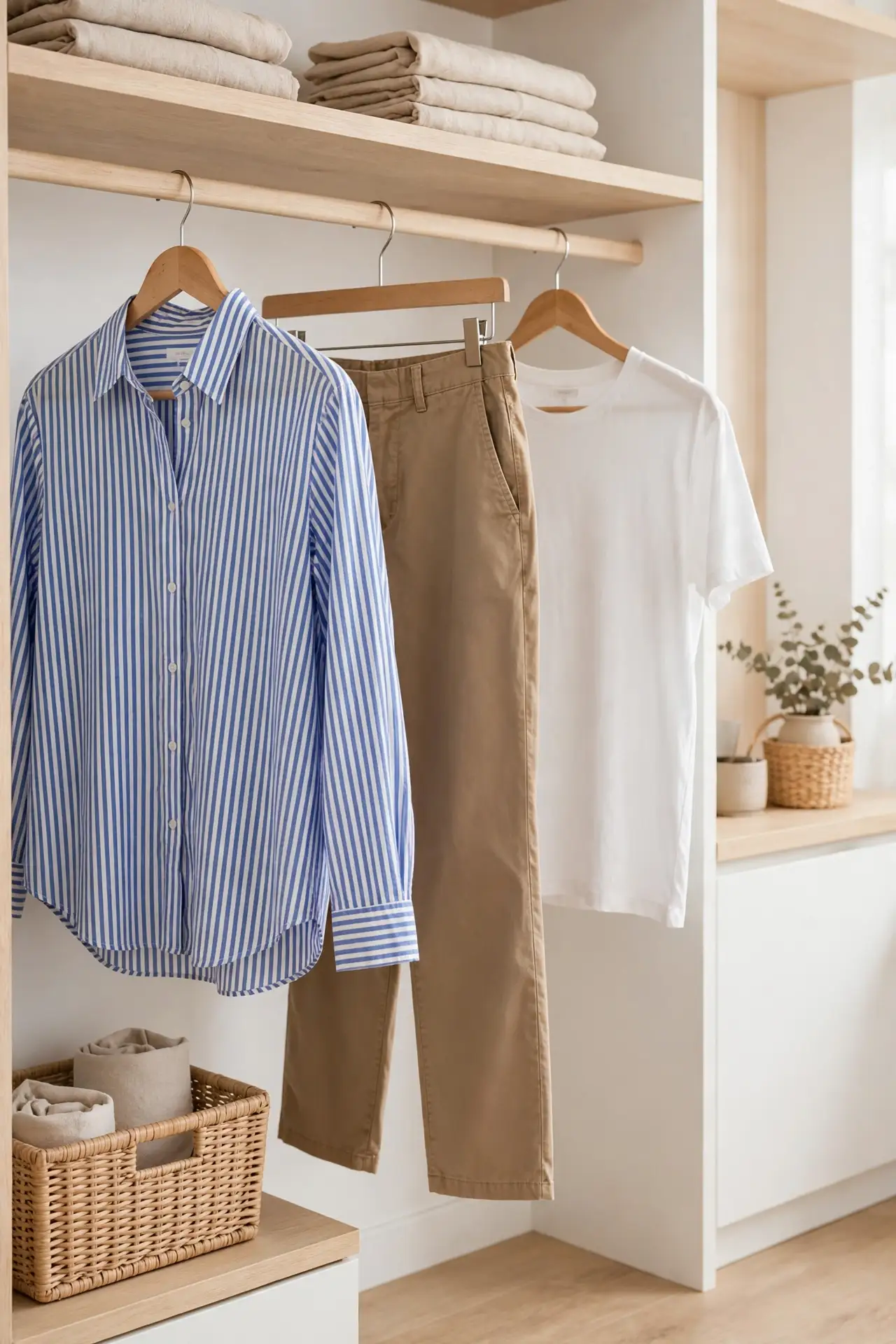
If your shirt has stripes, checks, or plaid, keep everything else in the outfit solid. Patterns compete for attention the way two people talk at once. A plain pair of pants lets one pattern be the only thing people notice.
Tiny details like a small logo or a thin watch strap don’t count, so ignore those. Own nothing with a pattern? Skip this step. A plain outfit with a good accent looks sharp on its own.
Check the outfit in a mirror and swap one piece if needed
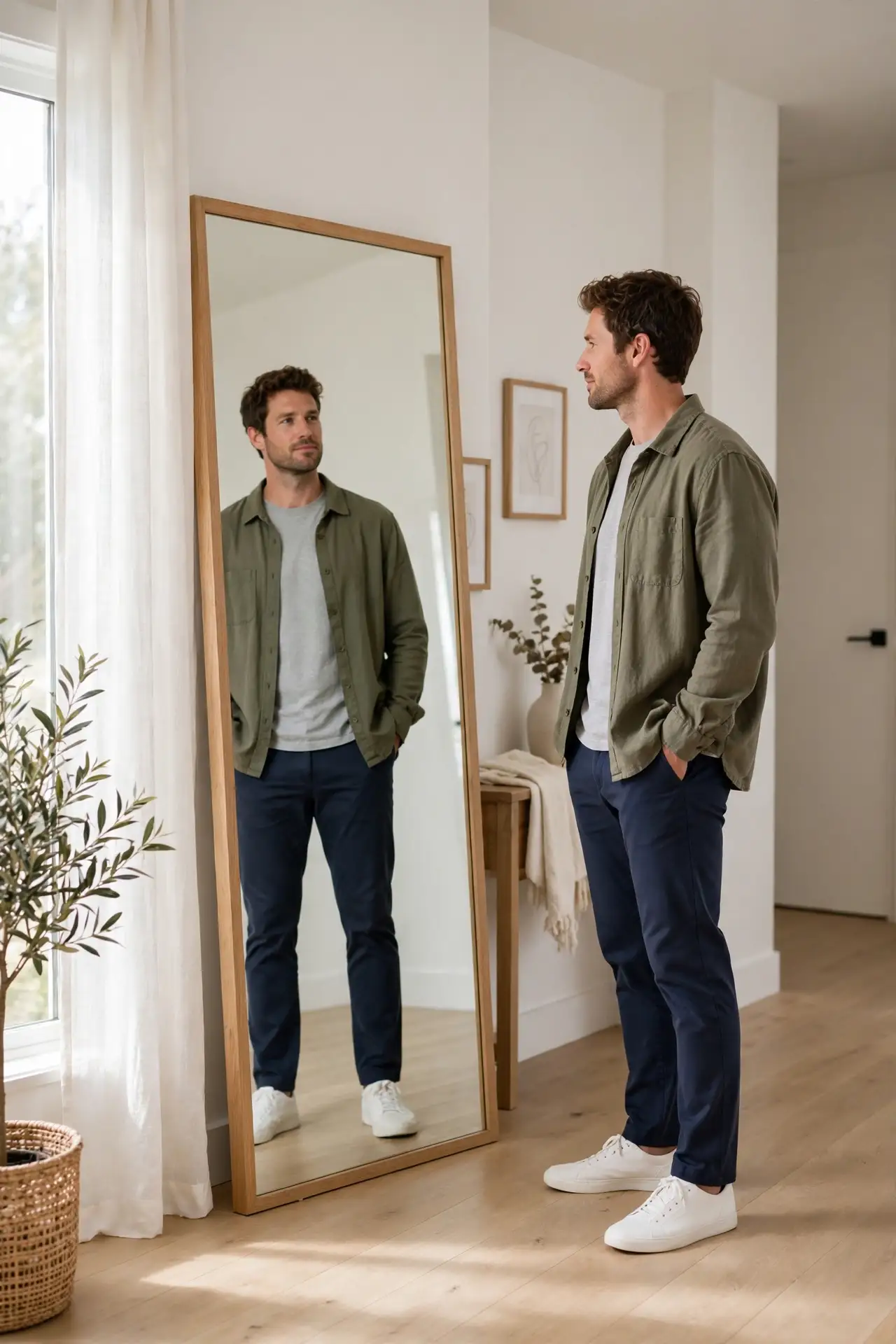
Stand 6 feet back and look at the whole outfit, not the pieces. Up close you see details. From a distance you see what everyone else sees. Ask yourself three questions:
- Can you name the accent color in one second?
- Do your two neutrals look different from each other?
- Does anything pull the eye away from your face?
If the answers are no, no, or yes, swap one piece and look again. Changing two at once makes it hard to tell which fix worked. Give yourself two tries, then walk out the door. Overthinking is what makes an outfit look try-hard.
- You freeze at the closet
- You default to black and gray
- You change clothes 3 or 4 times
- You wonder if it looks forced
- You start with one base piece
- You use 3 colors at most
- You dress in about 2 minutes
- You walk out the door and stop thinking about it
- Pants, tops, and 2 pairs of shoes
- 1 belt
- A mirror
- Daylight
- Sort neutrals from color pieces
- Pick one neutral base
- Add a second neutral, 2 shades away
- Choose one muted accent
- Use the accent once or twice
- Match belt to shoes
- Wear one pattern only
- Check from 6 feet, swap one piece
Conclusion
You now know how to do color coordination without looking try-hard. You sorted your closet, picked a base, added a second neutral, and chose one quiet accent.
Next time you get dressed, run the three-color count before you leave. It takes 10 seconds, and it catches most mistakes.
Your next step is small: build one outfit from clothes you already own, and wear it this week.
