
How to Measure Men’s Pants for a Perfect Fit

Measuring men’s pants sounds simple… until you’re standing in a fitting room wondering why the size you’ve worn for years suddenly feels like it belongs to someone else.
I learned this the hard way.
A few years ago, I ordered three pairs online in my “usual” size. One wouldn’t button, one fit like parachute pants, and one was mysteriously perfect. That mini crisis sent me down the rabbit hole of actually learning how pant measurements work.
Once you know what numbers matter and how to find them, shopping (and tailoring) becomes so much easier.
Let’s break it down step by step.
Why Knowing Your Measurements Changes Everything
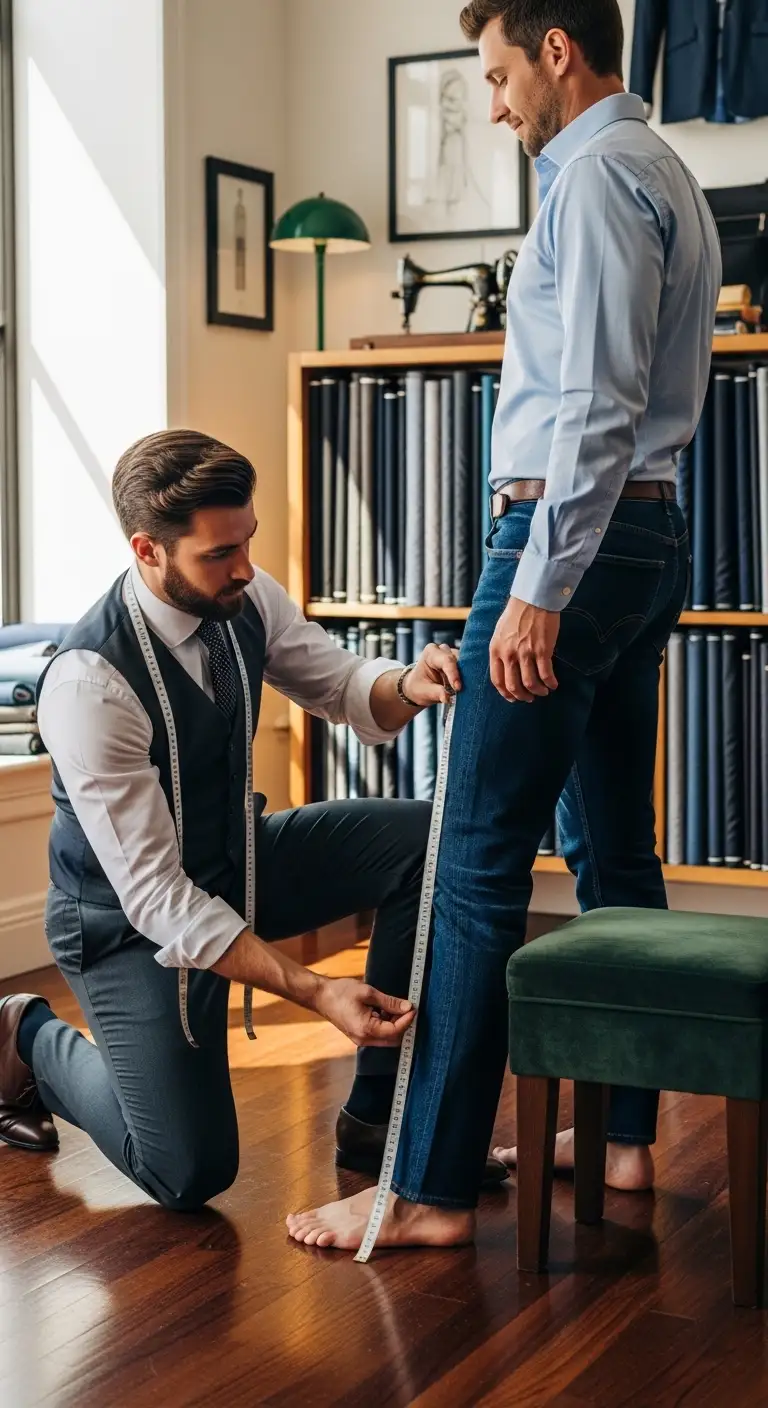
Most brands label trousers with two numbers — waist and inseam. But different rises, cuts, and fabrics can make the same tag fit completely differently.
When you know how to measure:
- you buy online with confidence
- you recognize when something will need tailoring
- you stop blaming your body for bad sizing
- you save money by avoiding returns
Think of it like having a map instead of guessing directions.
1) Waist Measurement
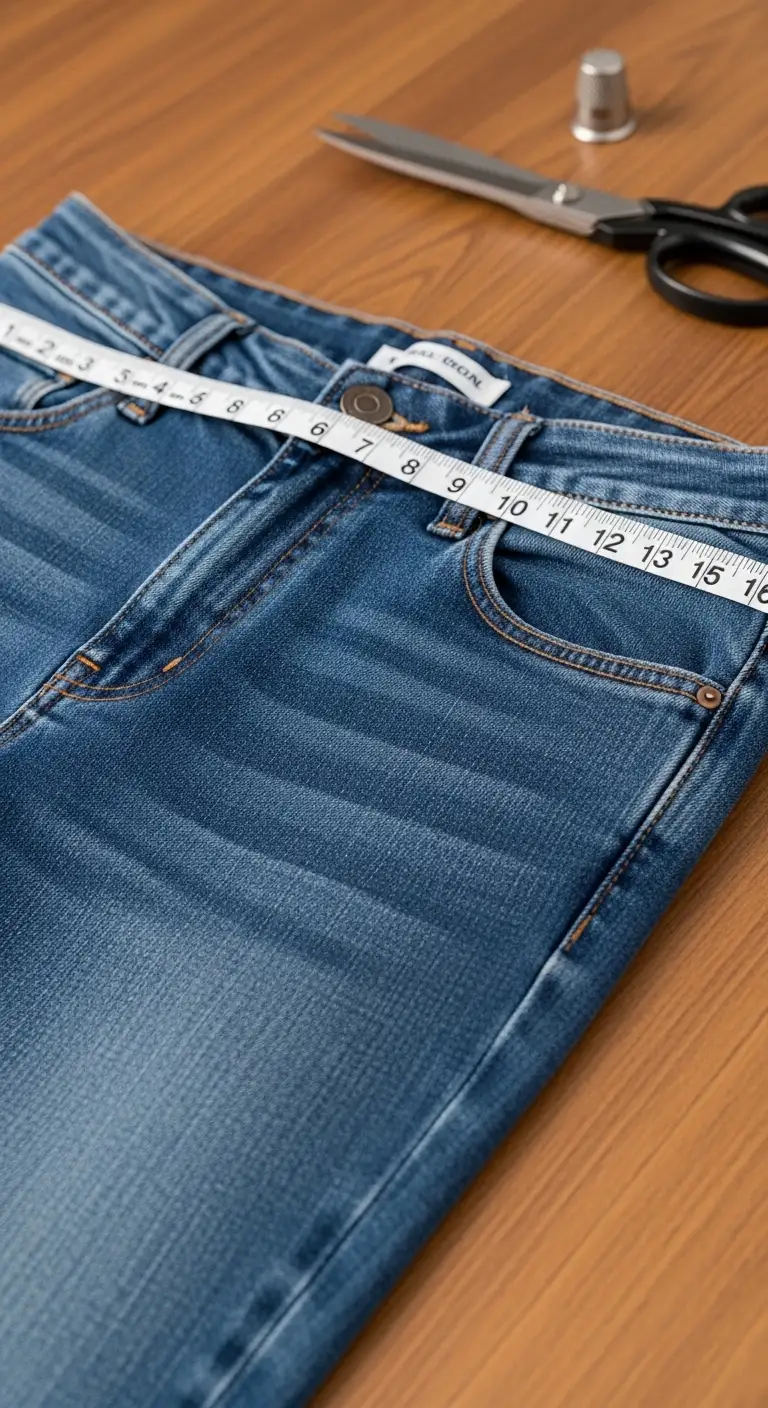
Here’s where many guys mess up (me included): your pant waist size is not always your body waist size.
How to measure it correctly
- Button the pants and lay them flat.
- Smooth out wrinkles without stretching.
- Measure straight across the waistband from one end to the other.
- Double that number.
If the flat measurement is 17 inches → the waist is 34.
My rookie mistake
I used to wrap the tape around myself and assume that number would match every brand. Nope. Some sit higher, some lower, and vanity sizing is very real.
Now I measure a pair I already love and use it as my benchmark. Game changer.
2) Inseam Measurement

The inseam determines how long the pants are from the crotch to the leg opening.
How to measure
- Lay pants flat.
- Place the tape at the crotch seam.
- Run it straight down to the hem.
That’s it.
Why this matters more than you think
Too long → sloppy stacking or puddling.
Too short → accidental flood look.
I once wore brand-new trousers to an event, thinking the break looked stylish. In photos, it looked like I borrowed my taller cousin’s clothes.
Since then, I know my exact inseam and whether I want:
- full break
- slight break
- no break
3) Front Rise
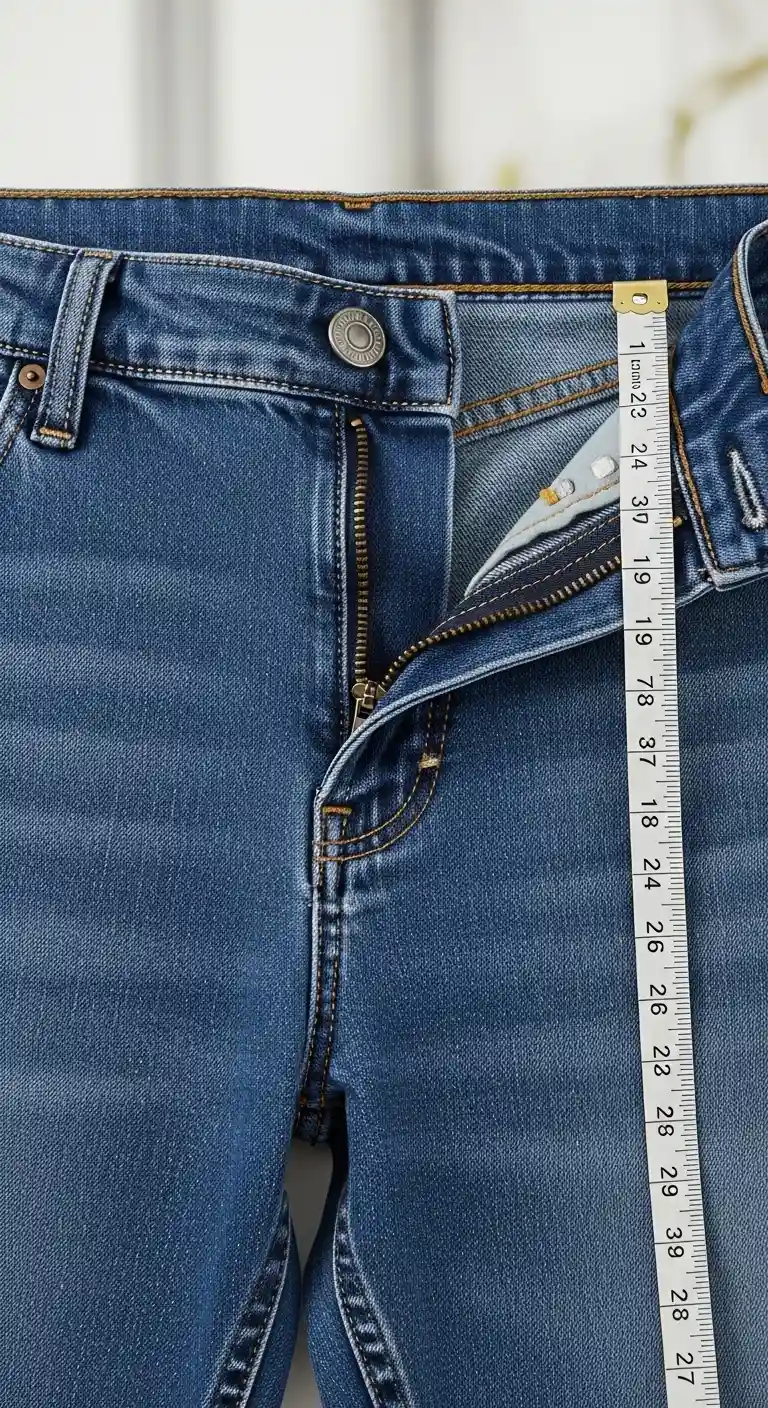
This is the distance from the crotch seam up to the top of the front waistband.
Most men ignore rise — until they sit down and regret everything.
How to measure
- Start at the crotch seam.
- Measure upward to the top of the waistband.
What I discovered
I bought slim pants online that looked incredible on the model. Standing up, I felt sharp.
Then I sat.
Let’s just say the engineering situation became… urgent.
The rise was too low for me.
Now I compare rise with pants I already own. Comfort improved instantly.
4) Thigh Measurement
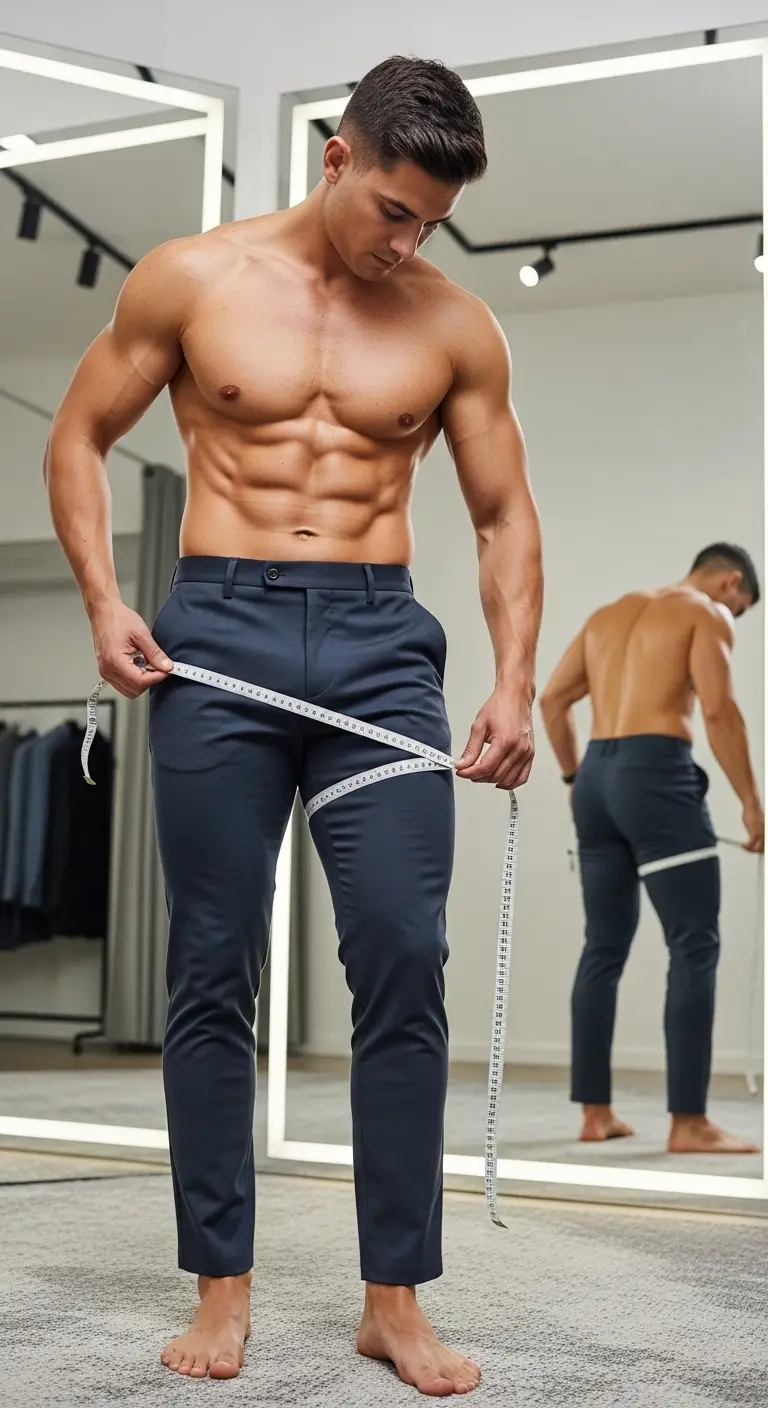
If you lift, cycle, or just have athletic legs, this one is critical.
How to measure
- Lay pants flat.
- Measure across the thigh about 1–2 inches below the crotch.
- Double it.
Personal lesson
I used to think tight thighs meant I needed a bigger waist.
Wrong.
I needed a different cut.
Knowing this saved me from swimming in oversized pants just to fit my legs.
5) Leg Opening (Hem Width)
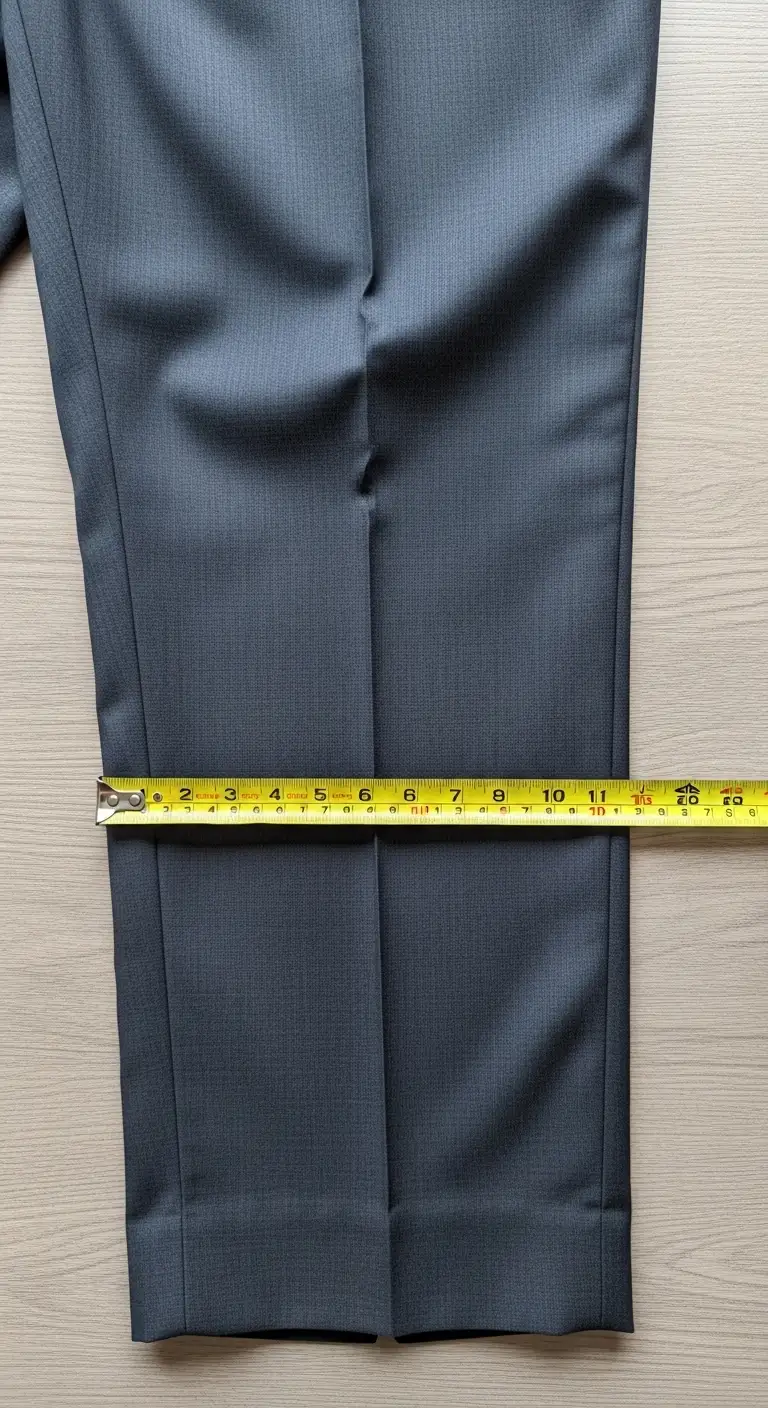
This measurement shapes the overall silhouette.
How to measure
- Measure straight across the bottom hem.
- Double it.
Why it’s powerful
Small changes here dramatically affect style.
Narrower → modern, tailored
Wider → classic or relaxed
I once tapered an old pair at the hem and suddenly everyone thought I bought new pants.
The Trick Tailors Know (Steal This)
Instead of measuring your body, measure your best-fitting pants.
That’s your gold standard.
Whenever I shop online now, I literally keep those pants beside me and compare the brand’s size chart. Returns dropped almost to zero.
Common Measuring Mistakes
Let me save you from my former chaos:
- Measuring stretchy pants while pulling them tight
- Forgetting to double flat measurements
- Comparing low-rise with mid-rise
- Ignoring fabric differences
- Assuming all “34s” are equal
They are not.
How Measurements Translate to Fit
Numbers tell a story.
- Bigger thigh + small hem → athletic taper
- Higher rise → more room when sitting
- Shorter inseam → cleaner look
- Larger leg opening → traditional feel
Once you understand this, you stop guessing and start choosing.
My Final Wake-Up Call
I used to think great fit meant expensive brands.
Then I measured properly.
Suddenly affordable trousers fit like custom pieces because I knew exactly what adjustments were needed.
Knowledge > price tag.
Quick Reference Cheat Sheet
- Waist → across waistband × 2
- Inseam → crotch to hem
- Front rise → crotch to top front
- Thigh → 1–2 inches below crotch × 2
- Leg opening → hem width × 2
Save this. Use it every time you shop.
