
How to Size a Men’s Belt: Sizing Guide

Wearing the wrong belt size can ruin even the best outfit. Not sure how to measure correctly? These easy tips will help you find your ideal men’s belt size for comfort, style, and the perfect fit every time.
Finding the correct Mens Belt Size is more important than most people realize, especially when comfort, appearance, and durability are equally important.
Many men focus on waist measurement alone, but belt sizing follows slightly different rules that can create confusion without proper guidance.
Whether you are shopping for a leather belt, dress belt, casual belt, or everyday accessory, understanding belt measurement techniques ensures a polished and confident look.
Common related searches such as how to measure belt size for men, men’s waist to belt conversion, belt sizing chart for men, and how long should a men’s belt be often reflect this confusion.
This guide explains everything clearly and naturally, helping you choose the right belt length without guesswork or unnecessary returns.
You will learn how sizing works, how different styles affect fit, and how to select a belt that complements your wardrobe perfectly.
Why Belt Size Matters
A properly sized belt:
- Improves comfort throughout the day
- Keeps trousers sitting at the right height
- Creates a clean, proportional appearance
- Helps your outfit look more polished and intentional
Whether you’re dressing for the office, a wedding, or a casual weekend, correct sizing makes a noticeable difference.
The Golden Rule of Belt Sizing
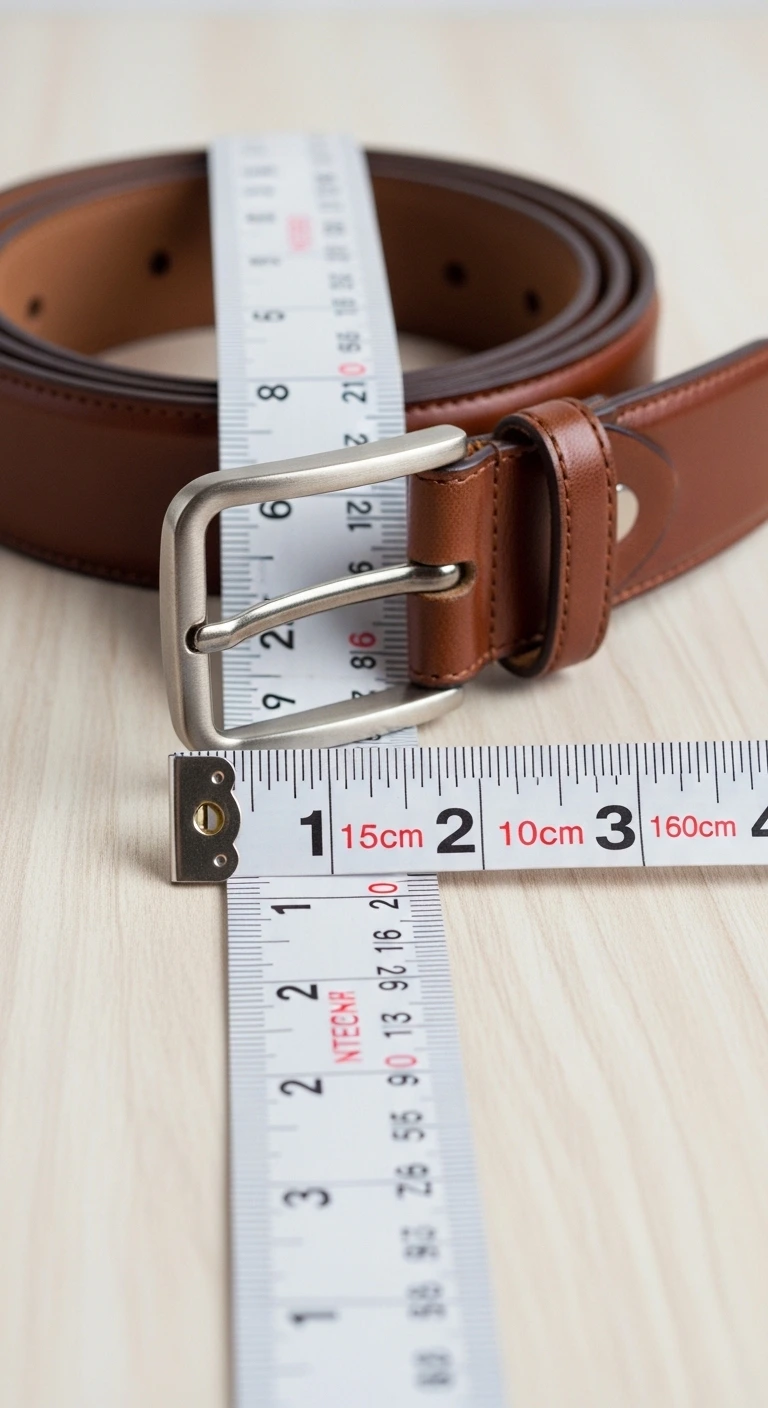
Here’s the rule professional stylists live by:
👉 Your belt size should be 1–2 inches larger than your pant waist size.
So if you wear size 32 trousers, your belt should usually be 34.
Why? Because belt measurements are taken from the buckle to the middle hole, not the end.
Method 1: Size a Belt Using Your Pant Size (Fastest Way)
This is the easiest method and works great when shopping online.
Step-by-step:
- Look at the waist size of your trousers or jeans.
- Add 2 inches.
- Choose that belt size.
Example:
- Pant waist = 34
- Belt size = 36
Simple and accurate for most men.
Method 2: Measure Your Existing Belt (Most Accurate)
If you already own a belt that fits perfectly, use it.
What to measure:
Measure from the end of the buckle (where leather starts) to the hole you use most often.
That number = your belt size.
This avoids guesswork and is ideal if brands size differently.
Method 3: Measure Your Waist with a Tape
Perfect if you’re unsure of your pant size.
Steps:
- Wear the trousers you’ll use with the belt.
- Run a soft tape measure through the belt loops.
- Pull snug (not tight).
- Add 1–2 inches for comfort.
Understanding Belt Size Charts
Most brands follow a similar structure.
| Pant Size | Belt Size |
|---|---|
| 30 | 32 |
| 32 | 34 |
| 34 | 36 |
| 36 | 38 |
| 38 | 40 |
If you fall between sizes, go up, not down.
Where a Belt Should Fit
A good belt should fasten at the middle hole.
Why?
Because your waist changes during the day (meals, movement, sitting). Extra holes give flexibility.
If you’re always on the first or last hole → wrong size.
Dress Belt vs Casual Belt Sizing
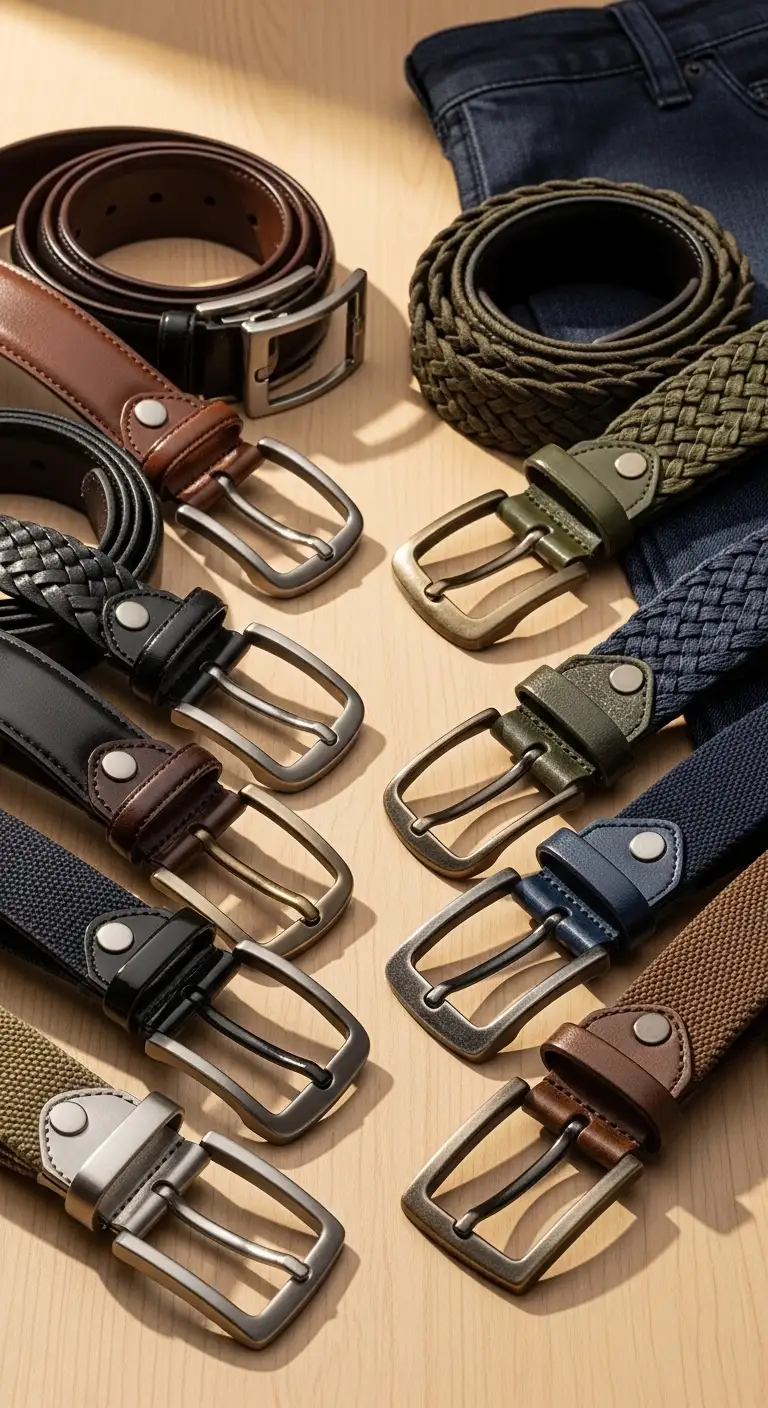
Sizing rules stay mostly the same, but the style of wear can change how it feels.
Dress belts
- Worn at natural waist
- Typically slimmer
- More precise fit needed
Casual belts
- Often worn slightly lower
- Thicker materials
- Allow a little more room
If you wear low-rise jeans, you might need a slightly larger size.
Different Belt Measurement Systems
Some brands use letters instead of numbers.
Typical conversion:
- S = 30–32
- M = 34–36
- L = 38–40
- XL = 42–44
Always check the brand chart, but this is a safe baseline.
Common Belt Sizing Mistakes
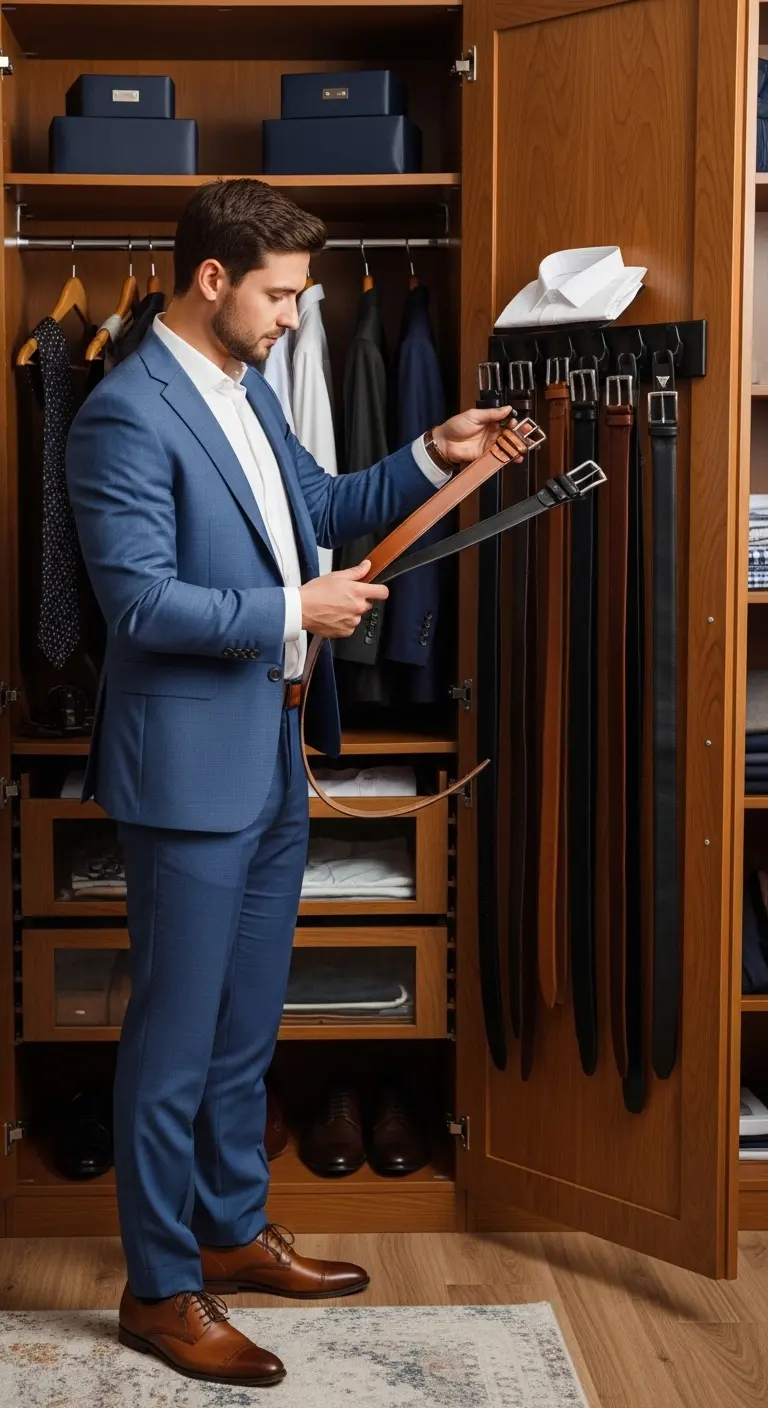
Buying the same size as your pants
Too small most of the time.
Guessing
Always measure or follow the +2 rule.
Ignoring rise height
Low-rise jeans may need a bigger belt.
Not checking hole position
You should land near the center.
How Long Should the Belt Tail Be?
After fastening, the belt tip should:
✔ Pass the first belt loop
✔ Stop around the middle of the next
Too long = sloppy
Too short = awkward
What If You Lose or Gain Weight?
If your size changes often:
- Choose belts with 5–7 holes
- Consider track or ratchet belts for flexibility
They provide micro-adjustments instead of fixed holes.
Can a Belt Be Shortened?
Yes, many leather belts can.
Usually, you can:
- Remove the buckle
- Trim leather
- Reattach
A cobbler can do this quickly and cheaply.
Pro Stylist Tips
- Own at least one brown and one black belt
- Match belt color with shoes for formal wear
- Slim belt for suits, wider for denim
- Quality leather molds to your body over time
Signs Your Belt Fits Perfectly
You’re using the middle hole. It feels secure but not tight. The tail length looks balanced. You don’t think about it during the day. That’s the sweet spot.
Selecting Men’s Belt Size for Casual and Everyday Wear
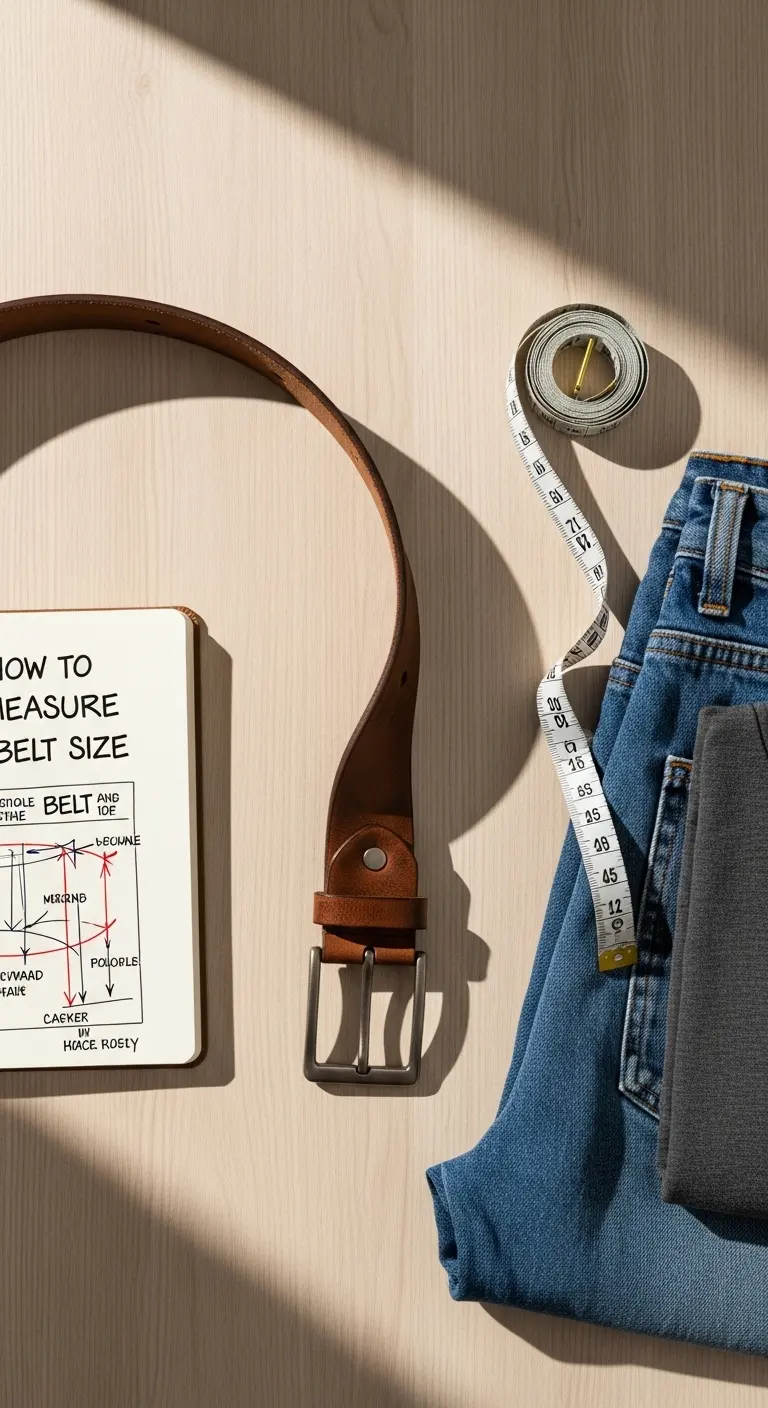
Casual belts offer slightly more flexibility in design, texture, and buckle size. However, the correct Mens Belt Size remains equally important to maintain balance and comfort.
When wearing jeans or relaxed trousers, the belt should still fasten at the center hole for optimal proportion.
A slightly thicker belt may enhance durability for daily use without compromising fit. Casual styling allows more freedom, but excessive length still creates imbalance and distraction.
Selecting the right size ensures the belt functions properly while supporting your overall aesthetic. Comfort and consistency should remain priorities even in relaxed wardrobe choices.
Final Thoughts
Understanding how to determine the correct Mens Belt Size eliminates confusion and enhances everyday comfort and style.
By measuring accurately, considering material and width, and understanding adjustment range, you can choose confidently.
A properly fitted belt supports posture, complements clothing, and reflects thoughtful attention to detail.
Avoiding common sizing mistakes ensures long-term satisfaction and prevents unnecessary returns or replacements.
When you approach belt selection with knowledge and clarity, it becomes a straightforward and rewarding decision.
Selecting the right belt is not merely a minor accessory choice but a practical investment in personal presentation.
With these insights, you are now fully prepared to find the perfect belt that fits seamlessly into your wardrobe.
