
Men’s Summer Hairstyles That Beat the Heat in Style

Summer turns your hair into a liability. Heat, humidity, sweat — they don’t care about your morning routine.
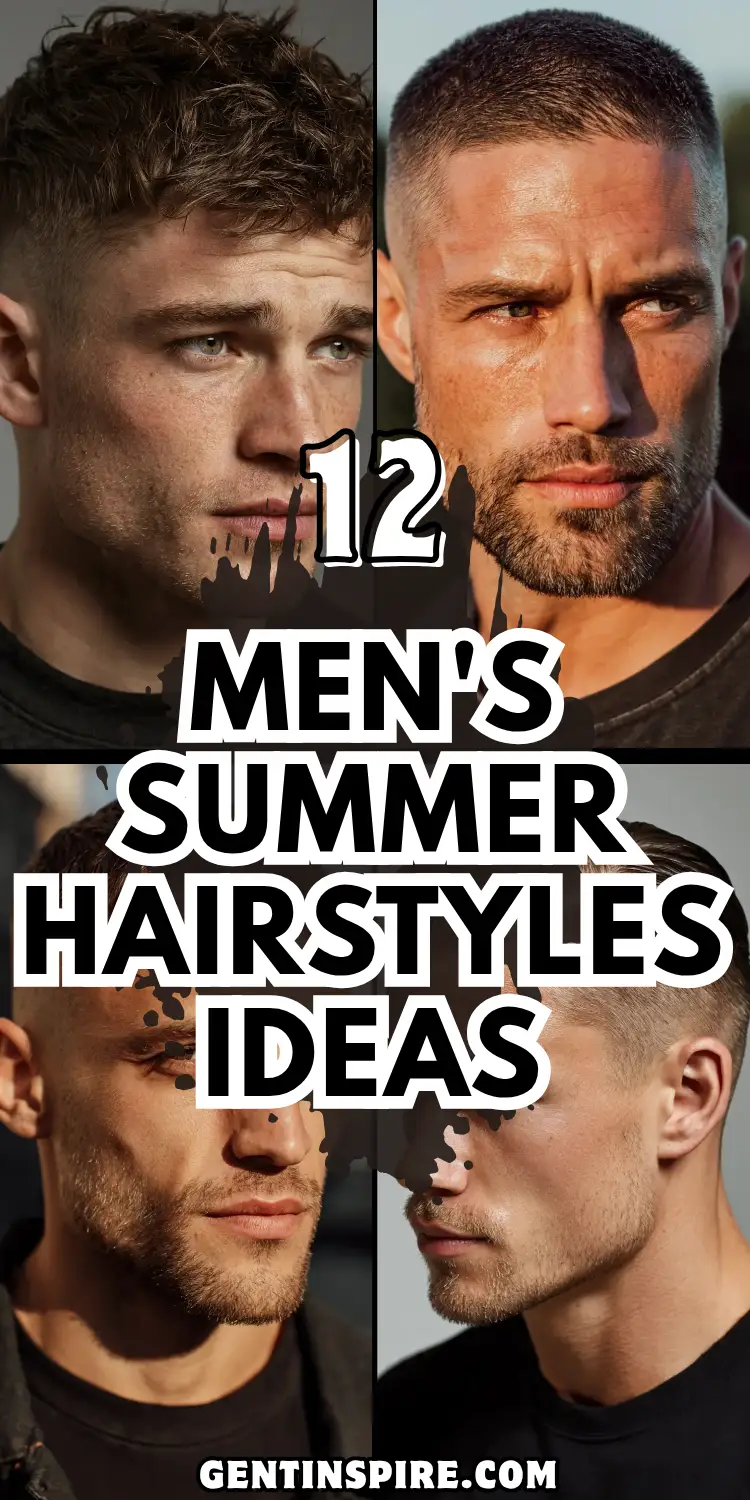
The right summer hairstyle isn’t just about looking good in photos — it’s about still looking good three hours later.
These 12 styles cover everything from low-maintenance to statement-making, each chosen because it performs in real summer conditions, not just in a barbershop mirror.
Before You Pick a Style
Know Your Hair Texture First
Product recommendations and styling techniques vary drastically between fine, thick, curly, and coarse hair. A style that looks effortless on one texture can look disastrous on another — know what you’re working with before you commit.
Factor in Your Maintenance Tolerance
Some of these styles need a barber visit every 3 weeks. Others survive 8 weeks without looking neglected. Be honest about how often you’ll actually book that appointment.
Match the Style to Your Summer Schedule
A slicked-back style works at a rooftop bar but falls apart on a hiking trail. Consider where you’re spending most of your summer — beach, office, travel, or all three — before deciding.
Humidity Changes Everything
What your hair does in dry air and what it does in 80% humidity are two different things. If you live somewhere humid, prioritize styles that work with your hair’s natural movement, not against it.
12 Men’s Summer Hairstyles Option
The Textured Crop — The Style That Ends Every Bad Hair Day
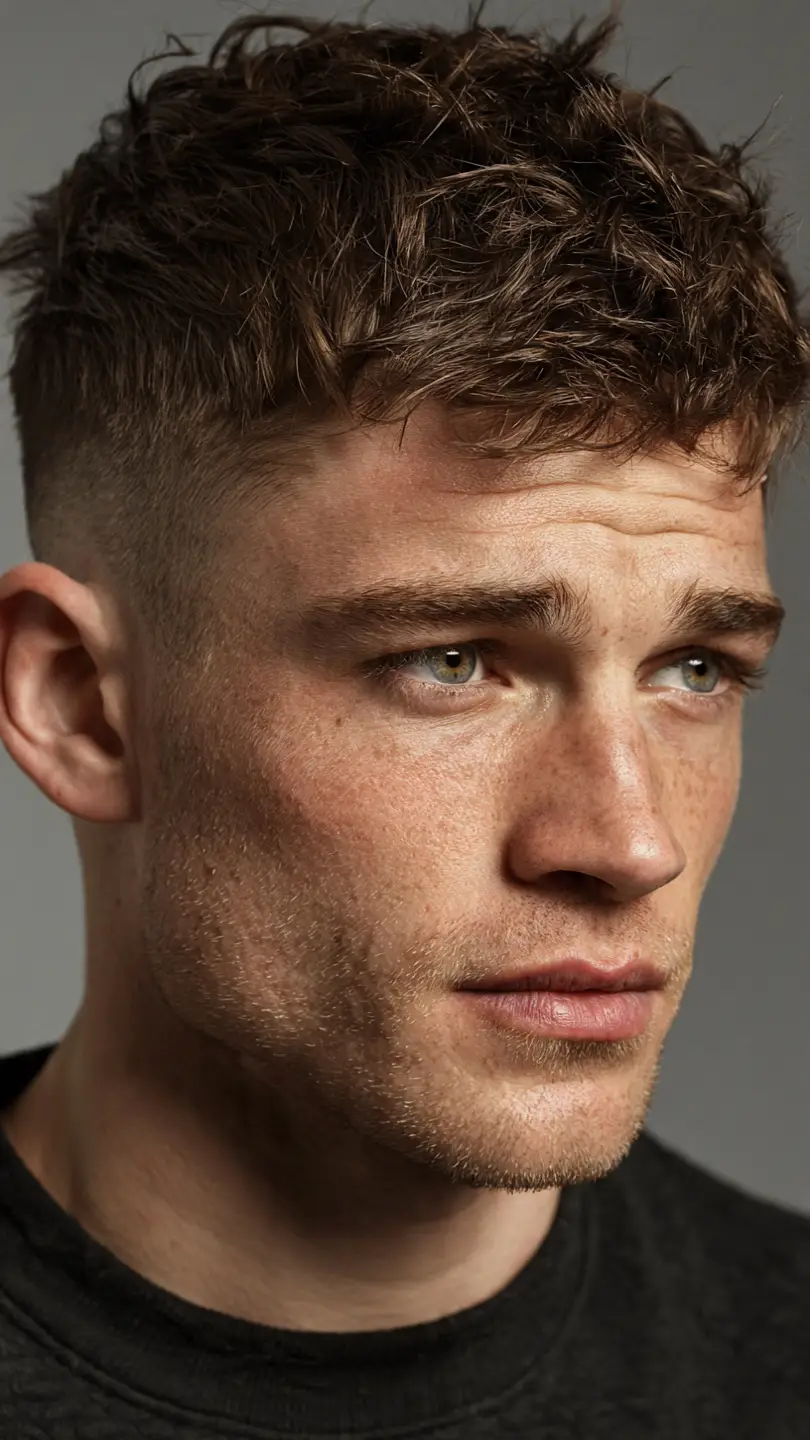
This is the most versatile short style in men’s grooming right now. It works across face shapes, hair textures, and dress codes without demanding much in return. The textured crop earns its reputation because it looks intentional even when you did nothing to it.
What you’ll need:
- A crop cut with a fade (skin, low, or mid — your call)
- Matte clay or paste with medium hold
- A small-tooth comb or your fingers
- A blow dryer with a diffuser (optional but useful for thick hair)
- Sea salt spray for added texture
How to style it: Work a pea-sized amount of matte clay through slightly damp hair, pushing forward and upward at the front. Don’t over-comb it — the texture is the point. Avoid shine products entirely; they make this style look greasy within an hour in summer heat. Finish with a light blast of sea salt spray if you want more grip and definition.
Humidity note: This style actually benefits from a little moisture in the air — it adds natural texture without extra product.
The Buzz Cut — The Style That Requires Zero Apologies
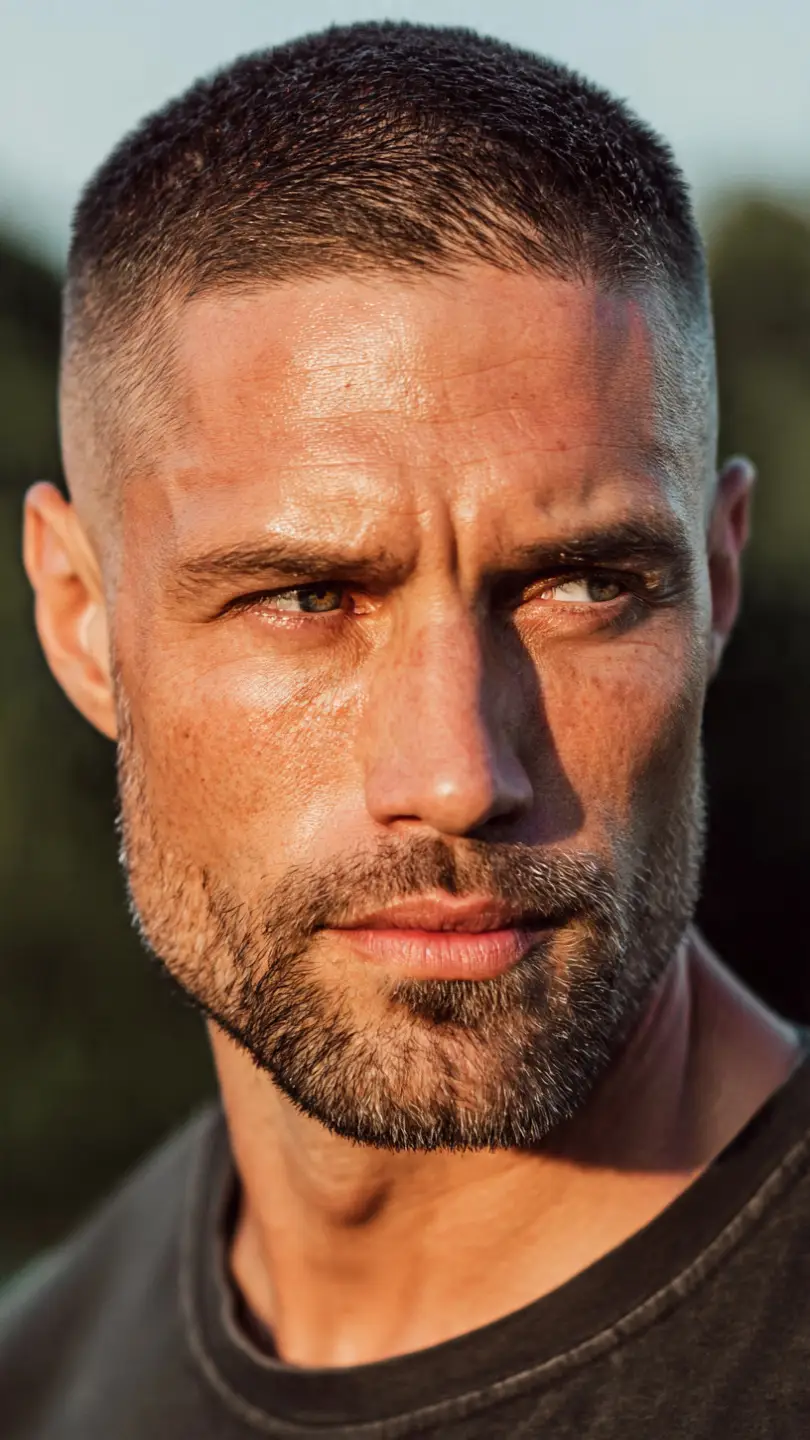
Nothing performs better in summer than hair that’s barely there. The buzz cut is low maintenance by design and impossible to ruin once you’ve committed. It shifts all the attention to your face, so good skincare becomes non-negotiable.
What you’ll need:
- A uniform buzz (guard 1–3 depending on preference)
- SPF moisturizer for the scalp
- A weekly shape-up at the barber or a quality clipper set at home
- A good facial cleanser
- Optional: a light beard to balance the face shape
How to style it: There’s no styling — that’s the entire point. Maintain it with a shape-up every 2–3 weeks to keep the neckline and temple edges clean. The difference between a sharp buzz and a neglected one lives entirely in the edges. Keep sunscreen in your bag; a shaved head in direct sun is a burn waiting to happen.
Variation: A skin fade on the sides with a slightly longer top (guard 3–4) gives you the low-maintenance benefit with a touch more shape.
The French Crop — The European Export That Belongs in Your Summer Rotation ☀️
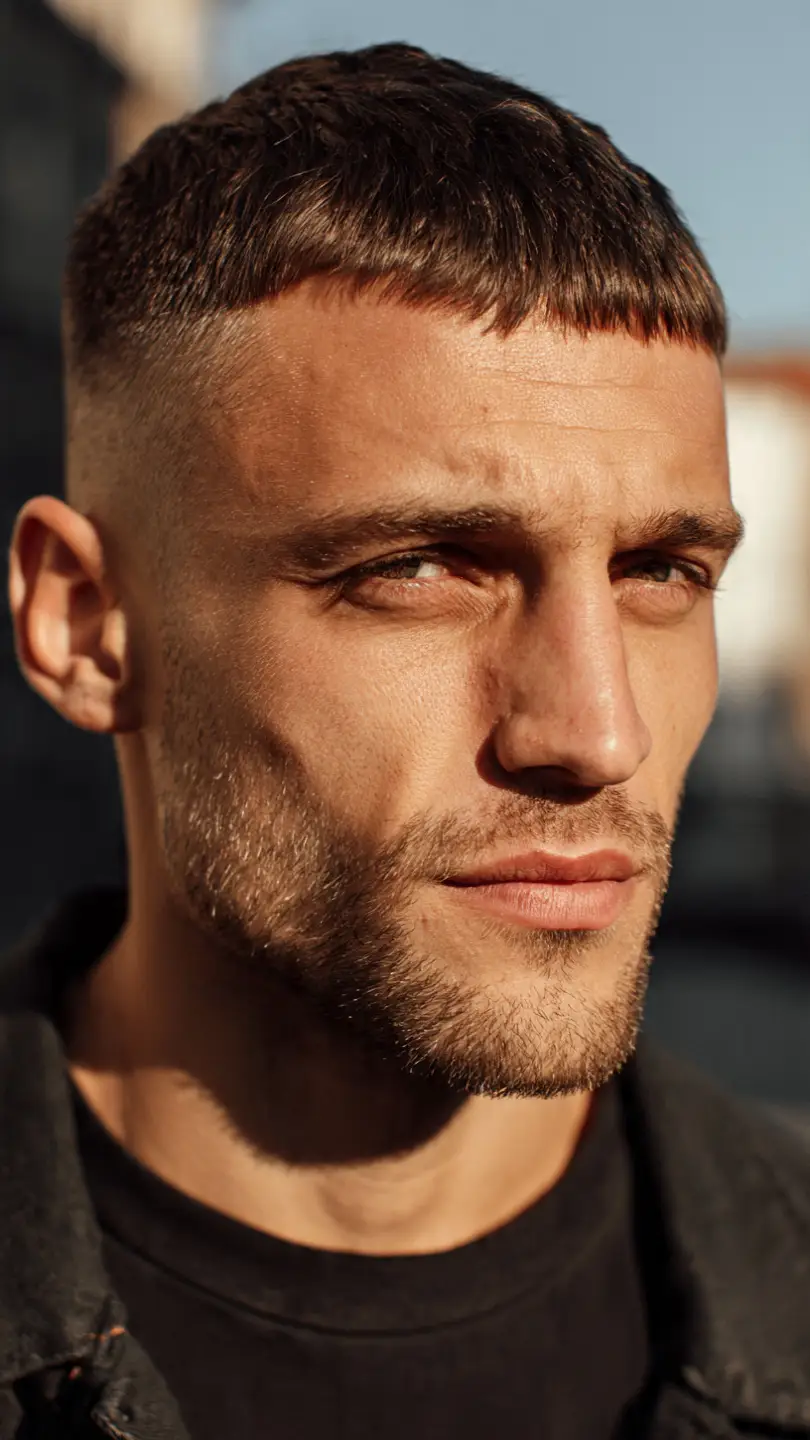
The French crop sits somewhere between a classic crop and a Caesar cut — short on the sides, slightly longer on top with a forward-pushed fringe. It’s clean, intentional, and photographs exceptionally well. It’s one of the few styles that looks equally sharp dressed up or dressed down.
What you’ll need:
- A French crop cut with a skin or low fade
- Matte or low-shine pomade
- A fine-tooth comb
- Barber visits every 3–4 weeks to maintain the fringe line
- Optional: a slight temple fade for added sharpness
How to style it: Apply a small amount of matte pomade to dry or slightly damp hair and push the top section forward, letting the fringe fall naturally across the forehead. Don’t force it too flat or too high — the fringe should sit, not stand. One pass with a comb is enough; over-styling breaks the relaxed quality that makes this cut work.
If this feels too bold: A longer fringe version (sometimes called a modern Caesar) is a softer entry point into the same aesthetic.
The Slicked Back Undercut — The Style That Still Commands a Room
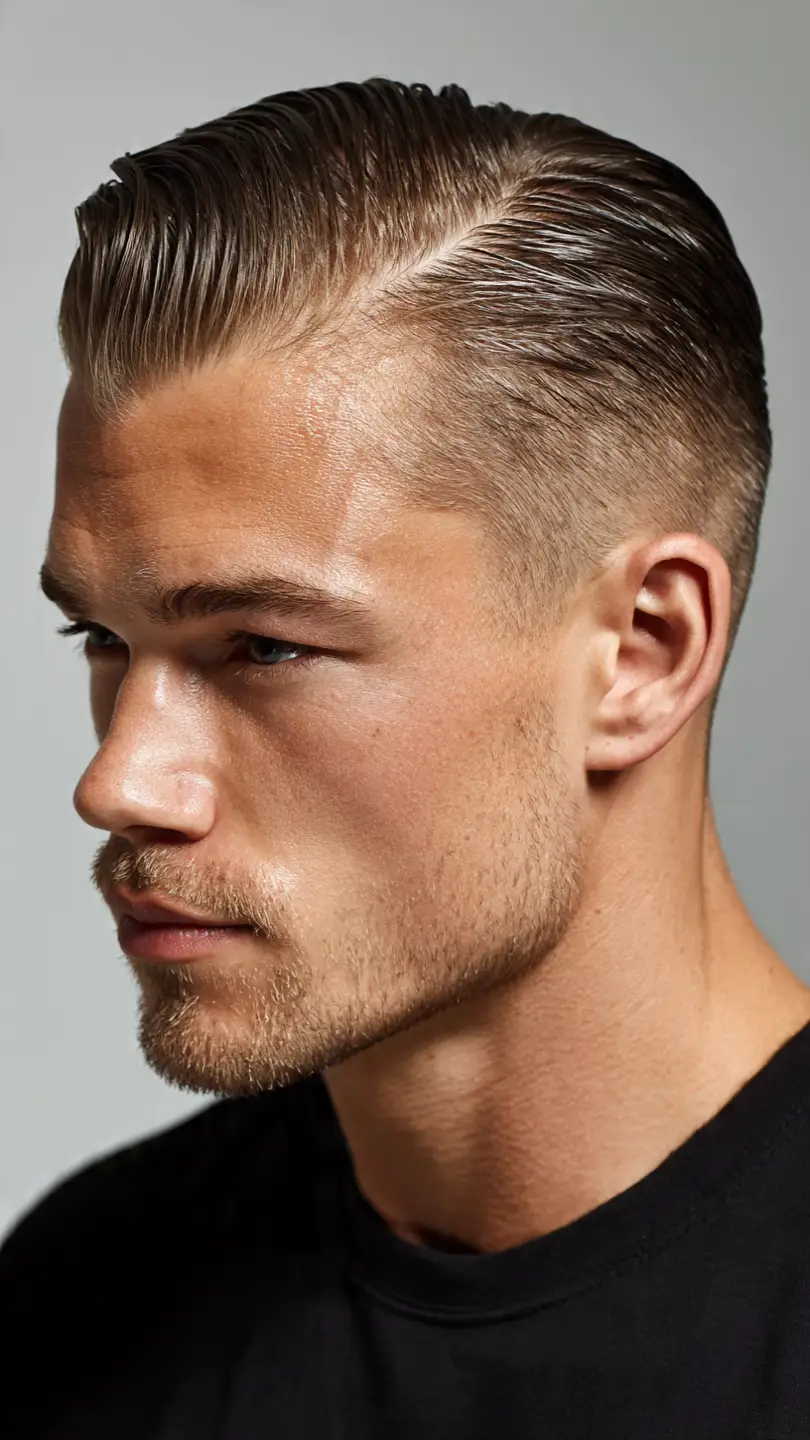
The undercut with slicked-back top hair is a decade old and still relevant because the contrast it creates is genuinely striking. Shaved or faded sides against longer, controlled top hair reads as polished in every setting. This style rewards good hair products — use the wrong one and it collapses by noon.
What you’ll need:
- An undercut with a high fade or skin fade
- High-hold pomade with medium shine (water-based for easy washing)
- A fine-tooth comb or Kent-style comb
- A blow dryer for volume on thicker hair
- Optional: hairspray to lock it in place
How to style it: Start with slightly damp hair. Apply pomade evenly from root to tip, then use a comb to sweep everything straight back. A blow dryer adds lift at the root, which prevents the style from going flat mid-day. On humid days, lock the style with a light-hold hairspray immediately after combing — don’t wait. The window between styled and collapsed is shorter than you think in summer.
Cool weather swap: In drier months, a water-based pomade alone handles it — no hairspray needed.
The Mid Fade with Natural Waves — The Style That Does Half the Work For You
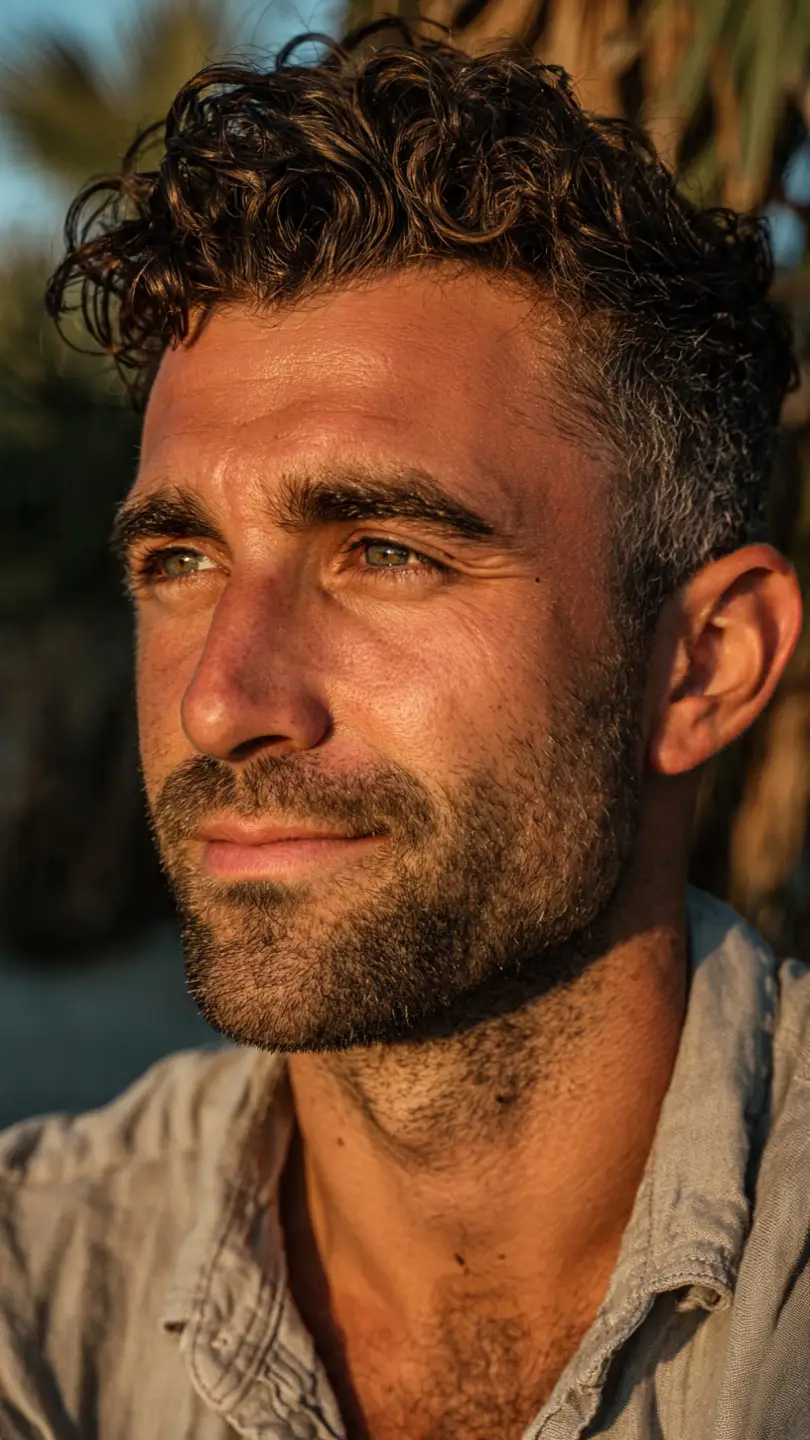
If you have naturally wavy hair, fighting it in summer is a losing battle. The mid fade with natural waves leans into your hair’s texture and makes it the feature rather than the problem. Wavy hair in summer isn’t a challenge — it’s an advantage most men waste.
What you’ll need:
- A mid fade cut
- A curl-enhancing cream or light mousse
- A microfiber towel or cotton T-shirt (no terrycloth)
- Sea salt spray
- Optional: a diffuser attachment for your blow dryer
How to style it: After washing, squeeze — don’t rub — your hair dry with a microfiber towel. Apply curl cream through the mid-lengths and ends, scrunch upward, and either air dry or diffuse on low heat. Never brush wavy hair once product is in — it destroys the wave pattern and creates frizz. The mid fade keeps everything looking intentional while the waves handle the visual interest.
Humidity note: Skip the sea salt spray on especially humid days — your hair will find its own texture without help.
The Taper Fade with Line-Up — The Style Where the Barber Does the Heavy Lifting
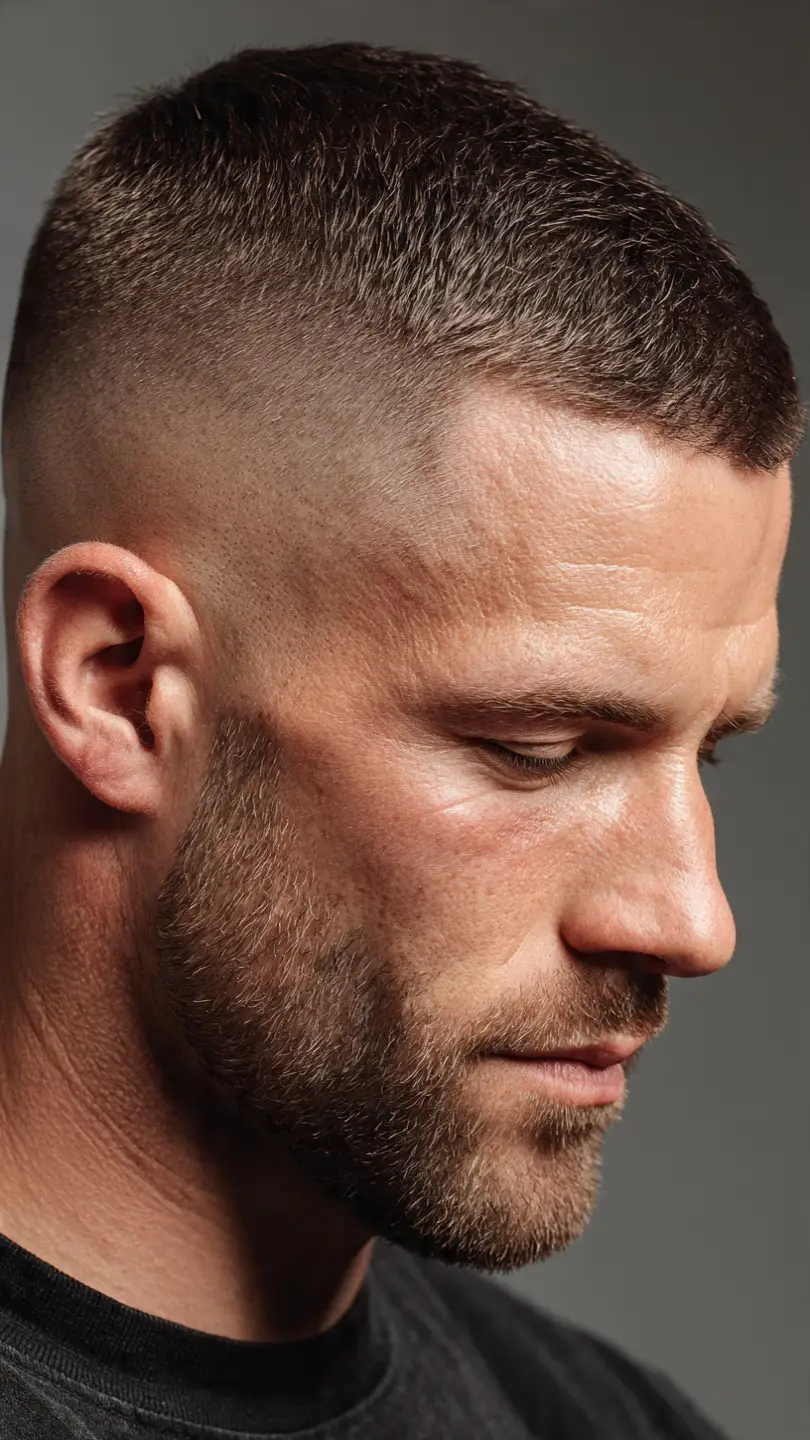
A precise taper fade with a sharp line-up is essentially a frame for your face. The geometry of clean edges — straight hairline, defined temple, neat neckline — elevates even a simple top section into something that looks considered. The line-up is not optional maintenance; it is the style.
What you’ll need:
- A taper fade (low, mid, or high)
- A crisp line-up at the hairline and temples
- Light edge control or wax for the hairline
- Barber visits every 2–3 weeks maximum
- Minimal product on top — let the shape do the work
How to style it: Apply a tiny amount of edge control along the hairline and lay it down with a soft bristle brush. Keep the top section simple — a light matte product or nothing at all. The cleaner the line-up, the less you need to do everywhere else. This style degrades visibly after 2–3 weeks, so frequent barber visits aren’t optional if you want to maintain the effect.
Variation: A design or part line shaved into the fade adds personality without changing the fundamental structure of the style.
The Curly Top with Low Fade — The Style That Finally Respects the Curl
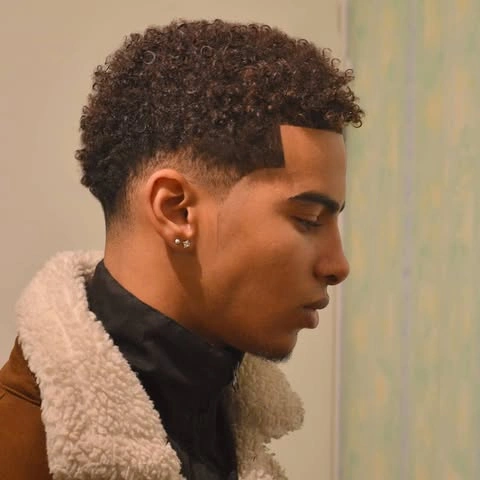
Curly hair men have historically been given bad advice. The curly top with a low fade stops fighting the curl and starts working with it — volume on top, clean contrast on the sides. The fade height determines the entire personality of this style: low fade is classic, high fade is bold.
What you’ll need:
- A low or mid fade cut
- A defining curl cream (not gel — gel crunches)
- A wide-tooth comb or pick for shaping
- A satin pillowcase (reduces frizz overnight)
- Optional: a light oil for shine on dry days
How to style it: On wash days, apply curl cream to soaking wet hair in sections, using the “praying hands” method to distribute product evenly. On non-wash days, refresh with a water spray bottle and scrunch lightly. Never touch curly hair while it’s drying — every touch is a frizz point. Use a pick or wide-tooth comb only at the root to shape and add volume, never through the curl itself.
Cool weather swap: In drier months, add a few drops of argan oil to your curl cream for extra moisture and definition.
The Quiff — The Style With More Versatility Than It Gets Credit For
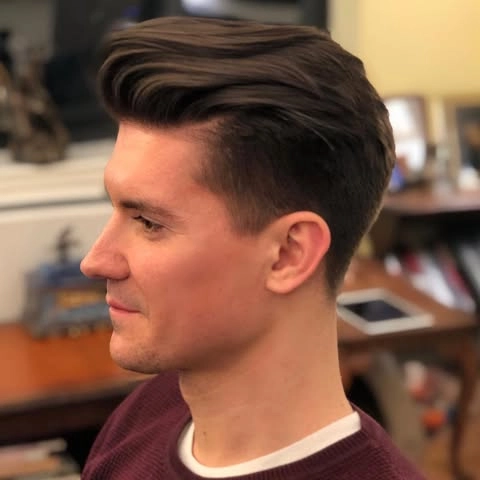
The quiff is volume at the front, structure throughout, and a fade or taper on the sides. It reads dressed-up when you need it to and relaxed when you don’t — depending entirely on which product you use. Product choice transforms this from boardroom to beach bar without changing the cut.
What you’ll need:
- A quiff cut with a mid or low fade
- Matte clay for a casual version, or medium-shine pomade for a formal version
- A blow dryer for lift at the front
- A comb with both fine and wide teeth
- Optional: light hairspray for all-day hold in humidity
How to style it: Blow dry the front section upward and slightly backward using a round brush or your fingers, building volume at the root. Apply product while the hair is still warm — it sets better. The volume should come from the root, not from piling product at the tips. On humid days, a matte clay holds better than pomade; pomade can get slippery when you start to sweat.
If this feels too bold: A lower, flatter version of the quiff (sometimes called a soft quiff) gives you the forward movement without the height.
The Dreadlock Fade — The Style That Combines Edge With Structure
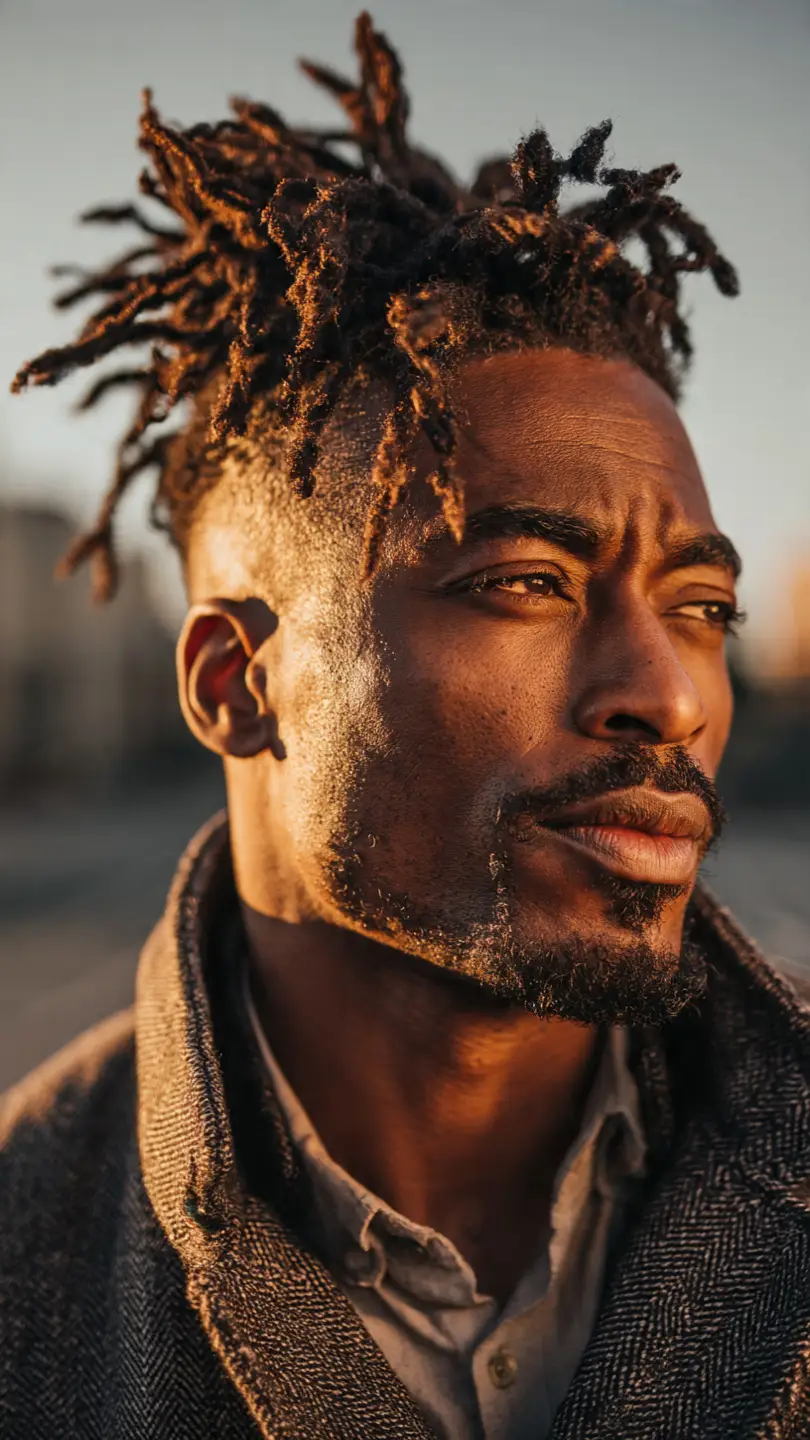
Short or medium locs paired with a clean fade are one of the most striking combinations in men’s grooming. The contrast between the textured locs on top and the sharp fade on the sides creates a profile that works in almost any environment. Well-maintained locs require a consistent moisturizing routine — neglect shows faster than most other styles.
What you’ll need:
- Starter or established locs (professional loctician recommended)
- A clean low or mid fade on the sides
- A loc butter or oil moisturizer
- A satin or silk bonnet or pillowcase for sleeping
- Optional: a light sheen spray for definition
How to style it: Moisture is the foundation of healthy locs. Apply loc butter or oil to the scalp and locs 2–3 times per week, massaging into the roots. In summer, sweat and sun exposure dry locs out faster than in any other season — increase your moisturizing frequency, not decrease it. Keep the fade fresh with barber visits every 3 weeks to maintain the contrast.
Variation: Loc extensions add length for men who want the aesthetic but are early in their loc journey.
The Side Part with High Skin Fade — The Style That Bridges Classic and Modern
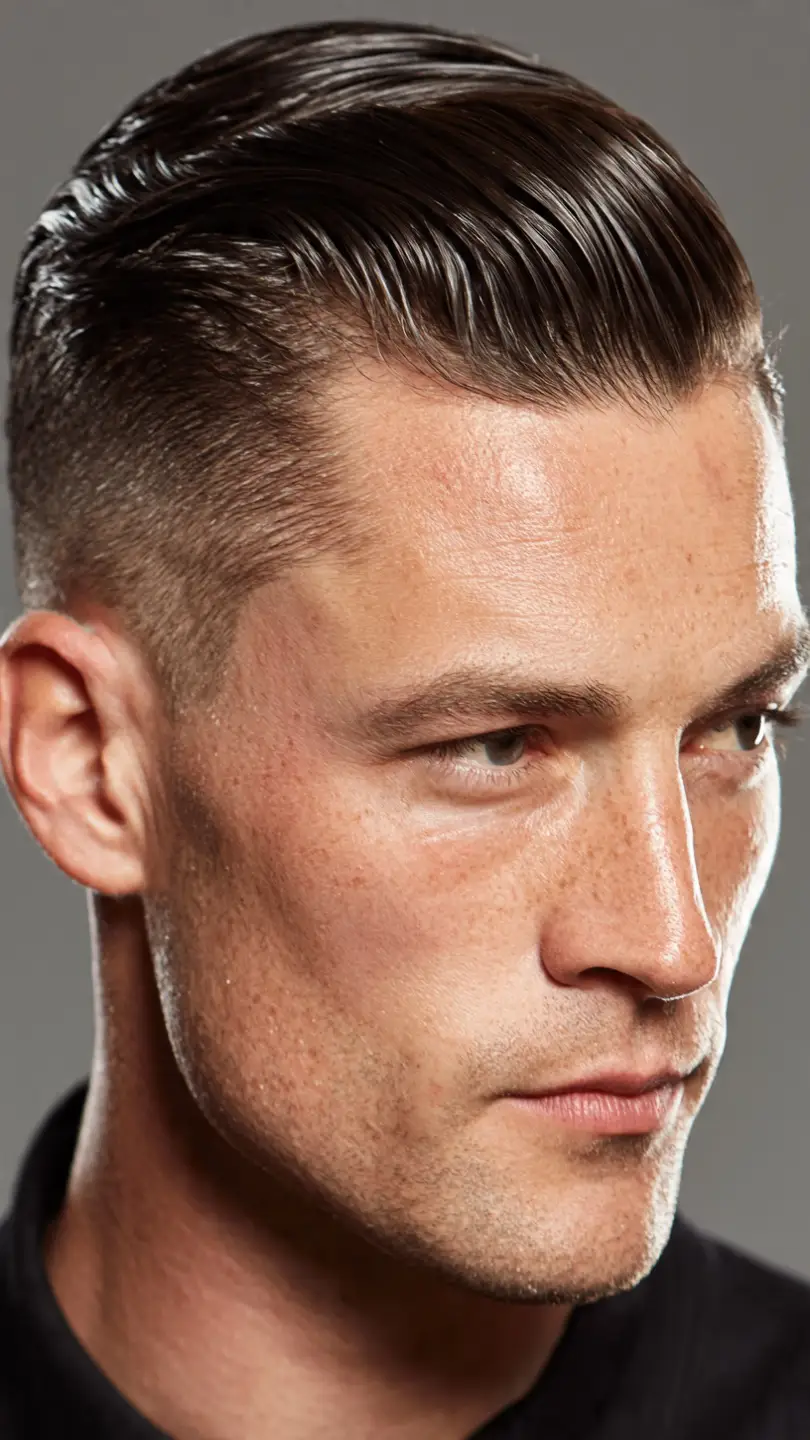
A hard side part cut into a high skin fade is one of the cleanest combinations in men’s hair. It references classic barbershop tradition while the aggressive fade height keeps it firmly modern. The part line should be razor-sharp — a blurry part makes the entire style look unfinished.
What you’ll need:
- A high skin fade with a hard part
- A high-hold, medium-shine water-based pomade
- A fine-tooth comb
- Optional: a touch of pomade worked into the part line to define it
- A barber who is precise with a straight razor
How to style it: Apply pomade to damp hair and use a fine-tooth comb to sweep the top section away from the part in one clean motion. The hair on the heavier side should lie flat and controlled, with no flyaways. A single clean comb pass beats five sloppy ones every time. Reapply a tiny amount of product mid-day if the sides start to lift — a water-based formula refreshes easily without buildup.
Cool weather swap: In lower humidity, a stronger-hold pomade reduces the need for mid-day touch-ups.
The Afro with Shape-Up — The Style That Makes a Statement Without Trying
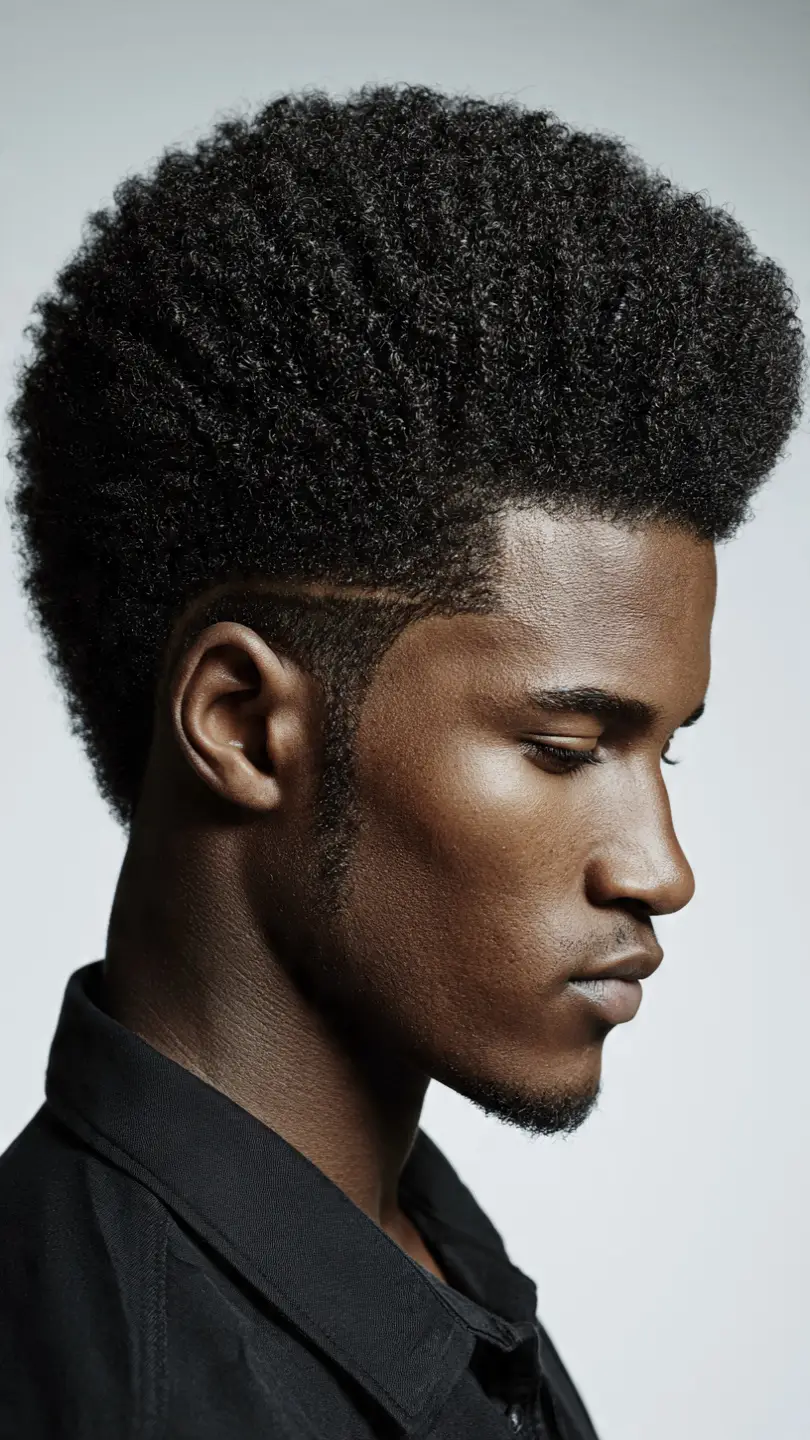
A well-shaped afro with a precise line-up is one of the most intentional styles in this list. The shape-up does for the afro what the frame does for a painting — it makes everything inside it look deliberate. The shape and symmetry of the afro matters more than the size — proportion is everything.
What you’ll need:
- A natural afro (or blow-out for added volume)
- A sharp line-up at the hairline and temples
- A moisturizing cream or shea butter
- A wide-tooth pick for shaping
- Optional: a light sheen spray for definition
How to style it: Keep the scalp and hair moisturized daily — dry afro hair loses shape and definition quickly. Use a pick starting from the outside edges, lifting outward and upward to shape, not downward. Always pick outward from the center — it builds symmetry instead of collapsing it. Keep the line-up tight; a fresh shape-up every 2 weeks maintains the architectural quality that makes this style stand out.
Humidity note: Light humidity actually benefits afro texture — it adds moisture and reduces breakage.
The Sleek Low Taper — The Style for Men Who Want Clean Without the Commitment
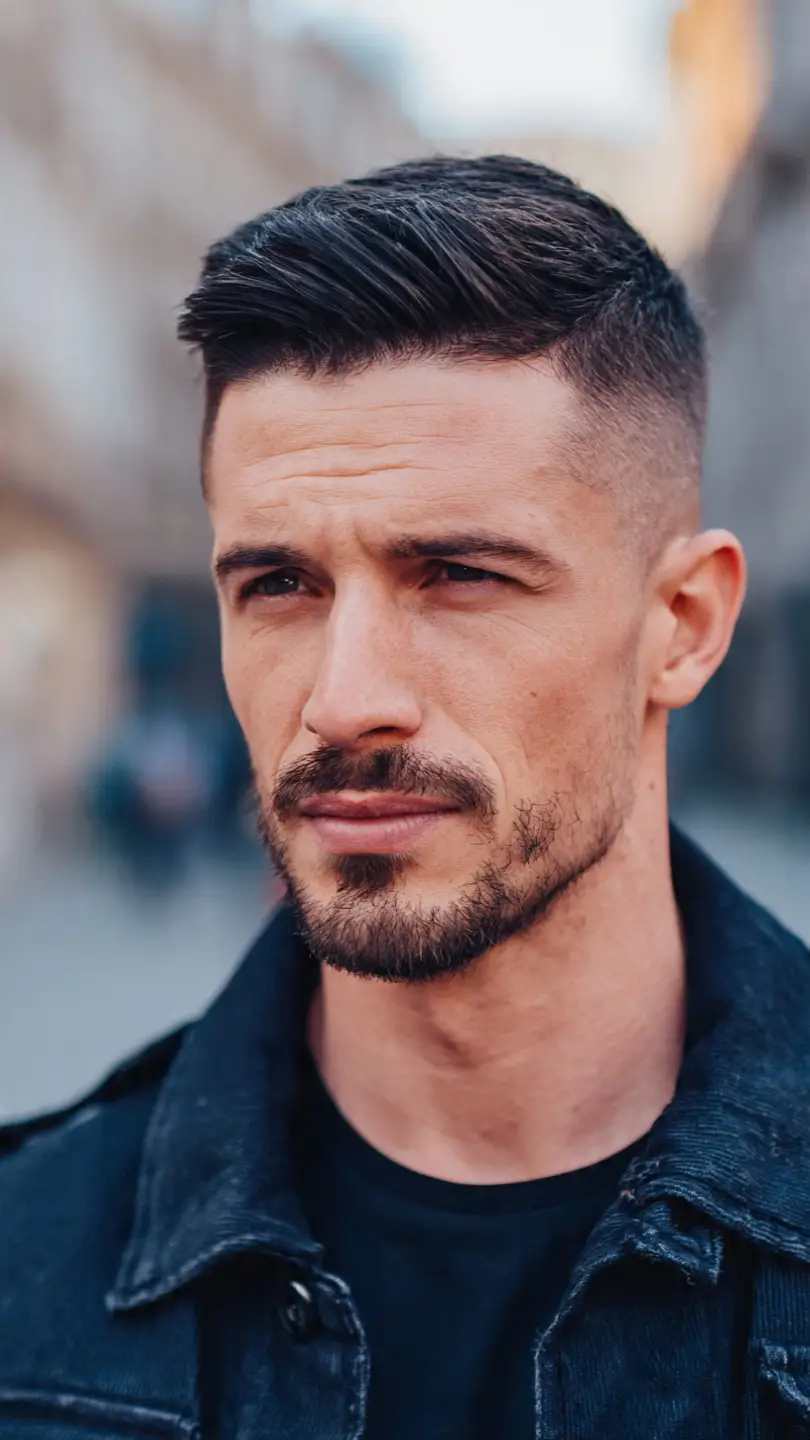
The low taper is the quietest style on this list. No dramatic fade, no bold texture — just a clean, gradual reduction from top to sides with a neat finish. It works on almost every face shape, suits every setting, and requires the least barber frequency of any faded style. Its power is in its restraint — it never competes with what you’re wearing.
What you’ll need:
- A low taper cut (not a fade — the transition is gradual, not abrupt)
- A light matte product or nothing at all
- A soft bristle brush
- Barber visits every 4–6 weeks
- Optional: a light styling cream for humid days
How to style it: Apply a small amount of matte cream or pomade to damp hair and style in whatever direction suits your natural growth pattern. This style works with your hair, not against it. Let your natural growth direction guide the style — fighting it adds effort and produces worse results. A soft bristle brush lays everything down cleanly on days when you want a more polished finish.
Variation: A low taper with a defined part gives you slightly more structure if plain feels too minimal.
The Bottom Line
Every style in this list succeeds for the same three reasons: it suits the hair texture it’s designed for, it accounts for real summer conditions, and it’s maintained at the right frequency. Skip any one of those and even the best cut underperforms.
IMO, the Textured Crop, the Curly Top with Low Fade, and the Afro with Shape-Up are the strongest picks here — each one works with the hair rather than against it, which matters more in summer than any other season. Find your texture, find your style, own it consistently.
