
13 Bald Men Facial Hair Styles for a Sharp Appearance

Thinking about growing facial hair after shaving your head? The right beard or mustache can completely transform your look. In this post, you’ll discover stylish bald men facial hair ideas that add personality, balance, and confidence to your appearance.
The first time I shaved my head, I spent more time thinking about my beard than my hair. Once the hair was gone, every feature on my face became more noticeable.
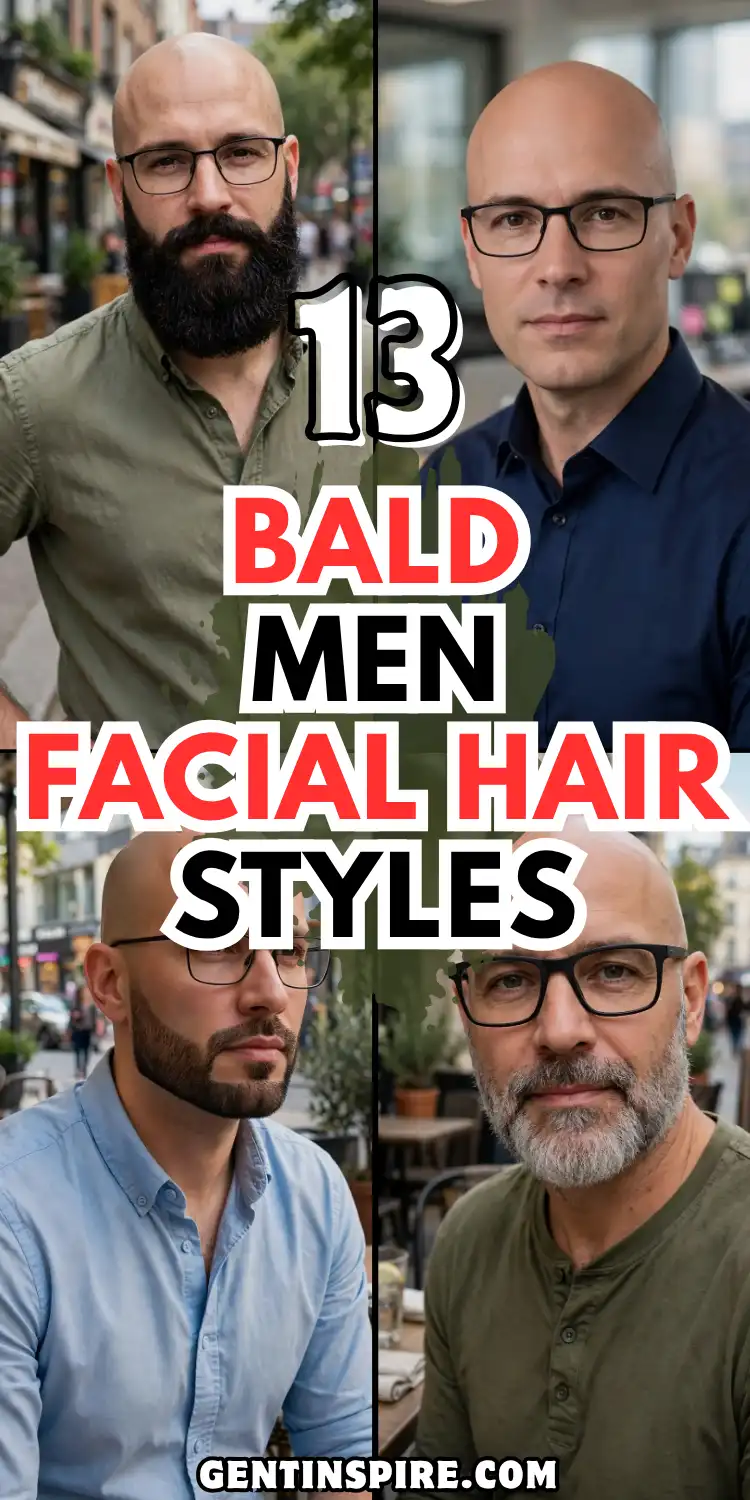
I quickly realized that the right facial hair wasn’t just a trend—it was the key to creating balance.
At first, I stayed clean-shaven, but my face looked rounder than I expected. After trying a short boxed beard, my jaw appeared more defined, and my overall look felt sharper. That simple change completely transformed my confidence.
If you’re embracing the bald look or want to refresh your style, these Bald Men Facial Hair ideas will help you find a beard that complements your face shape and enhances your appearance.
The Heavy Full Beard — The Classic Power Move
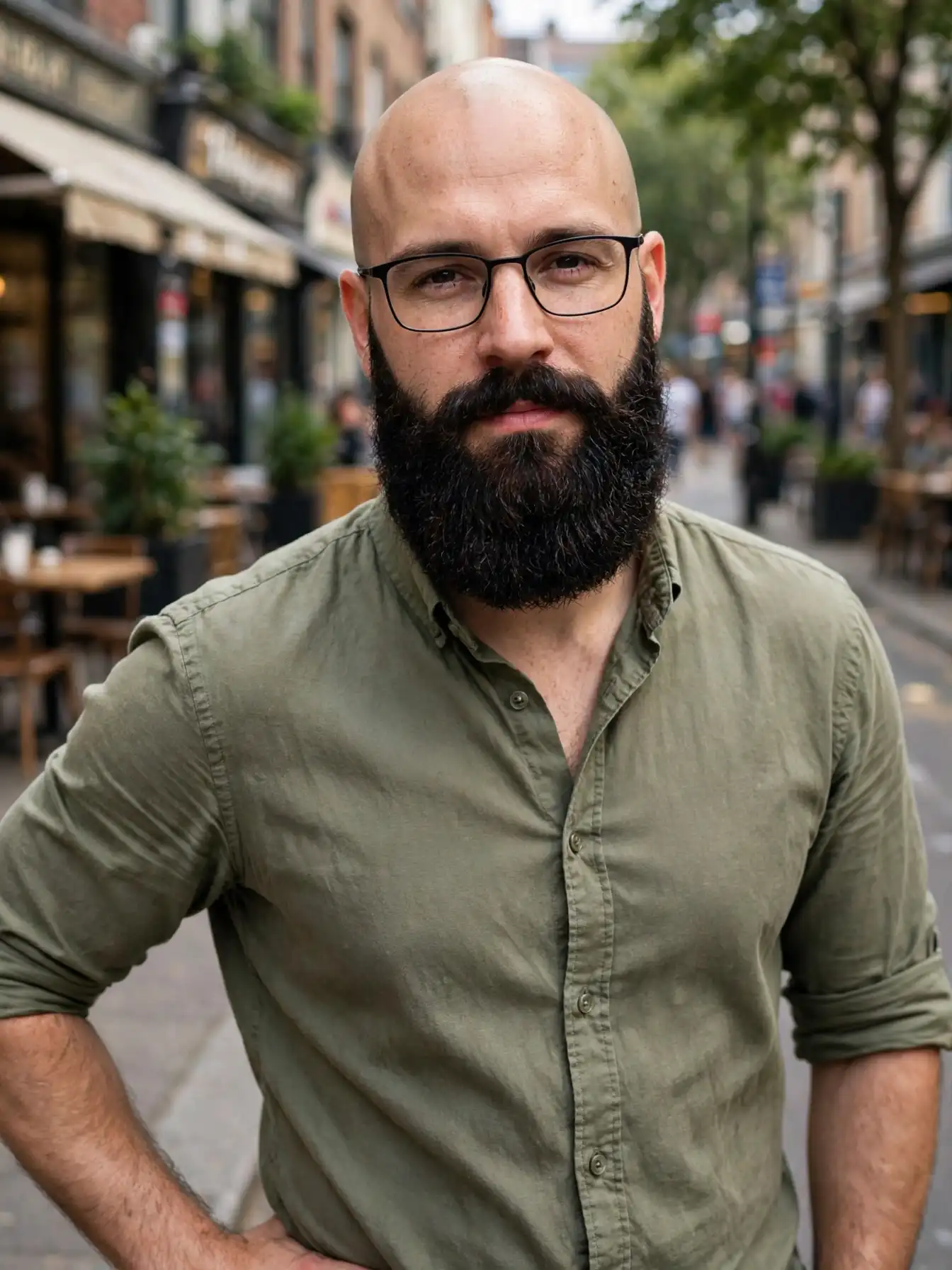
This is the most recognized bald-plus-beard combination for a reason. A dense, well-kept full beard rebalances the entire head, adding weight and masculinity where the missing hair left a void. Best for men with strong growth across cheeks, jaw, and neck.
What you’ll need:
- 4–6 weeks of uninterrupted growth
- A quality beard trimmer with length guards
- Beard oil for softness and sheen
- A straight-edge razor or barber visit for neck and cheek lines
- Beard balm for shape and hold
- Boar bristle brush for training direction
How to wear it: Let the beard grow past the scruff stage before touching it — most men quit too early.
Once full, set a consistent length (1–2 inches is the sweet spot for bald men) and get the neckline shaped by a barber at least once to establish the line correctly.
Never let the neckline creep up to the jaw — it shortens your face dramatically.
If growth is patchy on the cheeks: Drop the cheek line intentionally and run a shorter, denser beard along the jaw and chin only — it reads as a style choice, not a limitation.
The Short Boxed Beard — Controlled Aggression

The short boxed beard is the full beard’s sharper, more corporate-friendly cousin. It sits at half an inch to one inch, with defined geometric edges on the cheek line and a clean, squared-off bottom.
This style communicates discipline — it says the bald head was a deliberate choice.
What you’ll need:
- 3–4 weeks of growth
- Trimmer set to 5–8mm
- Precision trimmer for edge work
- Beard shaping tool or template
- Aftershave balm for cheek skin
- Clear beard gel for fine-tuning flyaways
How to wear it: Use a beard shaping tool to lock in symmetrical cheek lines — freehand cutting on a bald head looks uneven fast.
Keep the width at or just outside the corners of the mouth for the boxed effect. Trim every 4–5 days to maintain crispness.
The moment the edges blur, the whole style falls apart — schedule maintenance before you think you need it.
Cool weather swap: Let it grow to 1.5 inches through autumn and winter — the same shape at more length reads heavier and more seasonal without any technique change.
The Stubble — The Hardest Easy Style to Get Right

Stubble looks effortless. It isn’t. The difference between attractive stubble and a man who forgot to shave is exactly 1mm and a clean neckline.
This style works on almost every bald man regardless of face shape because it adds texture without bulk.
What you’ll need:
- 5–10 days of growth (varies by individual)
- Trimmer with 3mm and 5mm guard
- Precision liner for the neck
- Exfoliating face wash to prevent ingrown hairs
- Lightweight moisturizer for the shaved scalp and face
- Aftershave oil, not alcohol-based splash
How to wear it: Set your trimmer to 3–5mm depending on your density — thicker growth looks better shorter.
Define a clean neckline two finger-widths above the Adam’s apple and shave everything below it.
Blend the cheek line softly rather than carving a hard line, which looks costumey at this length.
Moisturize the scalp and face together — dry, ashy skin under short stubble kills the whole effect.
If stubble grows patchy: Run a 2mm guard across the whole face for even ultra-short coverage — it reads as a low shadow rather than failed growth.
The Goatee — Face-Lengthening Precision Tool

The goatee — chin hair plus mustache, cheeks shaved clean — is the most effective face-lengthening style a bald man can wear.
For round or wide faces, a well-shaped goatee adds the vertical line the missing hair no longer provides. It’s direct, classic, and requires almost no growth time.
What you’ll need:
- 2–3 weeks of focused chin and upper lip growth
- Precision trimmer for outlining
- Standard razor for clean cheek shaving
- Beard oil for the chin patch
- Shave gel for frequent cheek maintenance
- Mirror setup with good side lighting
How to wear it: Keep the mustache connected to the chin beard — the disconnected goatee (Van Dyke style) can work but is less forgiving on a bald head.
Shape the chin section into a rounded or slightly pointed bottom to maximize the lengthening effect.
Shave the cheeks every 2–3 days to keep the contrast sharp. The cleaner the shaved zones, the more intentional the goatee reads.
Footwear note: This style pairs exceptionally well with sharp, structured clothing — the precision of the goatee demands the outfit matches its energy.
The Van Dyke — The Disconnected Statement
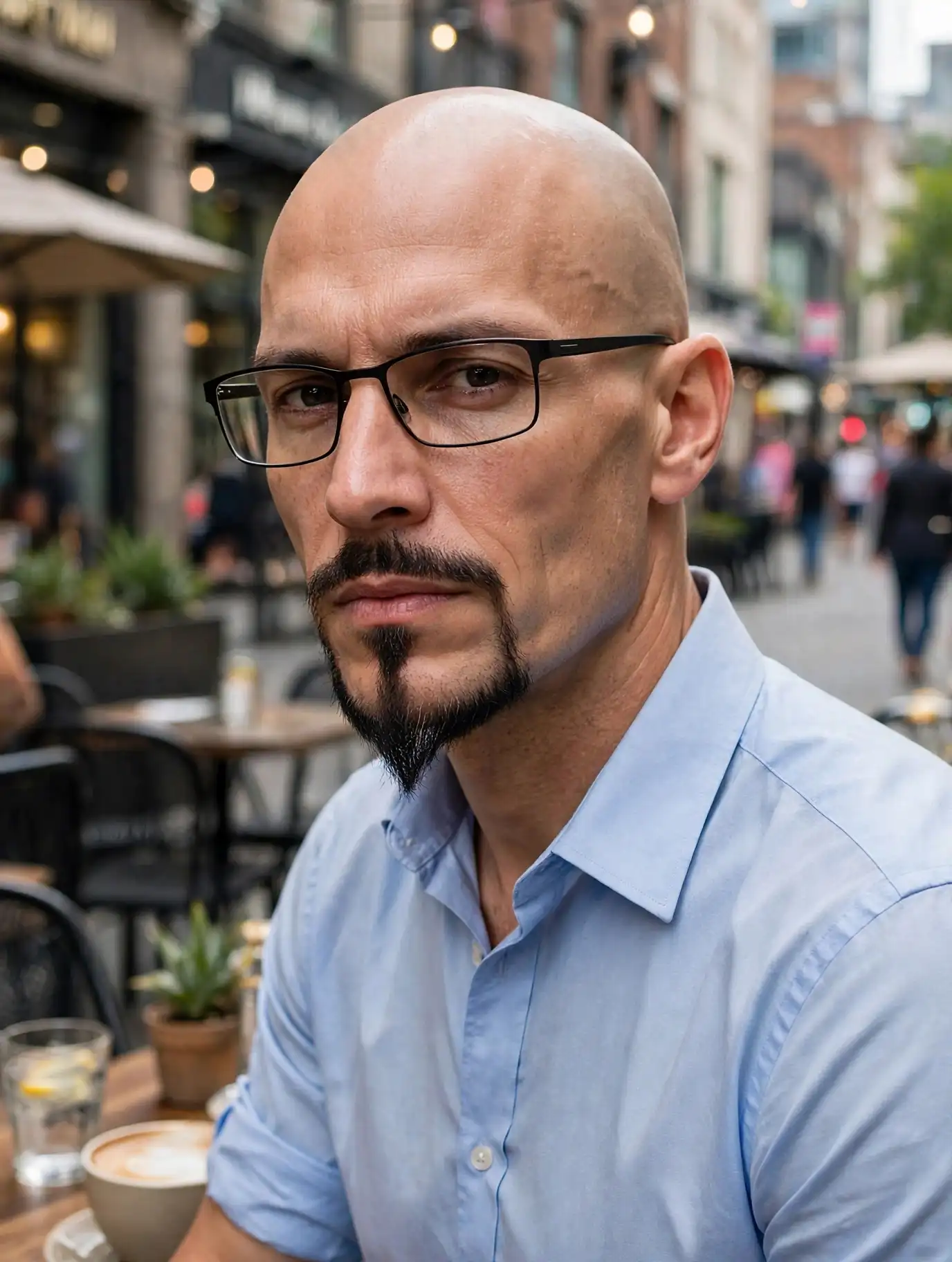
The Van Dyke separates the mustache from the chin beard with clean-shaved skin in between. It’s a bolder move than a standard goatee.
On a bald head, the Van Dyke creates a strong focal point on the lower face — it commands attention deliberately. Best for men with strong, angular features.
What you’ll need:
- 3 weeks of chin and upper lip growth
- Precision trimmer with a detail blade
- Razor for maintaining the disconnect zone
- Mustache wax for controlling the upper lip
- Beard balm for the chin section
- Good lighting and a magnifying mirror
How to wear it: The disconnected zone between mustache and chin should be shaved completely smooth — even light shadow there muddles the effect.
Keep the mustache trimmed to a medium length, styled slightly downward at the corners.
The chin section can be worn pointed or rounded, but pointed extends the face more effectively on a bare scalp.
The shaved zones need the same attention as the grown sections — neglect them and the whole style reads messy.
If this feels too bold: Grow the connection in slightly and wear it as a standard goatee — you keep the same face-lengthening effect without the sharp contrast.
The Anchor Beard — The Underrated Option

The anchor beard combines a pointed chin beard with a thin mustache connected by a line running down the center of the chin. It traces the jaw like an anchor shape.
Most men don’t know this style exists — which is exactly why it works so well in 2025. It suits oval and square faces best.
What you’ll need:
- 3–4 weeks of growth
- Precision trimmer with a very fine detail head
- Straight razor or outliner for the connecting strip
- Beard shaping template
- Beard oil
- Magnifying mirror for symmetry work
How to wear it: The anchor lives and dies on precision — asymmetry ruins it immediately.
Use a template on both sides and check from multiple angles before finalizing lines. Keep the chin section short and neat, between 1–2cm in length.
The connecting strip down the center chin should be no wider than 5mm. When in doubt, go narrower — a thinner anchor reads cleaner than a wide one.
Cool weather swap: Let the chin section grow out to a short full chin beard while keeping the mustache — it transitions into a classic goatee without starting from scratch.
The Circle Beard — The Office-Safe Power Style

The circle beard is a rounded goatee — mustache and chin hair connected in a continuous oval shape. It’s neat, professional, and surprisingly effective on a bald head.
This is the style that works in a boardroom and a bar on the same day without adjustment. It suits almost every face shape.
What you’ll need:
- 2–3 weeks of growth
- Trimmer with 8–10mm guard for bulk
- Precision liner for the circle outline
- Beard shaping tool
- Beard oil or balm
- Shave gel for maintaining clean cheeks
How to wear it: The circle should sit centered on the lower face — check both sides of the mouth are covered evenly by the mustache before finalizing.
Keep the beard length consistent throughout the circle using the same guard length from mustache to chin. Trim the outline every 4–5 days; the circle gets sloppy fast without maintenance.
If the mustache grows faster than the chin, trim it independently — uneven growth inside the circle breaks the shape.
The Chin Strap — High Risk, High Reward

The chin strap runs a narrow strip of beard along the jaw line from ear to ear, no mustache, shaved cheeks and upper lip. It’s the most divisive style on this list.
Done right, it frames the jaw like a portrait — done wrong, it looks like 2004 never ended. The difference is width and precision.
What you’ll need:
- 3 weeks of growth
- Trimmer set to 6–8mm for the strip
- Precision liner for the edges
- Razor for cheek and upper lip maintenance
- Beard shaping tool for symmetry
- Aftershave balm for the large shaved areas
How to wear it: Keep the strap narrow — no wider than 1.5cm. Anything wider starts reading as an overgrown beard rather than a deliberate chin strap.
The strip should follow the natural jaw line exactly; lifting it onto the cheeks kills the effect. Shave the upper lip completely clean.
Maintain the edges every 3 days maximum — this style shows growth faster than any other on this list.
If this feels too bold: Add a short mustache to soften the contrast and transition it toward a circle beard territory — less aggressive, still precise.
The Handlebar Mustache — Personality-Forward
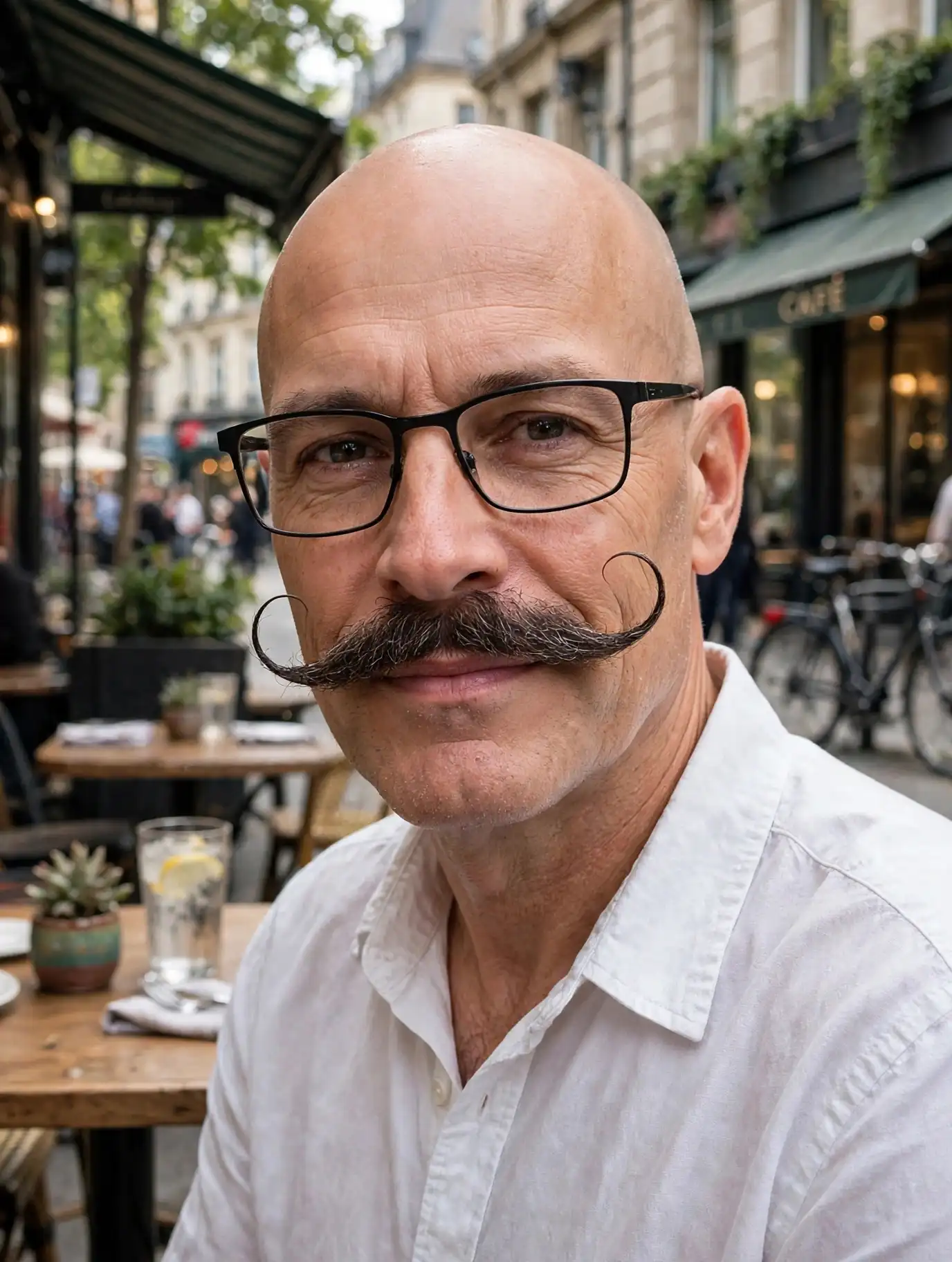
A waxed handlebar mustache with a clean-shaved face and bald head is a complete aesthetic statement. It reads as confident, eccentric, and intentional in equal measure.
This works because it ignores convention entirely — and on a bald head, that reads as controlled boldness rather than accident. Best for men comfortable owning a strong personal style.
What you’ll need:
- 6–8 weeks of upper lip growth minimum
- Strong-hold mustache wax (Fisticuffs or Dapper Dan)
- Fine-tooth mustache comb
- Small scissors for trimming stray hairs
- Precision razor for shaving everything below the mustache
- Patience — this style takes months to develop properly
How to wear it: Train the mustache outward from the center daily using wax, even before it’s long enough to curl.
The curl should start at the corner of the mouth and sweep upward — never downward, which reads as a drooping, unintentional shape. Re-wax throughout the day as needed.
The bald head combined with a handlebar demands extremely clean, well-fitted clothing — the contrast between strong style above and sloppy dress below is jarring.
Cool weather swap: Grow a short chin beard to balance the mustache’s weight in colder months — it stops the handlebar from reading as a costume.
The Balbo Beard — The Sophisticated Disconnect

The Balbo combines a trimmed floating chin beard with a separate mustache and shaved cheeks, similar to a Van Dyke but with more volume in the chin section.
Named after Italian military figure Italo Balbo. The Balbo gives a bald man structure, sophistication, and an edge that a full beard can’t — it’s grown-man facial hair. It suits square and oval faces particularly well.
What you’ll need:
- 4 weeks of growth
- Trimmer set to 10–12mm for chin volume
- Precision liner for disconnect zone
- Razor for cheek maintenance
- Mustache wax for light control
- Beard oil for the chin section
How to wear it: The chin section should be fuller and more rounded than a goatee — think of it as a short beard that’s been edited rather than a grown-out chin patch.
The mustache sits separately and clean, styled flat or with a slight outward curve. Maintain the disconnect zone between them with a razor every 2–3 days.
Don’t let the chin section stray too wide toward the jaw — keep it centered below the mouth to preserve the Balbo’s distinctive floating appearance.
If this feels too bold: Soften the disconnect by letting light stubble connect the mustache and chin — it shifts into Van Dyke or goatee territory with minimal regrowth needed.
The Extended Goatee — The Shape-Up Specialist

The extended goatee keeps the mustache and chin beard of a classic goatee but stretches the beard along the jaw line slightly — not a full chin strap, but wider than a pure goatee.
It’s the style that gives a bald man the most jaw definition without committing to a full beard. Works well on longer and oval face shapes.
What you’ll need:
- 3–4 weeks of growth
- Trimmer with multiple guards (6mm–12mm)
- Precision liner
- Beard shaping tool for extension symmetry
- Shave gel for cheek maintenance
- Beard oil
How to wear it: The extensions along the jaw should fade or taper as they move back — a hard stop looks unnatural.
Bring the line back to roughly the back edge of the chin, no further than where a shadow beard would naturally concentrate. The mustache connects normally to the chin section.
Keep the extension length slightly shorter than the chin beard — it should suggest jaw definition, not replicate a chin strap.
Footwear note: This style handles both casual and smart-casual settings equally — it’s adaptable without losing its edge.
The Salt-and-Pepper Natural Beard — Age as an Asset

This is not a specific shape — it’s a philosophy. Let the beard grow naturally at medium length, embrace grey and silver growth, skip artificial color, and maintain clean edges without over-engineering the shape.
On a bald man, salt-and-pepper growth reads as distinguished, not aging — it’s the style that turns a bare scalp from a concern into an asset. Best for men over 35 with natural grey coming through.
What you’ll need:
- 5–6 weeks of growth
- Trimmer set to 15–20mm for natural length
- Barber for shape and neckline (monthly)
- Beard oil with argan or jojoba for softness
- Boar bristle brush for grooming direction
- Scalp moisturizer matched to your skin tone
How to wear it: Resist the urge to dye the beard — dark dye on a bald head with natural grey elsewhere creates an obvious disconnect that reads as insecurity.
Embrace the silver and keep the shape loose but intentional: a rounded bottom edge, clean neckline, and soft cheek lines.
The grooming standard here is moisturized skin and a brushed, conditioned beard — the shape matters less than the health and texture of the growth.
Cool weather swap: Push to a fuller length in winter — salt-and-pepper at 2 inches is one of the strongest statements a bald man over 40 can make.
The Clean Shave — The Counterintuitive Wildcard

No beard. No stubble. Just a smooth face and a smooth head. This belongs on the list because it’s the option most bald men consider and most articles talk them out of.
The clean shave works — but only when the skincare is flawless, the head shape is strong, and the clothing picks up the slack. It’s the highest-risk, highest-reward choice on this list.
What you’ll need:
- A quality multi-blade razor or safety razor
- Pre-shave oil for both face and scalp
- Sensitive-skin shave gel
- High-quality aftershave balm (not alcohol splash)
- SPF moisturizer for daily scalp protection ☀️
- Tinted moisturizer if skin tone is uneven
How to wear it: Shave face and scalp on the same schedule — mismatched growth between the two reads as neglect.
Moisturize both immediately after every shave. Build a skincare routine with SPF, an exfoliator, and a quality balm — without facial hair, every pore and patch of skin is on display.
The outfit must do the heavy lifting here — sharp, well-fitted clothes are not optional when you’re running zero facial hair and zero head hair.
If this feels too exposed: Grow two days of stubble and reassess — most men who think they can’t pull off the clean shave simply haven’t invested in their skincare yet.
The Bottom Line
Every style on this list comes back to three principles: intentionality (the style was clearly chosen, not defaulted into), maintenance (edges, skin, and texture are kept current), and balance (the facial hair compensates for what the missing hair no longer provides in terms of structure and weight).
IMO, the short boxed beard, the salt-and-pepper natural beard, and heavy stubble are the three strongest performers for most bald men — they’re forgiving on growth patterns, adaptable across occasions, and consistently read as deliberate. The bald head isn’t the problem. The facial hair that ignores it is.
