
How to Help Men Over 65 Open Up About Feelings While Building a Style Routine He Loves

You ask your dad how he is doing. He says, “Fine.” You ask again. Same answer. Many men over 65 grew up learning to keep their feelings to themselves.
Some carry old regrets they have never said out loud, like lost friendships, missed family time, or words left unsaid.
If you are wondering how to help men over 65 open up about feelings, a direct “we need to talk” usually makes the door close faster.
Try something with less pressure. Clothes.
This guide shows you how to sort his closet, pick a few pieces he feels good in, and build a weekly outfit routine together. You do not need any fashion skills.
By the end, he will have 5 core pieces, 3 ready-to-wear outfits, and a Saturday habit that gives him a relaxed time to talk if he wants to.
Why does this work? You sit side by side instead of face to face. His hands stay busy. Every shirt has a story, and stories are easier to tell than feelings. Some mornings will be quiet, and that is fine. Showing up is the real work.
- Soft cloth measuring tape
- Notepad and pen
- 3 boxes or laundry baskets
- Sticky notes for labels
- Full-length mirror
- A sturdy chair for him
- 10 matching hangers
- Phone camera for outfit photos
- Two mugs of coffee or tea
- Budget of $150 to $300 for new pieces (optional)
Hold up one old favorite and ask where it came from

Most closets hold one jacket or shirt he has kept for 20 years or more. Pick it up and ask, “Where did you get this one?” Stories come easier than feelings. A story about a wedding, a first job, or a trip often leads to the people he misses.
Keep your questions on the past and the object. If he answers in one word, ask, “What was that day like?” Then stop talking and let the quiet sit for a few seconds.
Sort the closet into keep, tailor, and donate piles
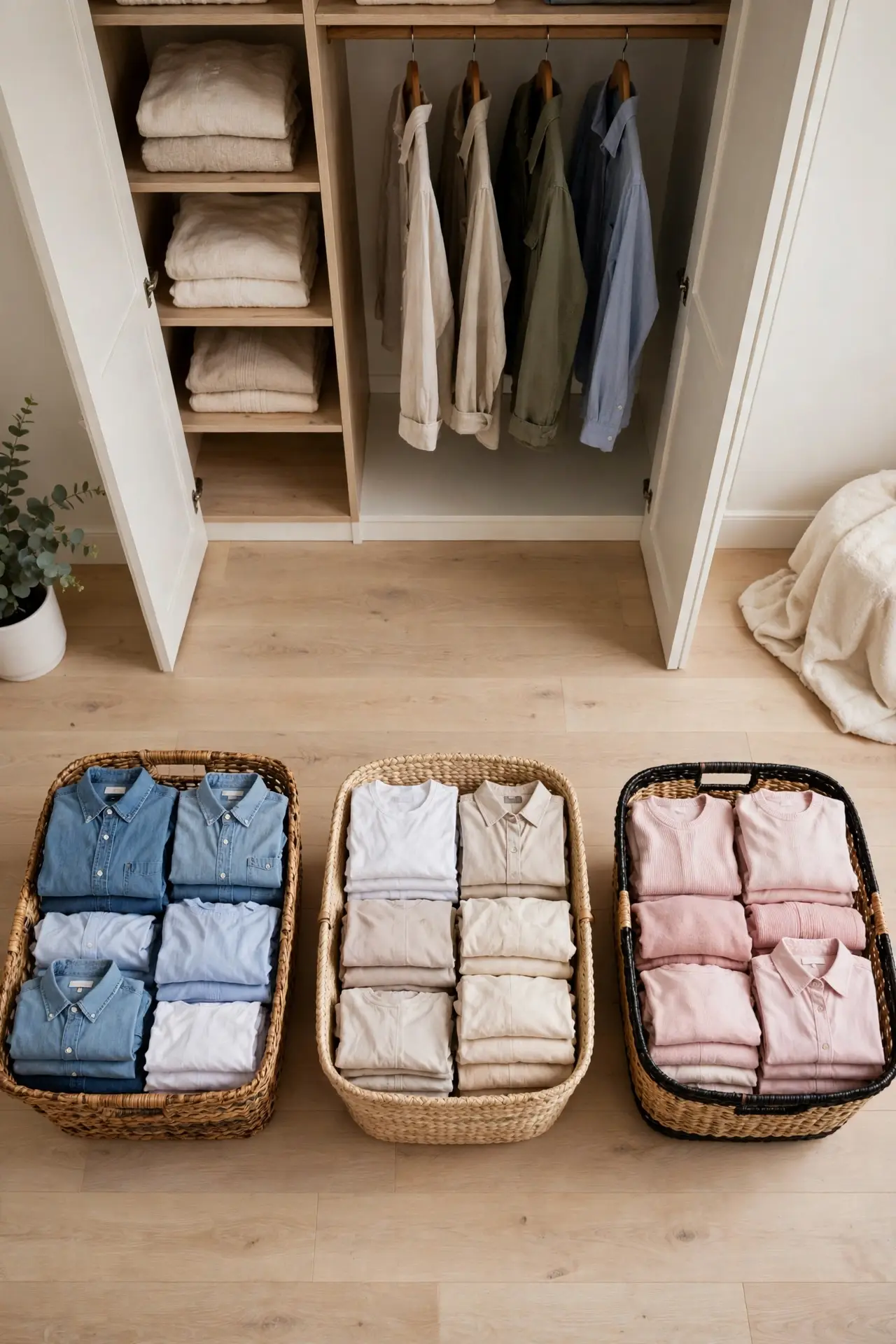
Make one rule before you start: if he has not worn it in 12 months, it goes in Donate.
- Label 3 boxes with sticky notes (grocery bags work too)
- Work one section at a time: shirts, then pants, then jackets
- Hold each piece up in the mirror
- Ask, “Do you wear this?” and drop it in a box
- Set story pieces on the chair, undecided
Fewer pieces make getting dressed less stressful. Do not rush the chair pile. Those clothes often hold the best conversations.
Listen without fixing when a hard story comes up
If he starts talking about a lost friend, a missed birthday, or something he wishes he had said, put the clothes down. Do not offer advice or a happy ending.
A short reply like “That sounds hard” or “Tell me more” keeps him talking, while fixing his story makes many men go quiet again.
Keep your eyes on the pile, since side-by-side talk feels lighter than eye contact. If he stops, wait 10 seconds before you speak.
Measure him for a comfortable fit
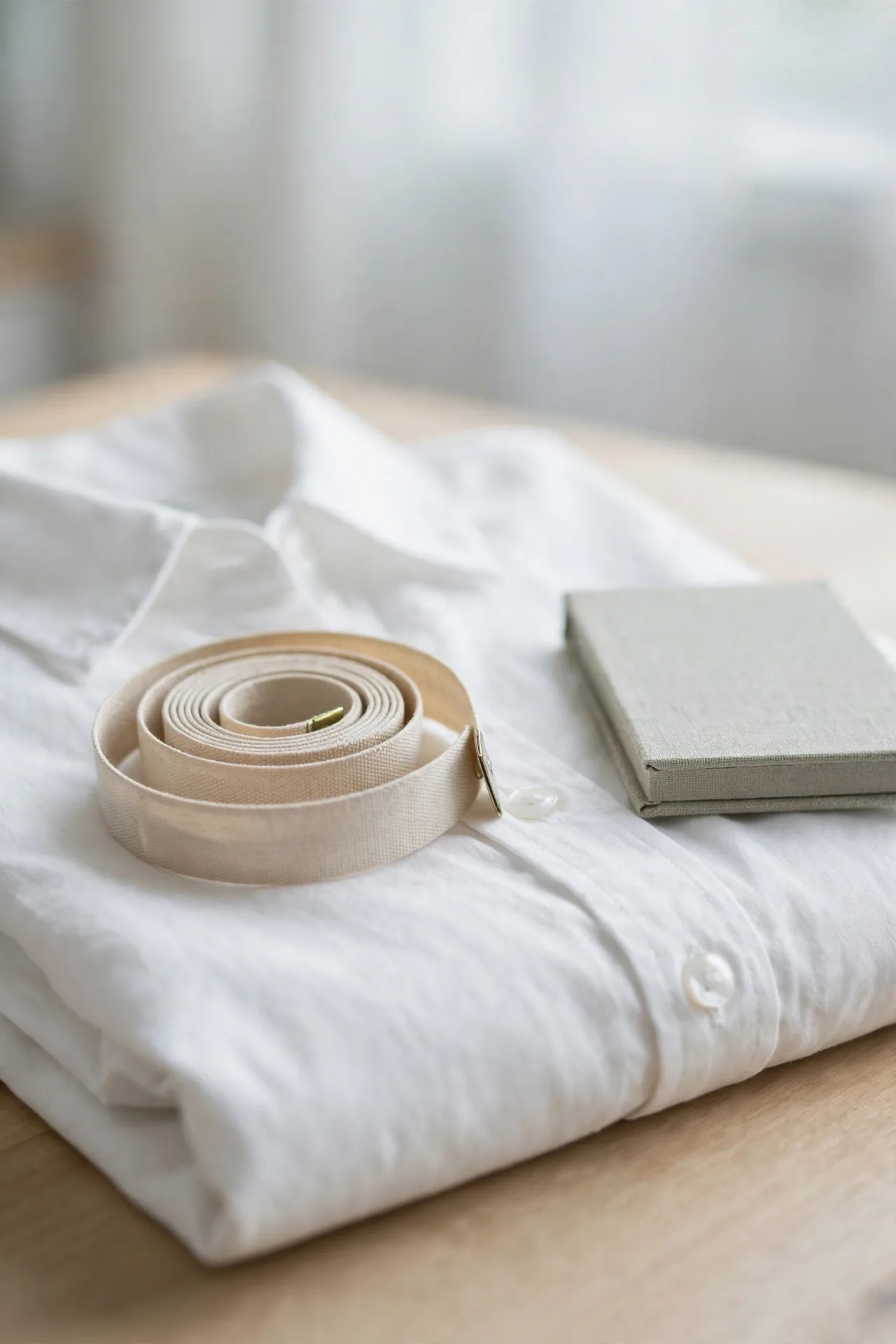
Old size tags lie. Bodies change over 30 years, so the size he has worn since the 1990s may be wrong now. Keep the tape flat and snug, with room for 1 finger underneath. Write down:
- Chest, at the widest part, under the arms
- Waist, over a shirt, where he normally wears his pants
- Inseam, from the crotch to the ankle bone
- Sleeve length, from the back of the neck to the wrist
No tape? Use string, then lay it along a ruler.
Choose five core pieces in colors that suit him
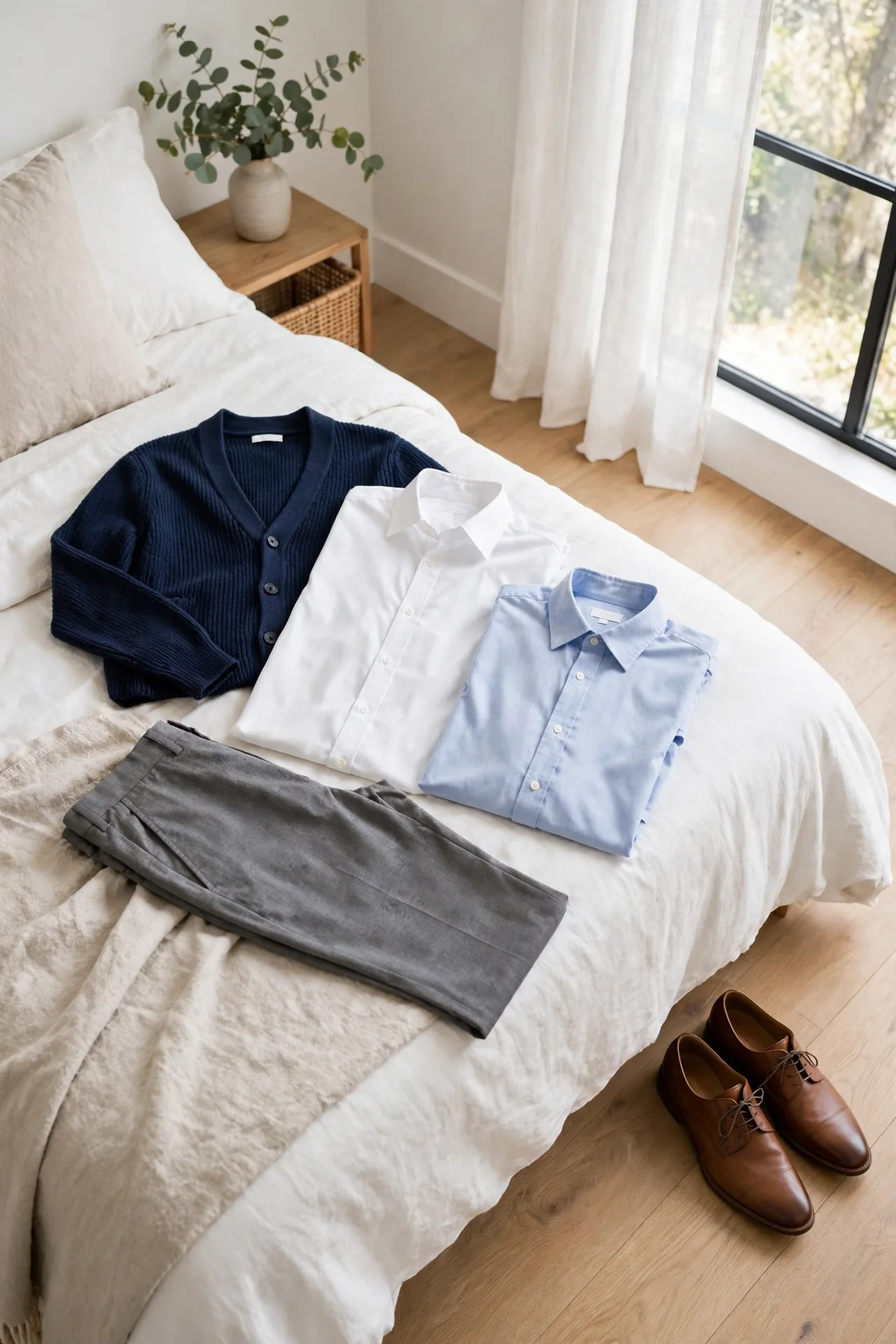
Wondering what to buy first? Aim for 5 pieces that all mix with each other: two button-up shirts, one pair of pants, one cardigan or light jacket, and one pair of shoes. Pick 2 or 3 main colors, such as navy, gray, and white.
Soft cotton and stretch waistbands feel better on a full day. Shoes need a grippy sole and room for his toes. On a tight budget, count the best pieces from the Keep pile and buy only the gaps.
Outfit planning: build three go-to outfits for the week
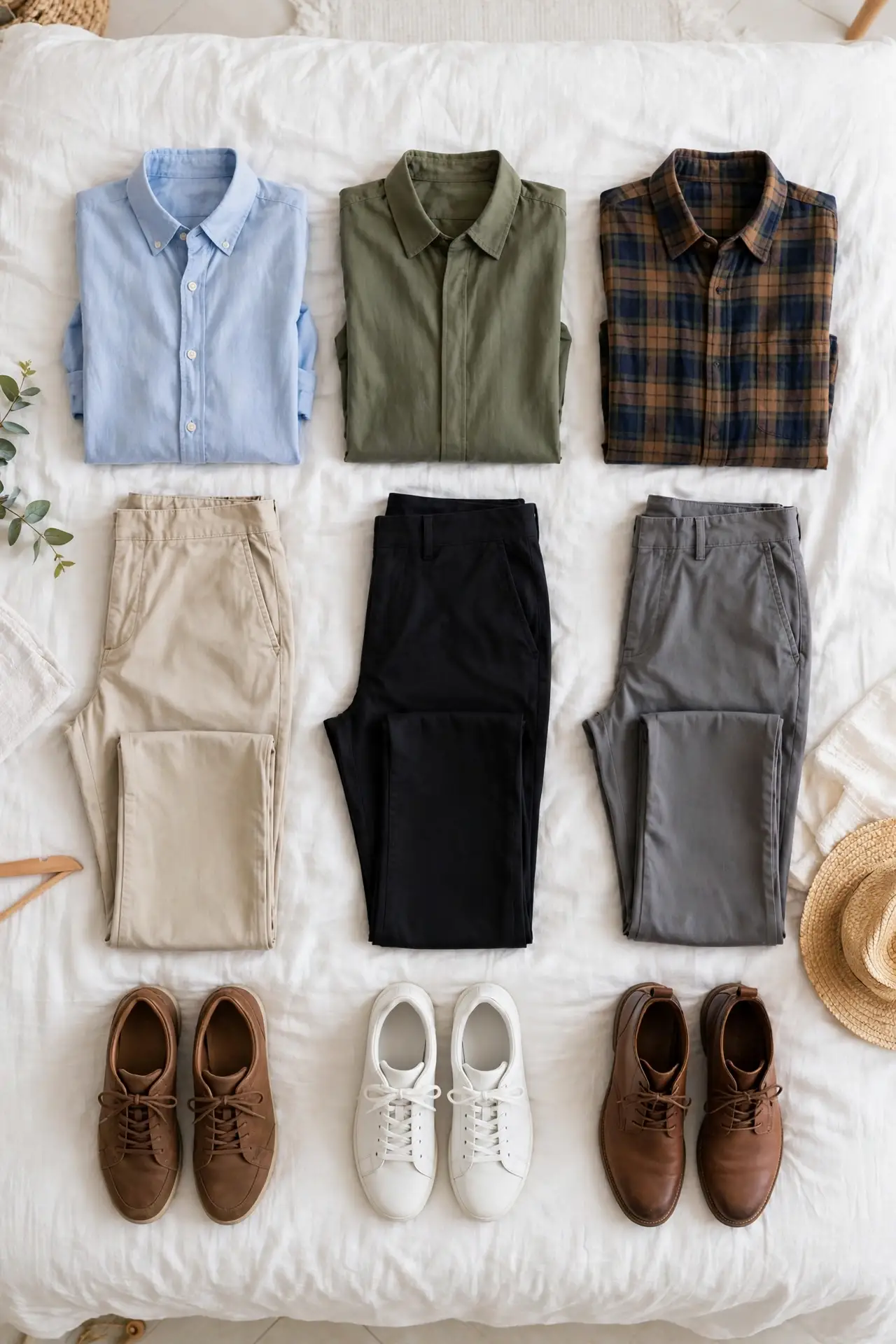
Three outfits cover most of a week, and fewer choices mean a calmer morning. Lay each one out on the bed and take a photo.
- Outfit 1: everyday, such as a shirt, pants, and shoes for errands
- Outfit 2: warmer, adding the cardigan or jacket
- Outfit 3: dressier, for church, a dinner, or a family visit
Save the photos in one phone album or print them and tape them inside the closet door. Make sure each of the 5 core pieces appears in at least 2 outfits, so nothing sits unused.
Help men over 65 open up about feelings with one gentle question

“What do you miss most about those years?” is a question he can answer in one sentence or in an hour. Ask it once, while you hang the finished outfits, so his hands stay busy and the moment feels low-pressure.
Common answers involve old friends, time with family, or something he always meant to do. Whatever he says, answer with “Thank you for telling me” and go back to the clothes.
Set a weekly outfit check-in to keep the habit going
Same day, same time, 15 minutes. Pick next week’s outfit together, check for loose buttons or stains, and ask which clothes he enjoyed wearing.
Steady visits feel safe, and trust grows from repeating them. If you cannot visit in person one week, a short phone call still counts.
- Pick a quiet Saturday morning
- Ask about one old favorite
- Sort into keep, tailor, donate
- Listen without fixing
- Measure him for fit
- Choose 5 core pieces
- Build 3 go-to outfits
- Ask one gentle question
- Set a weekly 15-minute check-in
Conclusion
You did it. You cleaned out a closet, built 5 pieces he feels good in, and set up a weekly habit you can both count on. That is a real way to start learning how to help men over 65 open up about feelings, with no pressure and no big speech.
Some Saturdays he will talk. Some he will not. Both count. Your next step is to shop for any gaps in his five pieces, or to plan a second session for his shoes and coats.
Save this pin so the steps are ready on Saturday morning. Then pour the coffee and start with the first old favorite.
