
How to Measure for a Suit: The Complete Guide for Men
A great suit should fit like it was designed just for you. The secret? Accurate body measurements. If you’re unsure where to start, these clear and simple suit measuring tips will guide you through each step so you can achieve a clean, flattering fit.
Choosing the perfect suit isn’t just about picking the right color or fabric—it’s about getting the perfect fit.
A well-fitted suit not only elevates your style but also boosts your confidence, making you look sharp and polished in any setting.
Whether you’re preparing for a wedding, a business meeting, or a special occasion, knowing how to measure for a suit is essential.
In this guide, we’ll walk you through everything you need to know, from taking accurate measurements to understanding fit types, so you can get a suit that feels custom-made—even if it’s off the rack.
Why Proper Suit Measurements Matter

A suit is more than just clothing; it’s an investment in your appearance. The difference between a good suit and a great suit often comes down to fit.
Ill-fitting suits can make even the most expensive fabrics look sloppy, while a properly fitted suit enhances your posture, sharpens your silhouette, and highlights your best features.
Here’s why precise measurements are crucial:
- Comfort: A suit that’s too tight restricts movement, while a loose suit looks baggy. Accurate measurements ensure comfort without compromising style.
- Proportion: Measurements help maintain balance across your shoulders, chest, waist, and legs, creating a clean, proportional appearance.
- Professional Appearance: For men in corporate settings, a well-fitted suit conveys confidence, attention to detail, and professionalism.
- Longevity: A suit that fits properly will maintain its shape and structure longer, protecting your investment.
By measuring correctly, you eliminate guesswork and increase your chances of buying a suit that looks tailored—even if it’s off-the-rack.
Tools You’ll Need
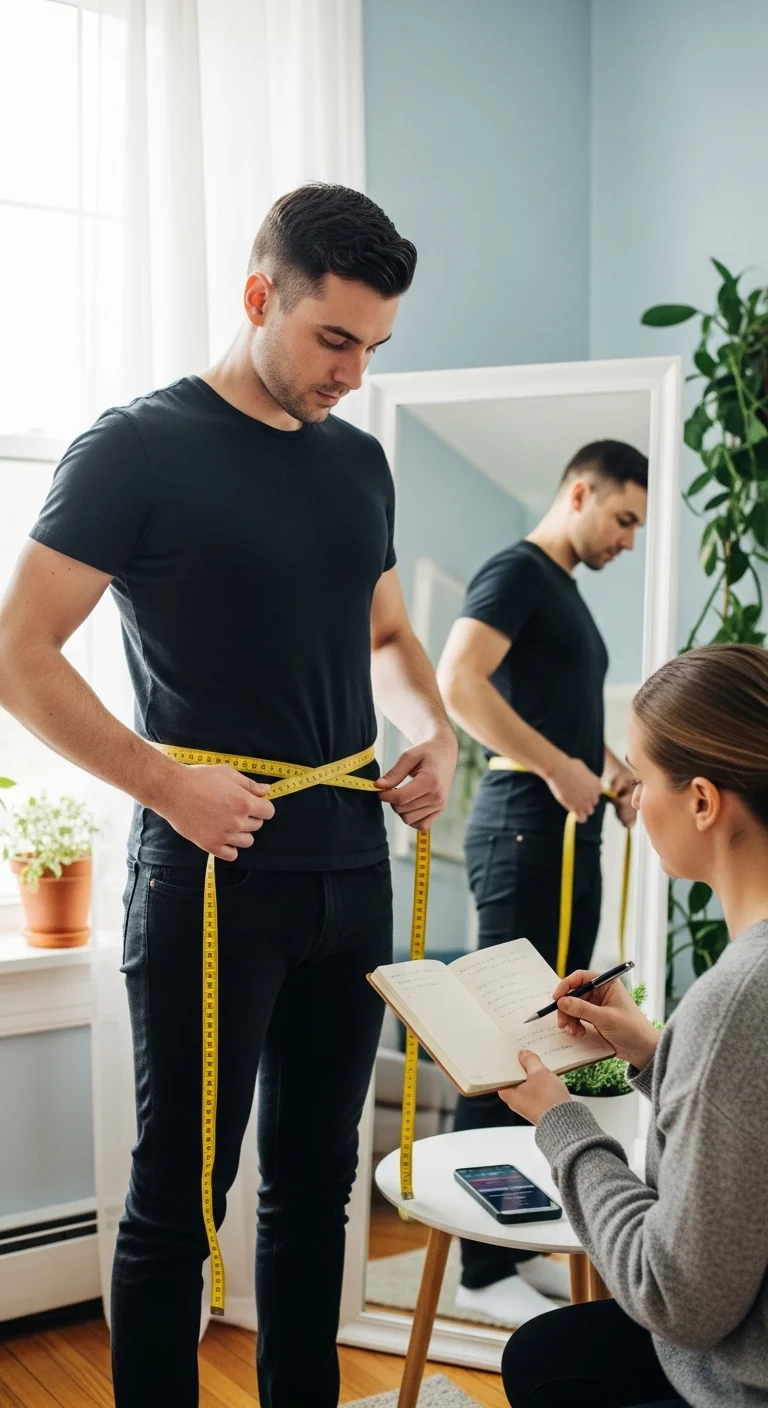
Before you start taking measurements, gather the following tools:
- Measuring tape: A flexible cloth or vinyl measuring tape is ideal.
- Mirror: A full-length mirror helps ensure accuracy when taking body measurements.
- Assistant (optional): While it’s possible to measure yourself, having someone assist ensures more precise results.
- Notebook or digital device: Record your measurements for easy reference.
Pro tip: Stand straight and relaxed while measuring. Avoid holding your breath or slouching, as it can affect accuracy.
Key Measurements for a Men’s Suit
To get a suit that fits perfectly, you’ll need to measure several areas of your body. Let’s break it down step by step.
1. Neck
Why it matters: The collar is one of the most noticeable parts of a suit. An ill-fitting collar can look sloppy and cause discomfort.
How to measure:
- Place the measuring tape around the base of your neck, where the collar sits.
- Insert a finger between the tape and your neck to allow for comfort.
- Record the measurement in inches.
Tip: Round up to the nearest half-inch for comfort.
2. Shoulders
Why it matters: The shoulder seam is crucial for the suit jacket’s fit. A seam that sits too far off your shoulder looks oversized, while one that’s too tight restricts movement.
How to measure:
- Stand naturally with arms relaxed.
- Measure from the end of one shoulder to the end of the other, across the back.
- Record the measurement.
3. Chest
Why it matters: The chest measurement ensures that your jacket fits properly across your torso without pulling at the buttons.
How to measure:
- Wrap the measuring tape around the fullest part of your chest, under your armpits, and across your shoulder blades.
- Keep the tape parallel to the ground and not too tight.
- Take a deep breath to avoid an overly tight fit, then record the measurement.
Tip: Add 1–2 inches for comfort and ease of movement.
4. Waist
Why it matters: Your waist measurement is essential for the jacket and trousers to sit correctly, ensuring the suit looks tailored.
How to measure:
- Find your natural waistline, usually just above your navel.
- Wrap the tape snugly but comfortably around your waist.
- Record the measurement in inches.
Tip: When buying trousers, consider the rise (distance from the waist to the crotch) for proper fit.
5. Hips
Why it matters: The hip measurement is crucial for trousers to fit comfortably without being too tight or loose.
How to measure:
- Stand straight and measure around the widest part of your hips and buttocks.
- Keep the tape parallel to the floor.
- Record the measurement.
6. Sleeve Length
Why it matters: Sleeves that are too long or short can ruin the suit’s look. Ideally, about a half-inch of shirt cuff should show.
How to measure:
- Start at the edge of your shoulder where the seam of the jacket will sit.
- Measure down to the wrist bone while your arm is slightly bent.
- Record the measurement.
7. Jacket Length
Why it matters: Jacket length affects proportion and overall style. A jacket that’s too long or short can throw off your silhouette.
How to measure:
- Measure from the top of your shoulder, near the neck, down to where you want the jacket to end—usually around mid-crotch for classic suits.
- Record the measurement.
8. Inseam
Why it matters: The inseam ensures your trousers fit perfectly in length, so they break properly at the shoes.
How to measure:
- Measure from the top of your inner thigh down to your ankle or where you want the trousers to end.
- Keep your leg straight and relaxed.
- Record the measurement.
9. Thigh & Knee
Why it matters: For modern and slim-fit suits, thigh and knee measurements ensure trousers are not too tight or loose.
How to measure:
- Thigh: Measure around the fullest part of your thigh.
- Knee: Measure around the knee, slightly bent.
- Record both measurements.
10. Crotch Depth (Rise)
Why it matters: The rise determines how high the trousers sit on your waist, affecting comfort and style.
How to measure:
- Sit on a chair with legs at 90 degrees.
- Measure from the waist down to the seat where the trousers will sit.
- Record the measurement.
Understanding Suit Fit Types
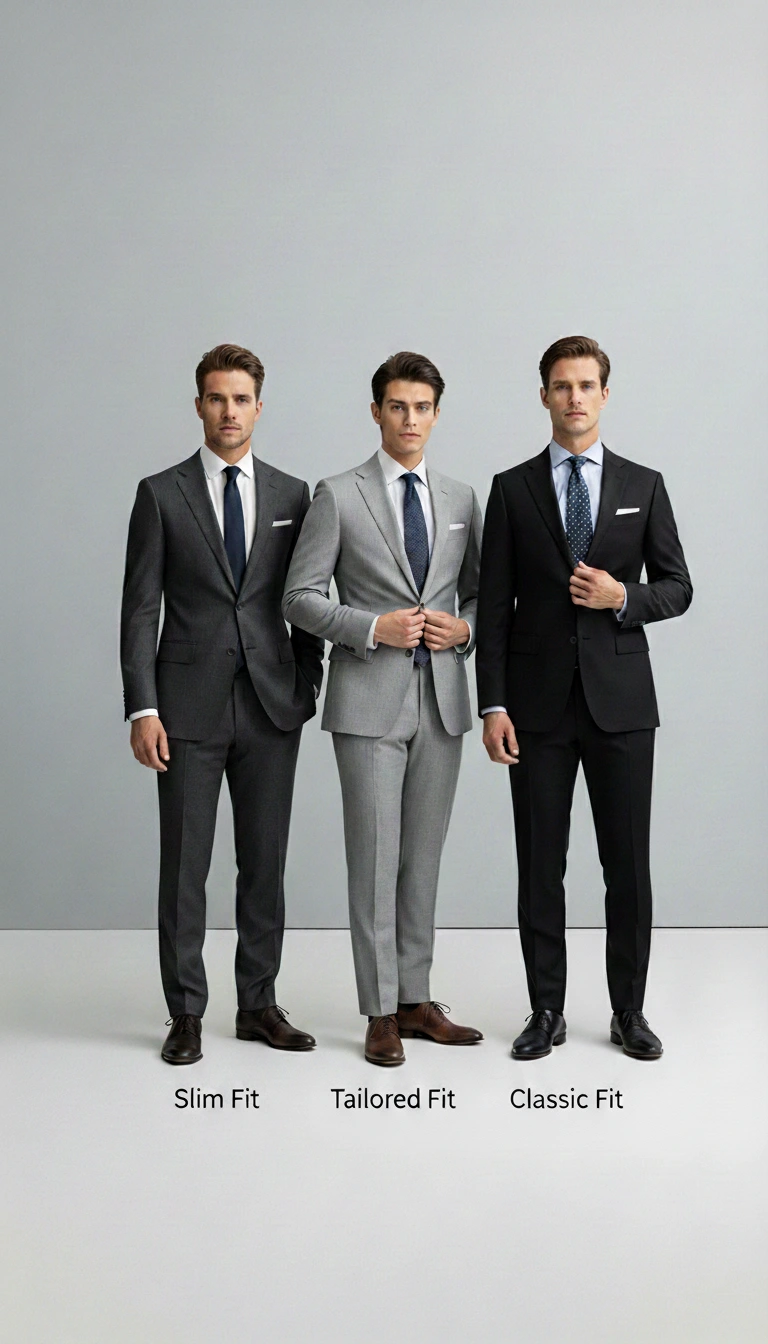
Once you have your measurements, it’s important to understand how they translate into fit. There are three main types:
1. Classic Fit:
- Looser, more traditional cut.
- Offers comfort and mobility.
- Ideal for taller or larger body types.
2. Slim Fit:
- Fitted closer to the body.
- Tapered waist and sleeves.
- Suitable for leaner frames.
3. Modern Fit:
- A balance between classic and slim fit.
- Slightly tapered but not tight.
- Works for most body types.
Choosing the right fit type depends on your style preference and body shape.
Tips for Accurate Suit Measurements
- Measure Multiple Times: Accuracy matters. Measure twice to ensure consistency.
- Use a Mirror: Helps avoid mistakes and ensures the tape is level.
- Wear a Dress Shirt: Take measurements over a shirt similar to what you’ll wear with the suit.
- Keep Good Posture: Stand straight but relaxed to mimic how the suit will sit naturally.
- Consult a Tailor: Even small adjustments by a professional can transform your suit fit.
Common Mistakes to Avoid
- Measuring too tightly: Can result in restrictive suits.
- Ignoring jacket vs. pants measurements: Both need attention; a fitted jacket doesn’t compensate for loose trousers.
- Not considering shrinkage: Wool or cotton suits may shrink slightly after the first wash or dry clean.
- Relying solely on size labels: Sizes like 40R or 42L are general; actual measurements are more precise.
How to Use Your Measurements
Once you have all your measurements:
- Off-the-Rack Suits: Compare your measurements to the store’s size chart. Focus on chest, shoulders, and waist. Minor tailoring can perfect the fit.
- Made-to-Measure Suits: Send your measurements to the tailor. They’ll create a suit specifically for your body.
- Custom-Tailored Suits: For the ultimate fit, a tailor will take additional measurements and make adjustments for posture, shoulder slope, and arm length.
Extra Tips for Men Buying Suits
- Fabric Choice Matters: Wool is versatile; cotton and linen work for casual occasions; silk and blends are luxurious.
- Button Style: Two-button suits are classic, three-button suits suit taller men, and single-button suits are formal eveningwear.
- Lapels: Notch lapels are versatile; peak lapels are more formal; shawl lapels are ideal for tuxedos.
- Trouser Break: The slight fold at the shoe should match your style preference—classic or modern.
Conclusion
Measuring for a suit may seem daunting at first, but with the right approach, it’s straightforward. Accurate measurements ensure comfort, style, and confidence.
Remember, a suit is more than just clothing—it’s a statement of sophistication and professionalism.
Take your time, measure carefully, and don’t hesitate to involve a professional tailor for the best results. With this guide, you’ll be equipped to buy or tailor a suit that fits like it was made just for you.