
How to Pick Sunglasses for Men: The Ultimate Style, Fit & Function Guide
Sunglasses are not just a seasonal accessory — they are one of the most powerful style tools a man can own. The right pair enhances your face shape, sharpens your outfit, protects your eyes, and communicates confidence without saying a word.
The wrong pair, however, can disrupt your proportions, cheapen your look, or simply feel uncomfortable.
Choosing sunglasses isn’t about grabbing the most popular brand or copying what a celebrity wears. It’s about understanding face structure, lens technology, fit, lifestyle needs, and personal style identity.
In this detailed guide, you’ll learn everything you need to confidently choose sunglasses that work for you — not against you.
Why Sunglasses Matter More Than You Think
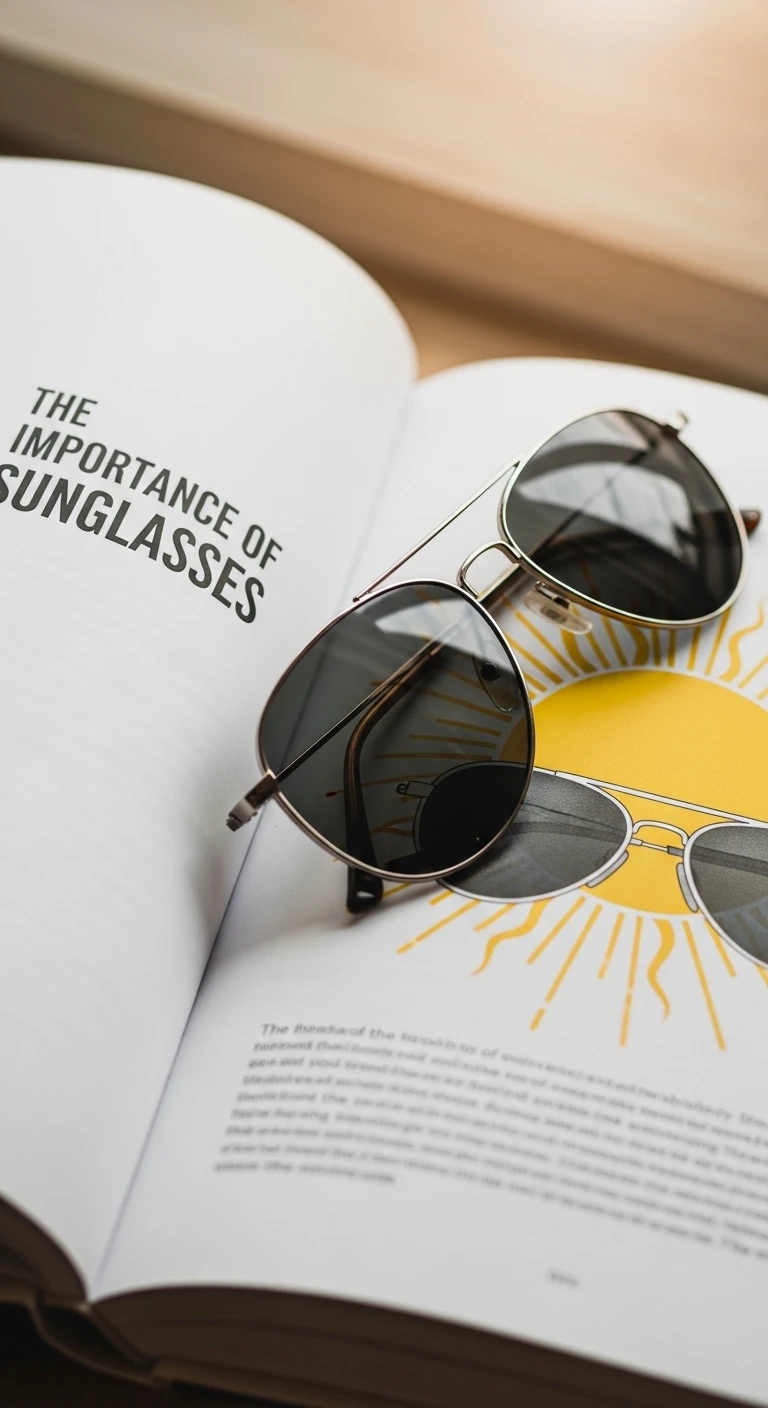
Before diving into shapes and materials, it’s important to understand why sunglasses are essential.
1. Eye Protection
Ultraviolet (UV) radiation from the sun can cause long-term eye damage, including cataracts and retinal issues. High-quality sunglasses block 100% of UVA and UVB rays.
2. Visual Comfort
Bright sunlight creates glare, especially around water, snow, and roads. Proper lenses reduce eye strain and improve clarity.
3. Facial Framing
Sunglasses frame the upper third of your face — the most attention-grabbing area. They influence how people perceive your confidence, maturity, and style.
4. Instant Style Upgrade
A simple T-shirt and jeans can look elevated with the right pair of sunglasses. They act like a “shortcut” to looking put together.
Step 1: Understand Your Face Shape
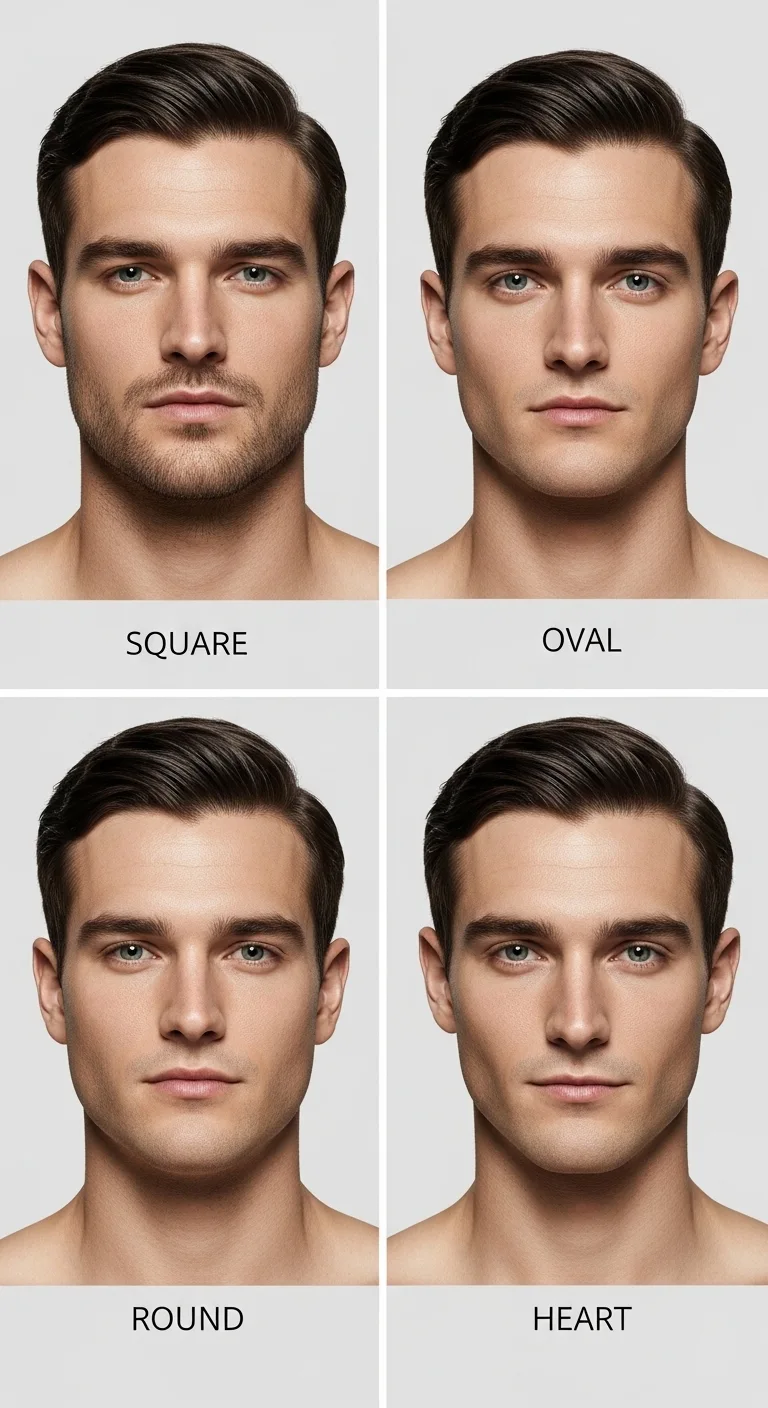
The foundation of choosing sunglasses is understanding your face shape. The goal is balance — create contrast and avoid exaggerating natural proportions.
Oval Face Shape
Characteristics:
- Balanced proportions
- Slightly narrower jaw than forehead
- Softly curved chin
Best Styles:
- Aviators
- Wayfarers
- Square frames
- Round frames
An oval face is the most versatile. Nearly all styles work. The key rule: avoid oversized frames that overpower your natural balance.
Round Face Shape
Characteristics:
- Equal width and length
- Soft jawline
- Full cheeks
Best Styles:
- Square frames
- Rectangular frames
- Angular shapes
Avoid small round sunglasses — they emphasize roundness. Instead, choose sharp lines to create structure and elongation.
Square Face Shape
Characteristics:
- Strong jawline
- Broad forehead
- Angular features
Best Styles:
- Round frames
- Aviators
- Oval shapes
Rounded frames soften strong angles and create visual harmony.
Heart-Shaped Face
Characteristics:
- Wide forehead
- Narrow chin
Best Styles:
- Thin metal frames
- Aviators
- Light-colored frames
Avoid heavy top frames that exaggerate forehead width.
Diamond Face Shape
Characteristics:
- Narrow forehead and chin
- Wide cheekbones
Best Styles:
- Oval
- Rimless
- Aviators
These styles balance cheekbone width without adding heaviness.
Step 2: Prioritize Fit Over Trend

Even the most stylish sunglasses fail if they don’t fit properly.
Signs of a Good Fit
- They don’t slide down your nose
- They don’t pinch your temples
- Your eyes sit centered in the lenses
- The frame width matches your face width
- The arms rest comfortably over your ears
If you constantly adjust them, they’re not the right size.
Step 3: Choose the Right Lens Technology
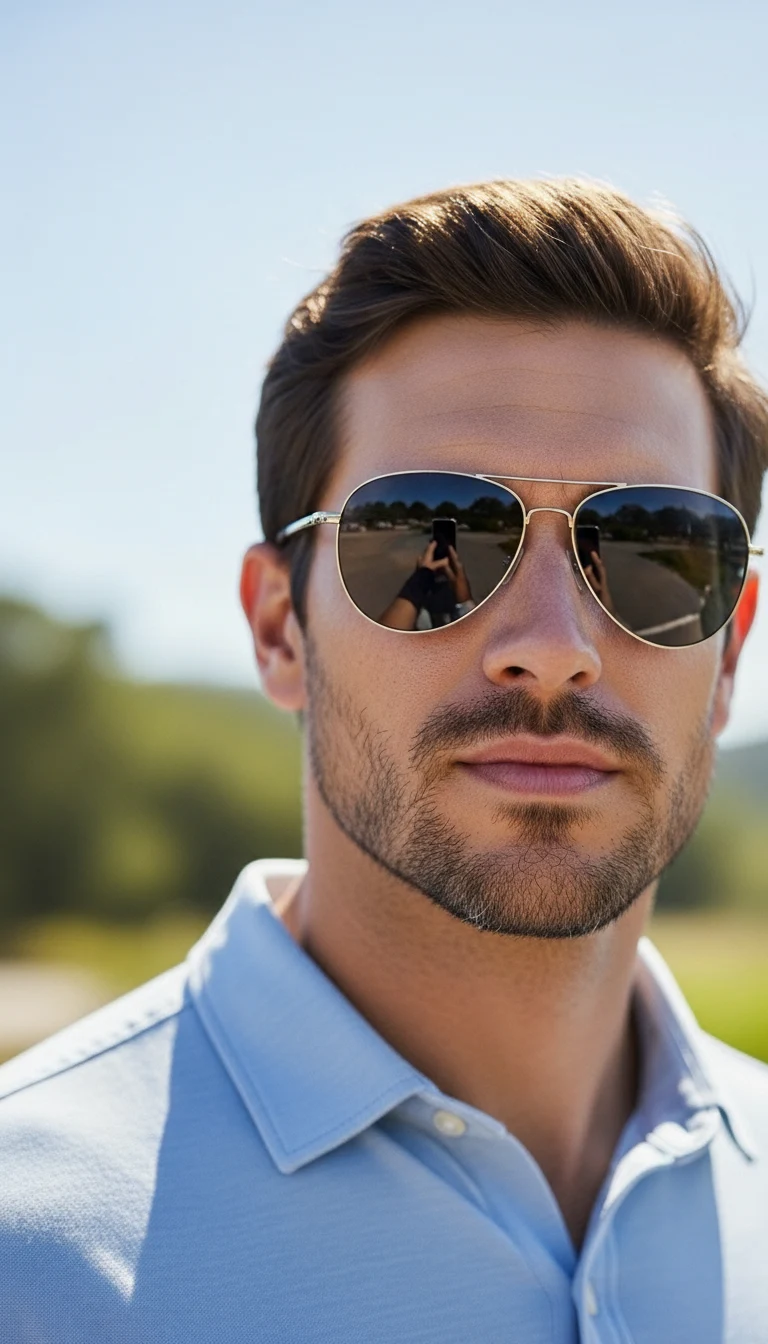
Sunglasses are about protection first — style second.
UV Protection (Non-Negotiable)
Always choose lenses labeled:
- 100% UV Protection
- UV400
Dark lenses without UV protection are dangerous. They make your pupils dilate while still allowing harmful rays in.
Polarized Lenses
Polarized lenses reduce glare caused by reflective surfaces like:
- Water
- Snow
- Glass
- Asphalt
They are excellent for:
- Driving
- Beach trips
- Fishing
- Outdoor sports
If you spend a lot of time outdoors, polarized lenses are worth the investment.
Lens Color Guide
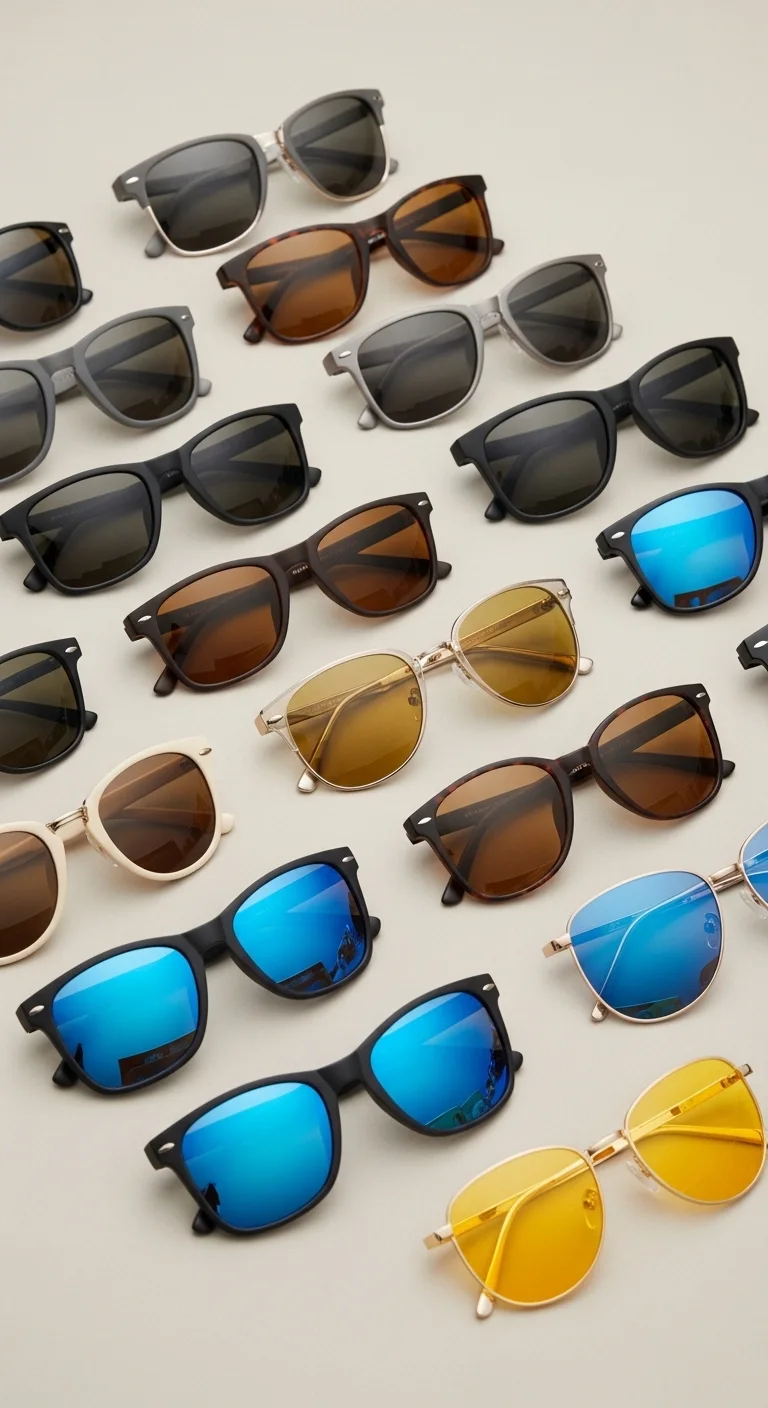
Grey
- Maintains natural color balance
- Ideal for everyday use
Brown
- Enhances contrast
- Great for sports and driving
Green
- Reduces glare
- Preserves color accuracy
Blue / Yellow / Mirrored
- More fashion-oriented
- May enhance contrast in specific environments
Choose lens color based on lifestyle, not just appearance.
Step 4: Frame Materials Matter

Different materials affect durability, comfort, and aesthetic.
Acetate (Premium Plastic)
- Durable
- Rich color patterns (like tortoiseshell)
- Slightly heavier
Great for bold, fashion-forward looks.
Metal
- Lightweight
- Classic
- Minimalist
Perfect for business or clean styles.
Titanium
- Extremely strong
- Ultra-light
- Corrosion-resistant
Ideal for long-term comfort.
Nylon / Sport Materials
- Flexible
- Impact-resistant
Best for active lifestyles.
Step 5: Match Sunglasses to Your Personal Style
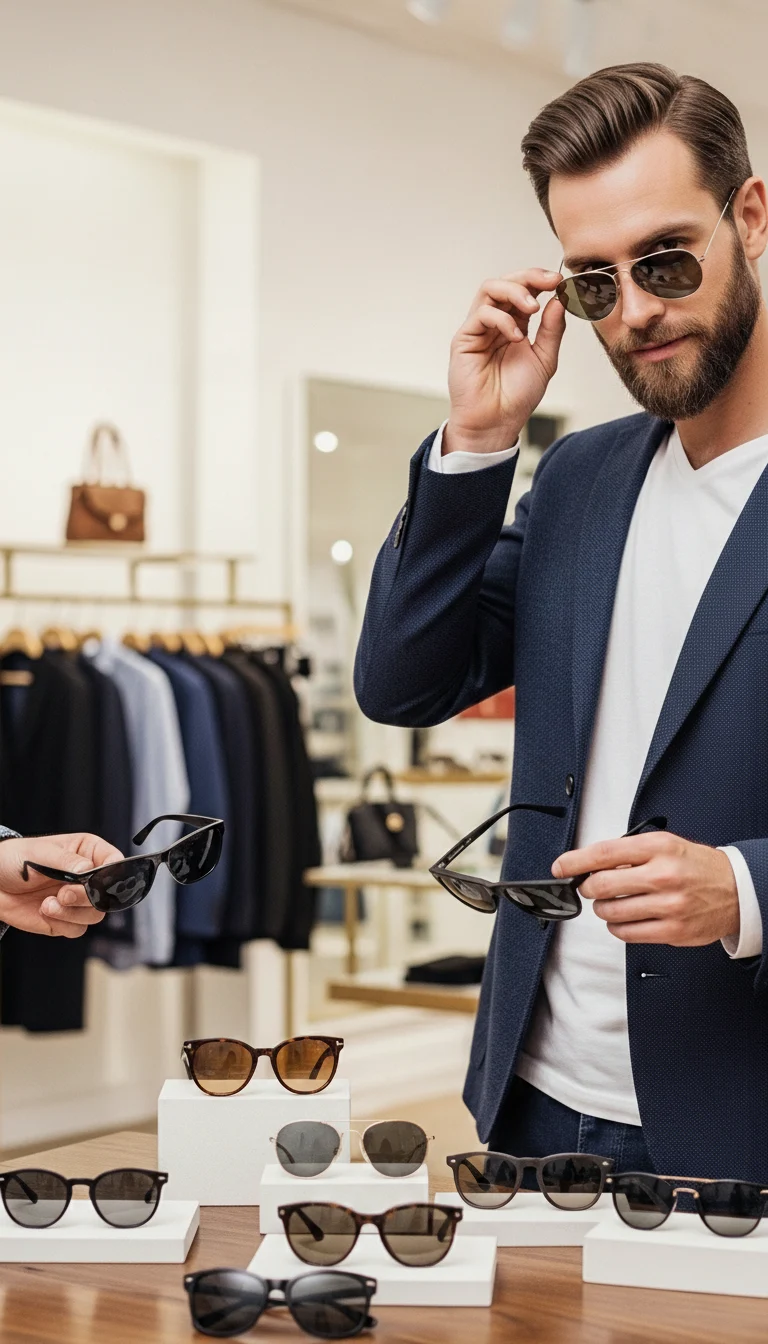
Sunglasses should complement your wardrobe.
Casual Style
If you wear:
- T-shirts
- Sneakers
- Denim
Choose:
- Wayfarers
- Matte black
- Brown lenses
Business / Smart Casual
If you wear:
- Blazers
- Button-down shirts
- Loafers
Choose:
- Thin metal frames
- Aviators
- Minimal designs
Sporty / Active
If you train or hike:
- Wraparound frames
- Lightweight materials
- Polarized lenses
Step 6: Skin Tone & Color Coordination

Your skin undertone affects which frame colors look best.
Warm Undertones
Look good in:
- Brown
- Gold
- Olive
- Tortoiseshell
Cool Undertones
Look good in:
- Black
- Silver
- Blue
- Grey
This subtle detail can significantly enhance your overall appearance.
Step 7: Pay Attention to Proportions
Oversized sunglasses can look dramatic — but only if balanced.
- Small face → Avoid oversized frames
- Large face → Avoid tiny lenses
- Thick neck/jaw → Thicker frames look balanced
- Slim face → Thinner frames look refined
Proportion creates visual harmony.
Step 8: Quality Checklist Before Buying
Before purchasing, check:
✔ UV400 protection
✔ Solid hinge construction
✔ Scratch-resistant coating
✔ No lens distortion
✔ Comfortable nose pads
Hold the sunglasses at arm’s length and look through the lens while moving them slightly. If straight lines appear wavy, the lens quality is poor.
Step 9: Common Mistakes Men Make
- Buying based on brand only
- Ignoring face shape
- Choosing fashion over protection
- Wearing scratched lenses too long
- Using sports sunglasses for formal outfits
Avoid these, and you’re ahead of most men.
Building a Sunglasses Collection
Ideally, every man should own at least two pairs:
- Everyday pair (neutral, versatile)
- Statement or sport pair
If budget allows, add:
- A business-appropriate minimalist pair
- A polarized pair for outdoor use
Final Thoughts
Choosing sunglasses is a mix of science and style. When you understand your face shape, prioritize fit, invest in proper lens technology, and align your choice with your personal aesthetic, sunglasses become more than an accessory — they become part of your identity.
The perfect pair should:
- Protect your eyes
- Fit comfortably
- Balance your facial features
- Complement your wardrobe
- Boost your confidence
When you find the right sunglasses, you’ll feel it immediately. They won’t just sit on your face — they’ll complete it.