
How to Dress Plus Size Men with a Belly

Most big guys with a belly make the same move. They grab a shirt two sizes too big and hope it hides everything. I did this for years.
The baggy shirt never hid my stomach. It made my whole body look wider, and the low-rise jeans under it slid down all day.
This guide shows you how to dress plus size men with a belly by getting the fit right instead of hiding under extra fabric. By the end, you will have one full outfit.
The pants will stay at your waist, the shirt will hang clean over your middle, and people will look at your face first. You don’t need a diet, a special store, or pricey tailoring.
- 01Measure, Then Size Up
Measure chest, waist, and belly. Buy for your largest number, with 4–6 inches of room to move.
- 02Raise the Rise
Pants should sit at your navel, held up by suspenders, never a belt squeezed under your belly.
- 03Shoulders First, Colors Close
Shoulder seams sit on the shoulder bone. Keep shirt and pants a few shades apart so nothing cuts you in half.
- 04Wear One Layer Open
An unbuttoned overshirt or blazer draws two long vertical lines that make you look taller and narrower.
Measure your chest, waist, and belly

Three numbers decide almost everything you buy. Pull the tape snug, with room for one finger under it, and stand the way you normally stand. Do not suck in. Clothes bought for a held breath fit badly the other 23 hours of the day.
- Chest: around the fullest part, right under your armpits.
- Belly: around the widest point, wherever that is.
- Waist: across your belly button, where your pants should sit.
No tape? Wrap a string around, pinch where it meets, and lay it along a ruler. Write each number down in inches.
Size by your largest measurement
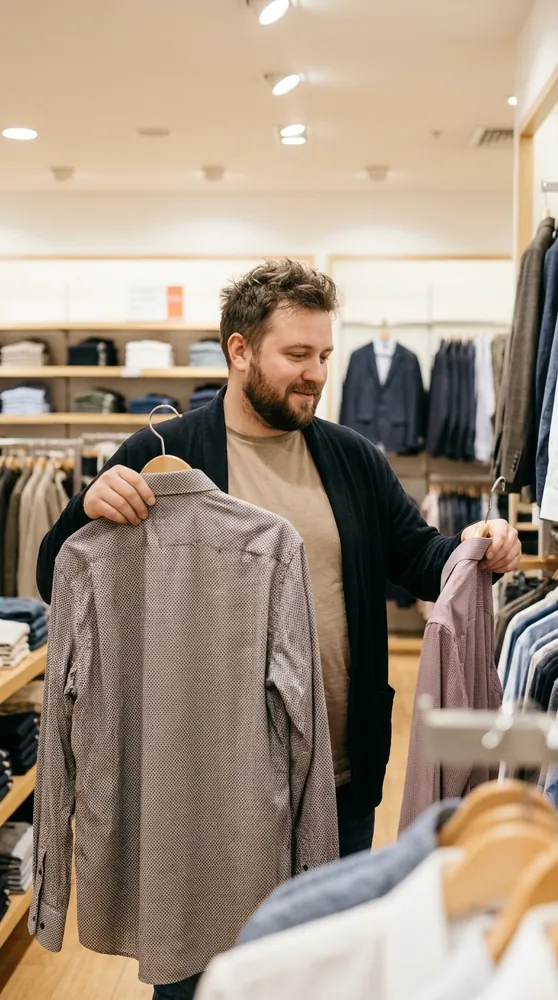
If your chest measures like an XL and your belly measures like a 2XL, buy the 2XL. Clothes sized to your smaller number pull at the buttons and ride up. Open each brand’s size chart, because an XL at one store can be an L at another. Look for a shirt that measures about 4 to 6 inches more than your body at the chest and belly. That space gives you room to move without adding bulk.
Big-and-tall lines usually add room through the middle while keeping the shoulders in proportion. If a regular brand fits your belly but swallows your shoulders, try its big-and-tall section before you settle.
Choose trousers that sit at your belly button
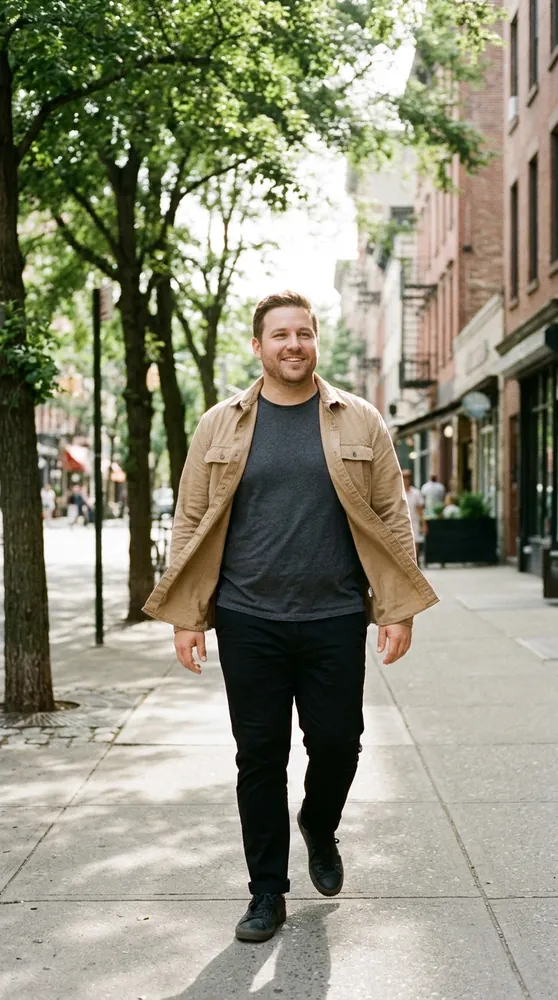
Low-rise pants have nowhere to go but under your stomach. They slide down, your belly rolls over the top, and you spend the day pulling them up.
A mid-rise or high-rise pair sits at your navel or a little above it, so the waistband stays put.
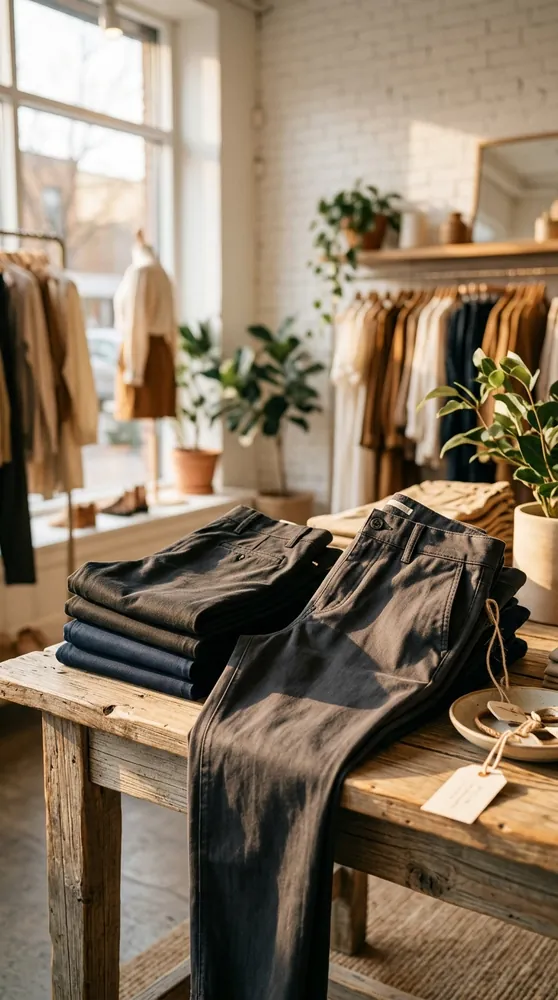
Check the product page for “front rise.” In plus sizes, look for 12 inches or more. Pick a straight or relaxed leg, too. Skinny legs make your top half look bigger next to them.
Hold your trousers up with suspenders

Because a belt has to squeeze to work, it fights your shape all day. Suspenders hang the pants from your shoulders instead, so the waistband stays at your navel without digging in.
Button-on suspenders lie flattest under a layer. Clip-on pairs cost less, often around $15, and work fine to start. Not a fan of either? Look for trousers with side tabs, small buttoned straps that tighten the waist without a belt.
Never cinch a belt below your belly. It pinches when you sit, and it draws a hard line right under your stomach that points straight at it. If you wear a belt, the pants must sit at your navel and the belt should match your pants.
Fit the shirt at your shoulders first

Where does the shoulder seam land? It should sit right on the edge of your shoulder bone. If it droops 1 inch or more down your arm, the shirt is too big, and that extra fabric makes your whole upper body look wider.
Now button it and stand sideways. The fabric should skim your belly. It should not hug it, and it should not tent out. Gaps between buttons mean you need more room in the middle, not a bigger shirt everywhere.
Leave the top one or two buttons open. The small V it makes pulls the eye up toward your face and away from your middle.
Pick a shirt color close to your trouser color

Your eye reads every sharp color change as a line. A white shirt over black pants draws a bright stripe right across your belly.
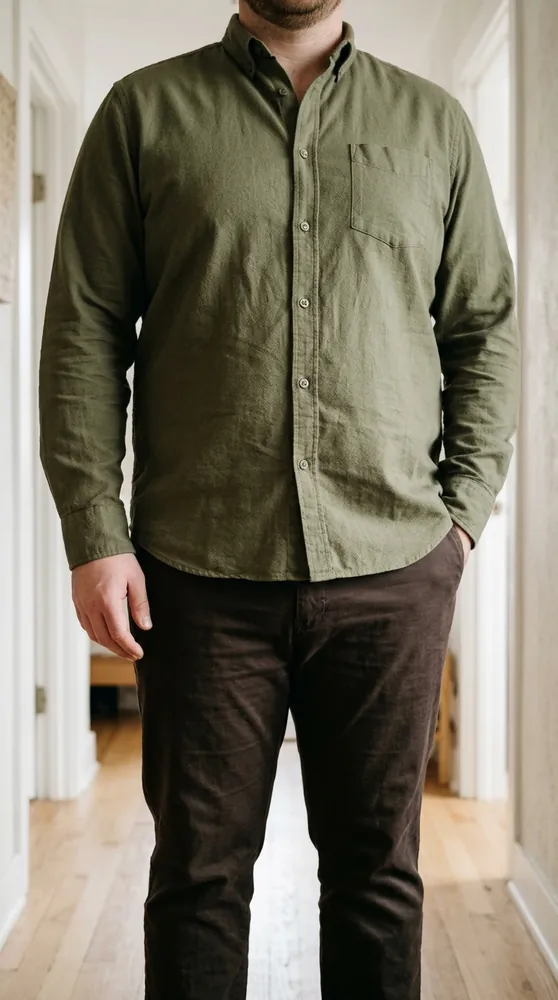
Keep your shirt and trousers within a few shades of each other, like a navy shirt with charcoal chinos, or olive over dark brown.
Darker, solid colors in the middle work best. Save bright colors and bold patterns for things near your face, like a collar or a scarf.
Check where the shirt hem lands
About 2 to 3 inches below your waistband is the sweet spot for an untucked shirt. That puts the hem near the middle of your zipper.
If your belly peeks out when you reach for something, the shirt is too short. Look for “tall” sizes, which add about 1 to 2 inches of length.
A hem that hangs past your seat is too long and makes your legs look short. Shirts with long, curved tails are made for tucking, so tuck those into your high-rise pants instead.
Add an open layer on top
If you own only one layer, make it one you can wear open: an overshirt, a cardigan, or a soft, unlined blazer. Worn unbuttoned, it draws two long lines from your shoulders to your hips.
Those lines break the width of your middle into narrower pieces, and you look taller. The layer should end at your seat or a little past it. Shorter layers stop right at your widest point.
Don’t button a jacket over your belly. The fabric pulls into an X shape around the button, and that X points straight at your stomach. If it can’t close flat, wear it open.
Wear shoes with some weight
Tiny shoes make a big frame look bigger. Slim loafers and thin canvas sneakers look lost under a broad body.
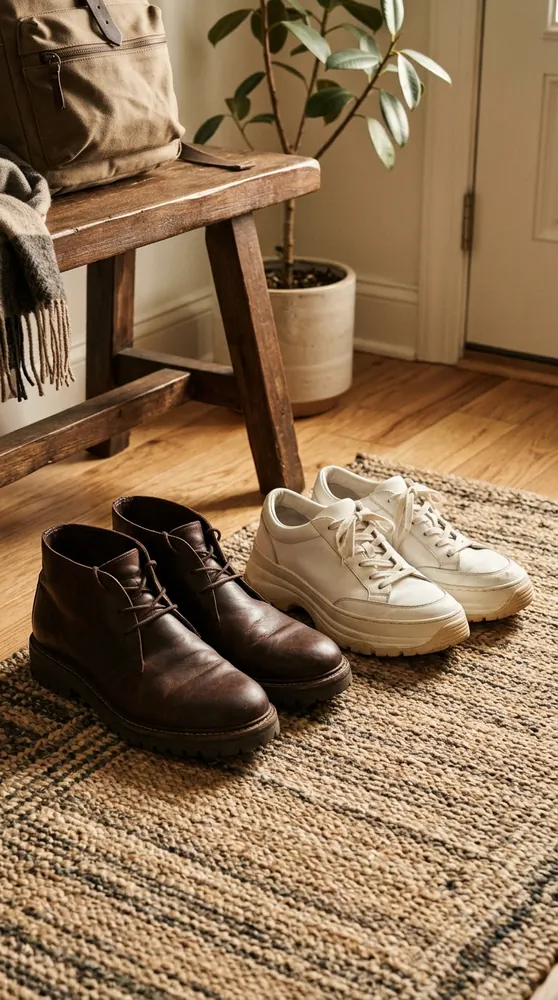
Pick shoes with some bulk instead, like derbies, chukka boots, or leather sneakers with a sole about 1 inch thick. They balance your top half.
Match your shoe color to your belt or suspender leather. Brown with brown, black with black. It looks planned, even on a lazy Saturday.
Test your plus size outfit in the mirror
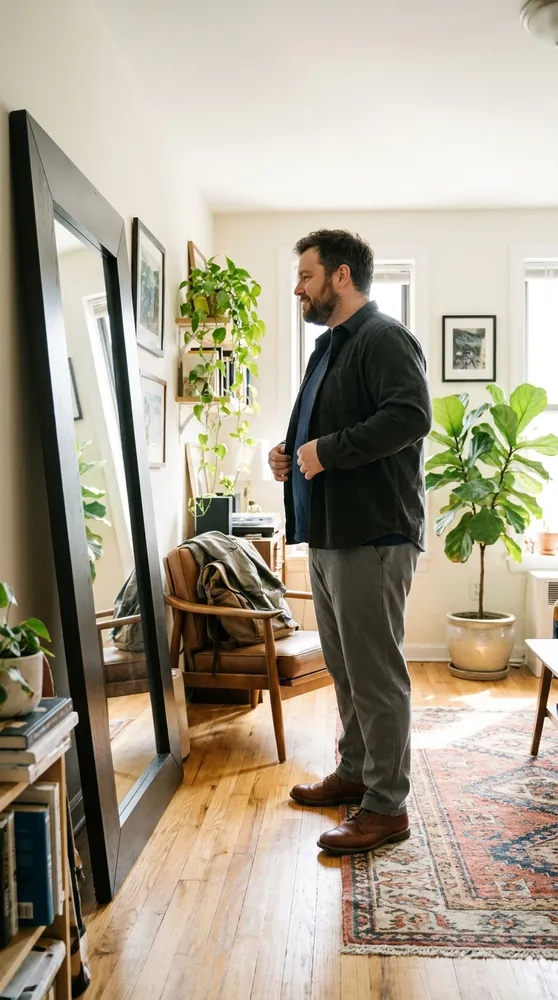
Ten seconds, sideways, in front of a mirror. That tells you more than ten minutes facing it. Get fully dressed, then run three quick tests:
- Stand sideways. The shirt should skim your belly with no pulling or tenting.
- Raise both arms over your head. No skin should show.
- Sit in a chair for 1 minute. The waistband should stay put, and no button should strain.
If one test fails, the table below shows you the fix.
You now have an outfit built around your real shape. Your pants sit at your navel, your shirt fits at the shoulders, your colors flow, and your layer hangs open.
That’s how to dress plus size men with a belly: get the fit right first and stop trying to cover up.
Next, repeat these steps for a second outfit so you have two go-to looks for the week.
Save this pin so your numbers and steps are right there on your next shopping trip.