
How to Measure Yourself Correctly for Big and Tall Clothing

Finding clothes that truly fit starts with taking accurate body measurements. Whether you’re shopping online or visiting a store, knowing your measurements helps you choose clothing that feels comfortable, looks flattering, and reduces the chances of ordering the wrong size.
Big and tall clothing is designed with extra room in key areas and longer proportions than standard sizes.
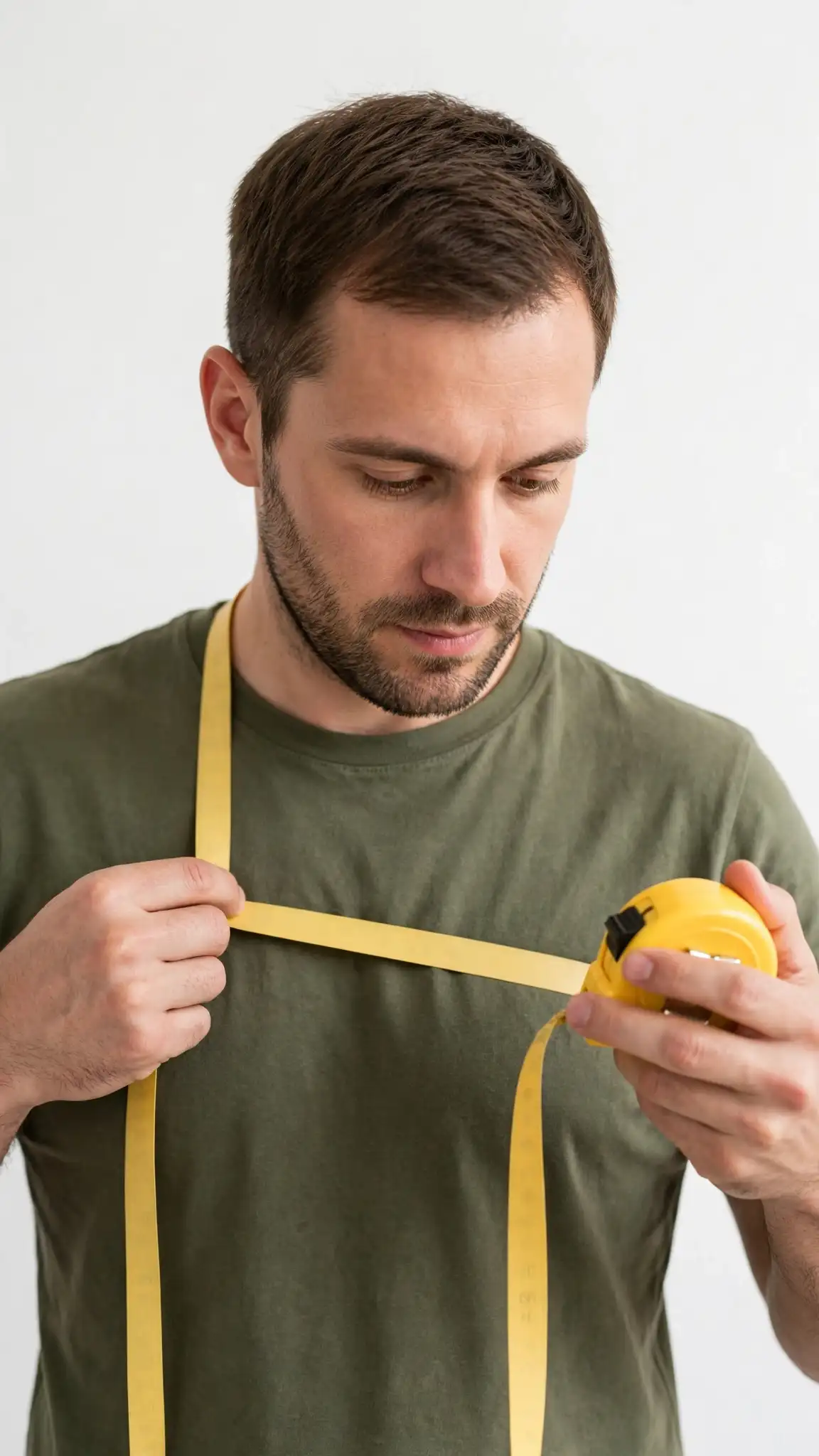
However, sizing can still vary between brands, making your actual body measurements far more reliable than simply buying your usual size.
This guide explains how to measure yourself correctly for big and tall clothing so you can shop with confidence and enjoy a better fit every time.
Why Accurate Measurements Matter
Many people rely on the size printed inside their favorite shirt or pair of jeans. While this may work occasionally, clothing sizes are not standardized across all brands. A 2XL from one company may fit differently from a 2XL from another.
Taking accurate measurements helps you:
- Find clothing that fits comfortably.
- Reduce returns and exchanges.
- Compare sizing charts with confidence.
- Build a wardrobe that looks more tailored.
- Shop online with fewer surprises.
Spending just a few minutes measuring yourself can save both time and money in the long run.
What You’ll Need
Before you begin, gather a few simple items:
- A flexible measuring tape.
- A full-length mirror.
- A notepad or phone to record measurements.
- Comfortable fitted clothing or lightweight layers.
- A friend to help with difficult measurements if possible.
Avoid measuring over bulky clothing, as it can add extra inches and affect accuracy.
Tips Before Measuring
For the most accurate results:
- Stand naturally without holding your breath.
- Keep your feet shoulder-width apart.
- Let the measuring tape rest against your body without pulling it tight.
- Measure twice to confirm each number.
- Record measurements in both inches and centimeters if you shop internationally.
Small differences can have a noticeable impact on how clothing fits.
How to Measure Your Chest
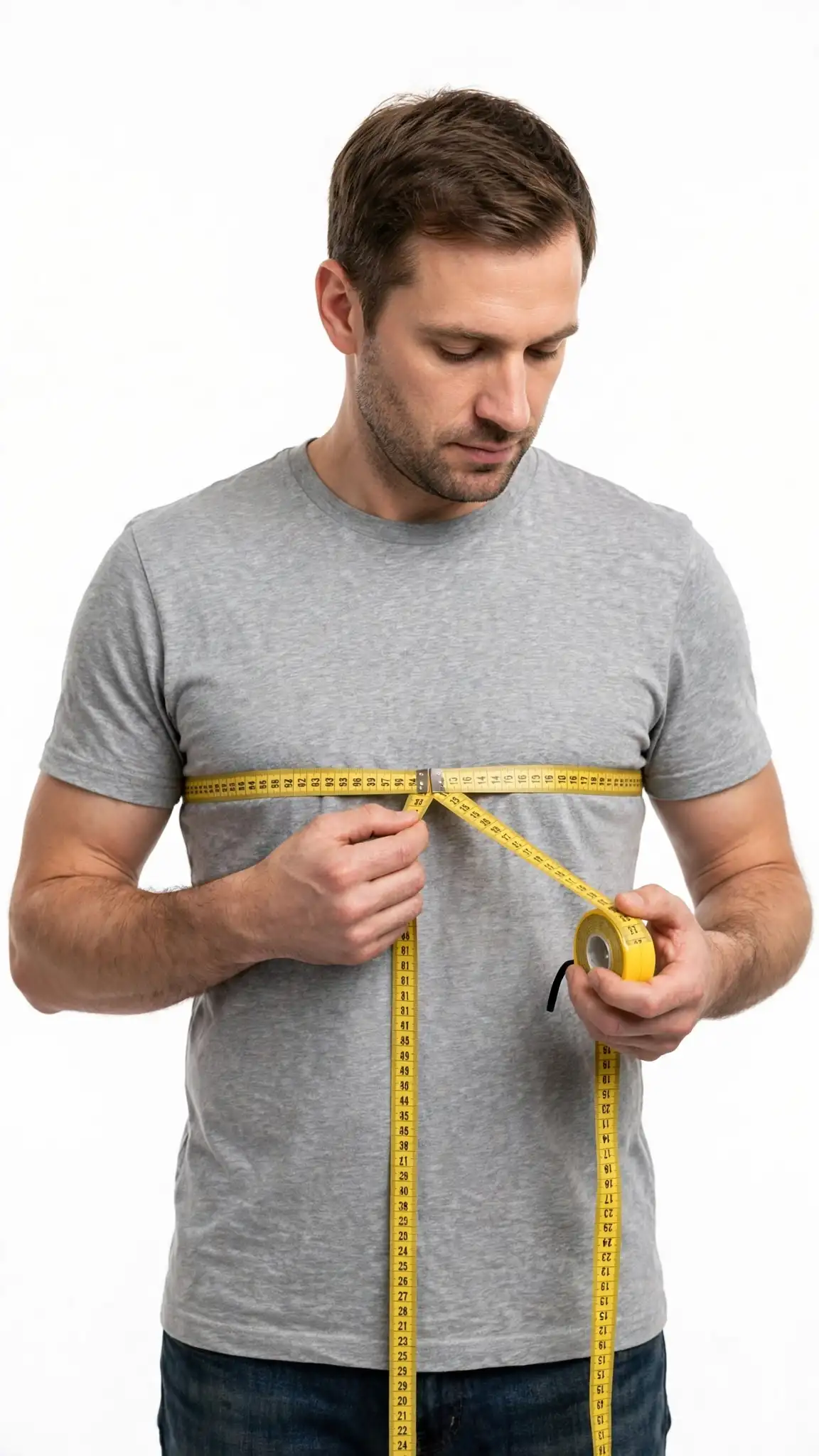
The chest measurement is one of the most important numbers when buying shirts, jackets, sweaters, and coats.
To measure your chest:
- Stand up straight with your arms relaxed.
- Wrap the measuring tape around the fullest part of your chest.
- Keep the tape level across your back.
- Ensure the tape feels snug but not tight.
- Record the measurement.
For big and tall clothing, avoid pulling the tape too tightly. Clothing should allow comfortable movement throughout the day.
How to Measure Your Neck
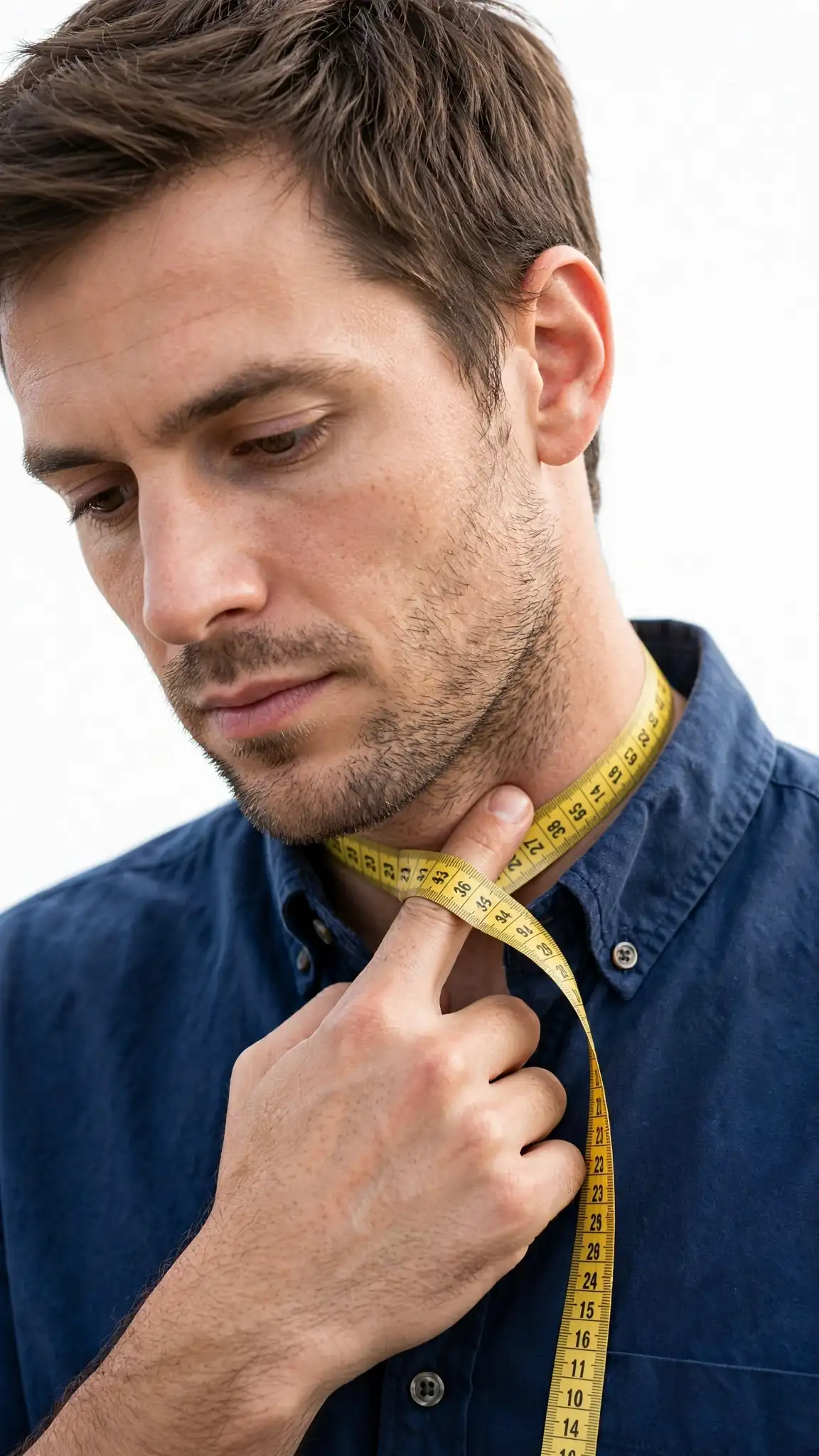
A proper neck measurement helps ensure dress shirts and collars fit comfortably.
To measure your neck:
- Wrap the tape around the base of your neck where a shirt collar normally sits.
- Leave enough room to fit one finger between the tape and your neck.
- Record the measurement.
This extra space prevents collars from feeling restrictive.
How to Measure Your Shoulders
Shoulder width affects how shirts, jackets, and coats sit on your body.
Measure from one shoulder edge to the other across your upper back.
If measuring alone is difficult, ask someone to help for greater accuracy.
Proper shoulder measurements reduce pulling across the upper back and improve overall comfort.
How to Measure Sleeve Length
Sleeves that are too short or too long can make even expensive clothing look poorly fitted.
To measure sleeve length:
- Place one end of the tape at the center of your upper back near the neck.
- Run it across the shoulder.
- Continue down the outside of your arm.
- End at the wrist bone while keeping your arm slightly bent.
Big and tall clothing often includes extended sleeve lengths, making this measurement especially important.
How to Measure Your Waist
Your natural waist is not always where you wear your pants.
To find it:
- Stand naturally.
- Locate the narrowest part of your torso, usually just above the belly button.
- Wrap the tape around this area.
- Keep the tape level and comfortable.
- Do not suck in your stomach.
A relaxed waist measurement provides a more comfortable everyday fit.
How to Measure Your Hips
Hip measurements are useful for pants, shorts, and some outerwear.
Wrap the measuring tape around the fullest part of your hips and seat while standing naturally.
Keep the tape parallel to the floor for consistent results.
How to Measure Your Inseam
The inseam determines pant length.
To measure it:
- Stand straight while wearing shoes similar to those you’ll wear with the pants.
- Measure from the top of the inner thigh down to the bottom of the ankle.
- Alternatively, measure a pair of pants that already fits well.
Big and tall pants are often available in multiple inseam lengths, making this measurement particularly valuable.
How to Measure Your Outseam
The outseam measures the total length of your pants.
Measure from the top of your waistband down the outside of your leg to your ankle.
This measurement is helpful for dress pants and tailored trousers.
How to Measure Your Thigh
Athletic or muscular builds often require additional thigh room.
Measure around the fullest part of one thigh while standing naturally.
Avoid tightening the tape.
This ensures enough space for comfortable movement throughout the day.
How to Measure Your Wrist
Some dress shirts require wrist measurements for properly fitted cuffs.
Wrap the tape around your wrist where the cuff normally rests.
Leave just enough room for comfortable movement.
How to Measure Your Height
Height is a major factor in big and tall sizing.
Stand against a wall without shoes.
Keep your heels, shoulders, and head touching the wall.
Measure from the floor to the top of your head.
Many tall clothing collections are designed specifically for individuals above average height.
Common Measuring Mistakes to Avoid
Even small mistakes can lead to clothing that feels uncomfortable.
Watch out for these common errors:
- ✕ Pulling the tape too tightly
- ✕ Measuring over thick clothing
- ✕ Holding your breath
- ✕ Measuring while slouching
- ✕ Guessing instead of measuring
- ✕ Ignoring the brand’s sizing chart
- ✕ Recording incorrect numbers
Taking your time produces far more accurate results.
How Often Should You Update Your Measurements?
Body measurements naturally change over time.
It’s a good idea to measure yourself:
- Every six to twelve months.
- After significant weight changes.
- Before purchasing expensive clothing.
- Before ordering from a new brand.
Keeping current measurements makes future shopping much easier.
Using Size Charts Effectively
Once you have your measurements, compare them with the specific size chart provided by each clothing brand.
If your measurements fall between two sizes:
Never assume that your usual size will fit across every brand.
Final Thoughts
Learning how to measure yourself correctly for big and tall clothing is one of the easiest ways to improve your shopping experience.
Accurate measurements help you find clothes that fit better, feel more comfortable, and complement your body shape.
Keep a record of your chest, neck, shoulders, sleeves, waist, hips, inseam, and height, and update them whenever your body changes.
Pair those measurements with each brand’s sizing chart instead of relying solely on standard size labels.
With the right measurements, you’ll spend less time dealing with returns and more time enjoying clothing that fits exactly the way it should.
