
How to Build a Capsule Wardrobe Plus Size Men

You open the closet, look at a full rack of shirts, and still have nothing to wear. Half of it pulls at the buttons. The other half hangs like a tent.
If you’ve been searching for how to build a capsule wardrobe as a plus size man, you already know most guides are written for guys with a 32-inch waist.
This guide is for your body as it is today. By the end, you’ll own about 25 pieces that fit, match each other, and make 5 work-week outfits you can repeat without thinking. The method starts with your real measurements, not tag sizes.
Interactive Planner
Plus Size Capsule Wardrobe Planner
Pick your colors, tap + for every piece you already own, and see what’s left to buy, the rough cost, and how many outfits you can make.
1. Pick Your 5 Colors
Aim for 2 dark bases, 2 middle tones, and 1 accent.
2. Count What You Own
Pick a shopping budget, then tap + for each piece that fits you today.
3. Your Shopping List
Buy pants first, then tops, then the jacket.
Prices are rough US estimates per piece and change by store and season. Your choices save in this browser only.
1. Measure your chest, waist, neck, inseam, and sleeve
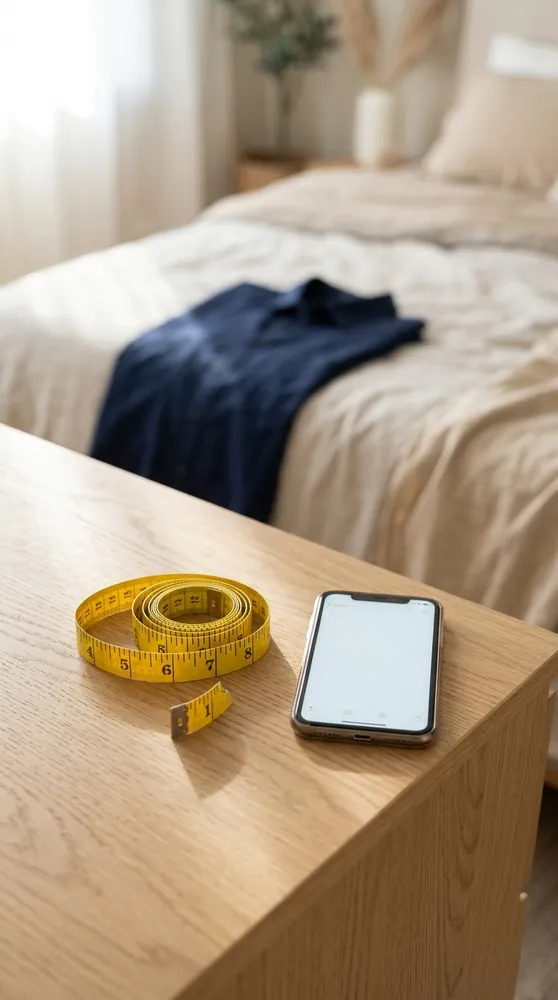
Size tags don’t agree with each other. A 2XL from one brand can be 3 inches wider than a 2XL from another, so your real numbers are the only thing you can trust. Stand up straight and breathe normally:
- Chest: around the widest part, under your arms
- Waist: where your pants actually sit, not your belly button
- Neck: around the base, with 1 finger of room under the tape
- Inseam: crotch seam to the floor, barefoot
- Sleeve: center of the back of your neck, over the shoulder, to the wrist bone
No soft tape? Wrap a piece of string, pinch the spot, and lay it on a ruler. Save all five numbers in your phone notes.
2. Empty your closet into three piles
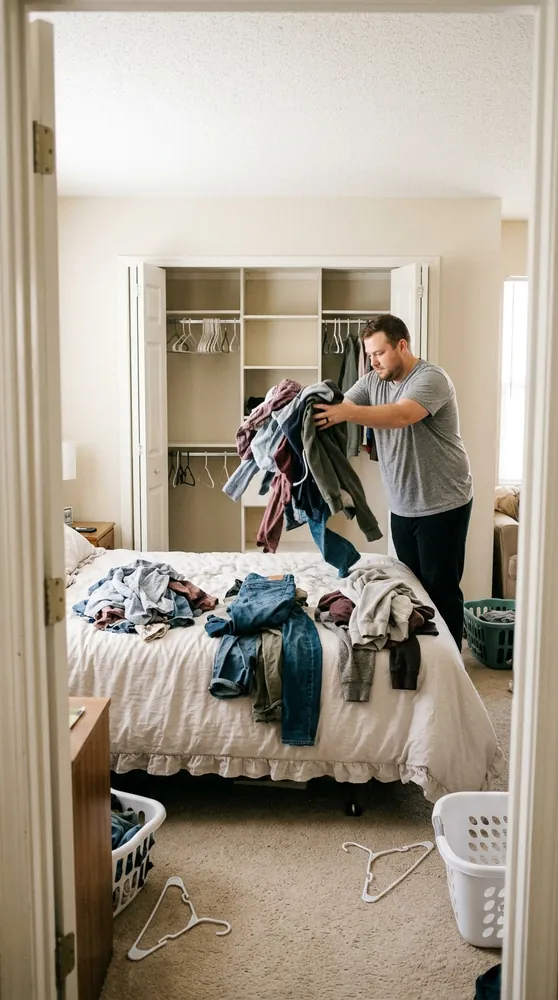
You can’t judge clothes while they’re hanging in the dark. Pull out every shirt, pair of pants, jacket, and pair of shoes and drop them on the bed. Sort into 3 piles.
Keep is for pieces that fit now and get worn. Maybe is for things that are close but need a fix. Go is for anything too tight, too big, or not worn in 12 months.
Don’t keep clothes for a “someday” size. They eat closet space and make getting dressed feel like a test. If your size changes later, you’ll buy for that body then. Build this capsule for the body you have this week.
3. Try on every Keep piece in front of a mirror
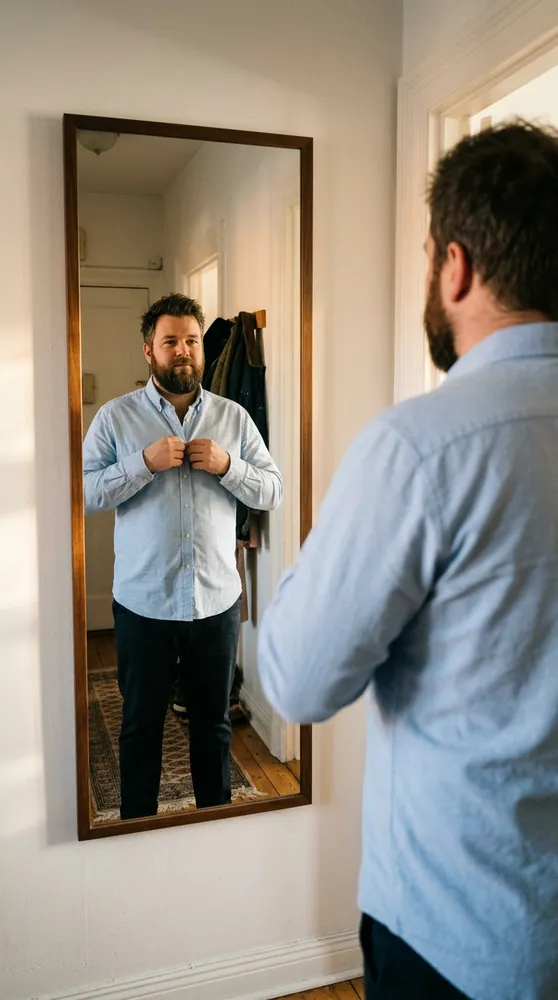
10 seconds per item tells you almost everything. Check that the shoulder seam sits on your shoulder bone, not halfway down your arm.
Look for X-shaped pull lines around the buttons, because those mean the shirt is too tight. Shirt hems should land about mid-zipper. Anything that fails moves to Maybe.
4. Choose five colors that all match each other
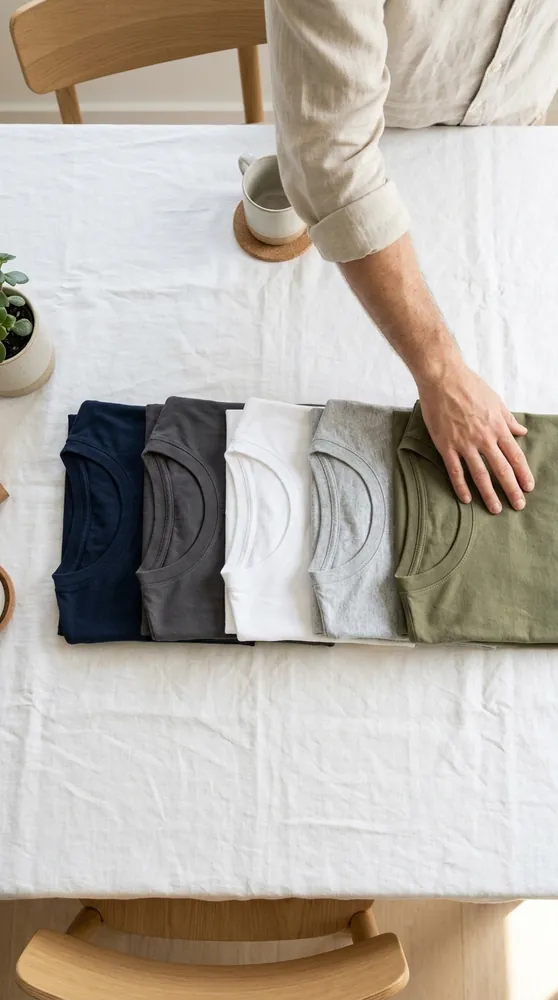
Why five? With 2 dark base colors, 2 middle tones, and 1 accent, almost every top works with every pair of pants. A safe start is navy and charcoal for the base, white and gray for the middle, and olive or burgundy as the accent.
Darker solids create a smooth, unbroken line, which is why they show up so often here. Look at your Keep pile first. The colors that show up most are probably your real favorites.
Try wearing a top and pants in close shades, like a navy tee with navy chinos. One color from shoulder to ankle reads as one long line, which looks taller and cleaner than a hard color split at the belly.
5. Write your capsule wardrobe list for a plus size build
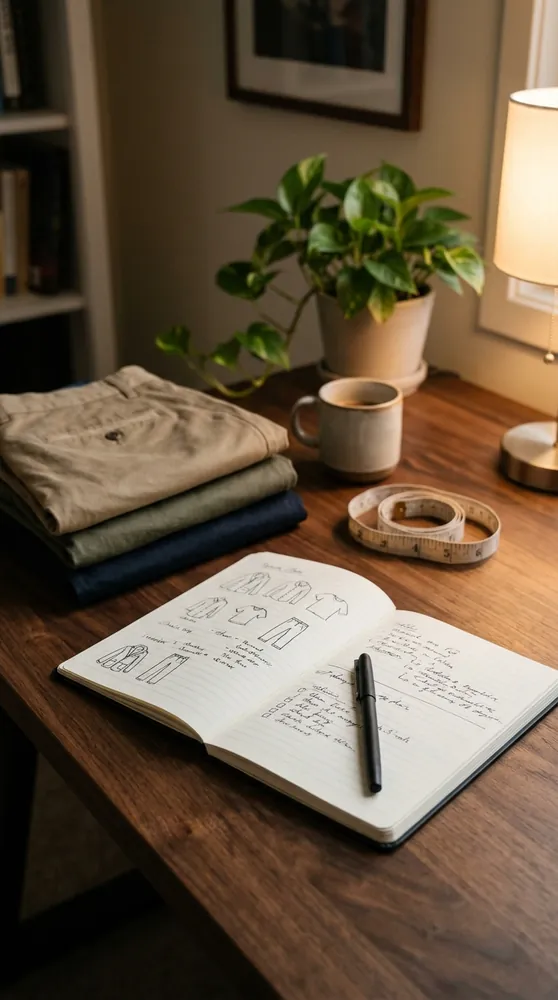
If it isn’t on the list, it doesn’t come home. Aim for 25 pieces, not counting socks, underwear, or gym clothes:
- 8 knit tops: 4 tees, 2 henleys, 2 polos
- 3 button-up shirts: oxford, chambray, flannel
- 2 sweaters: a crewneck and a quarter-zip
- 4 pants: dark jeans, 2 chinos, gray trousers
- 8 extras: 3 layers, 3 pairs of shoes, 2 belts
Cross out anything your Keep pile already covers. What’s left is your shopping list.
6. Buy your pants before any tops
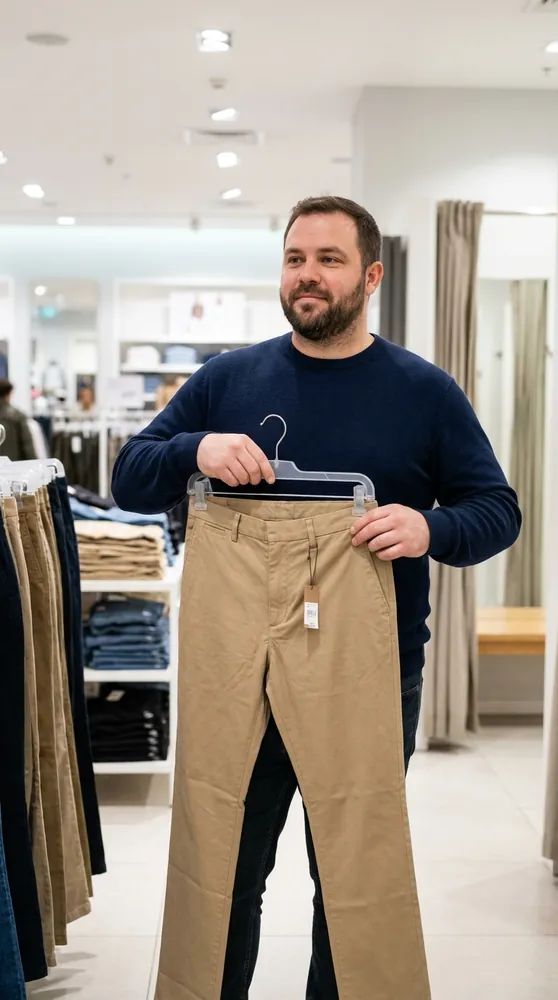
Pants are the hardest piece to fit, and every top on your list has to work with them. Look for a mid or high rise so the waistband sits at your natural waist instead of rolling under your stomach.
A straight or relaxed-taper leg with an opening around 8 to 9 inches balances a bigger upper body. Skinny legs make the top half look heavier.
Stretch helps too, so check the tag for 1 to 2% elastane. Shopping online? Order 2 sizes and return one. In a fitting room, sit down for 30 seconds. If the waistband digs in, go up a size.
7. Pick tops in heavier, matte fabric
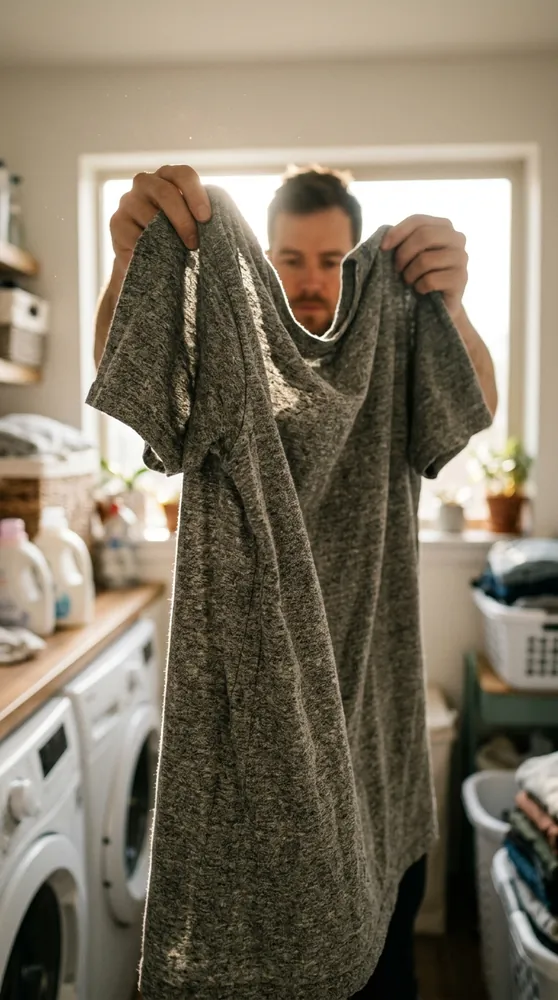
Thin T-shirts cling. They stick to your belly and show every fold. Look for tees marked 6 oz or 180 GSM and up in the product details.
Pick matte cotton over shiny blends, since shine catches light on every curve. Hold a tee up to a lamp.
If you can see your hand through it, skip it. Workwear-brand pocket tees are a good budget option, since they’re thick and cheap.
8. Add one jacket that sits on your shoulders
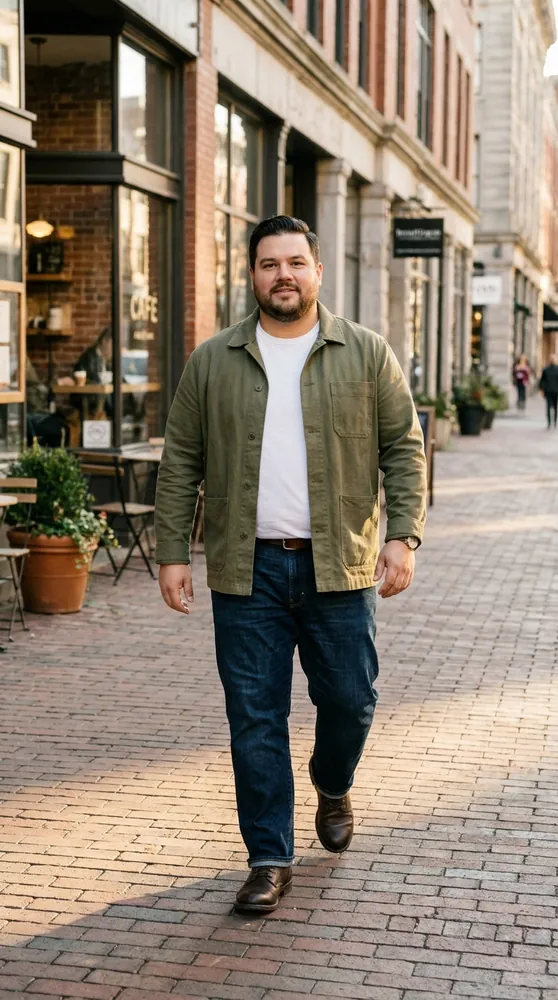
A jacket with some structure draws a straight line down from your shoulders. That line does more for your shape than any color choice.
Pick a chore jacket or an unstructured blazer in navy or olive. It should cover your seat, and the shoulder seam should land on your shoulder bone.
Wear it open, since a buttoned jacket pulls across the middle. On a tight budget, a heavy flannel overshirt worn open does the same job for under $50.
9. Take three pieces to a tailor
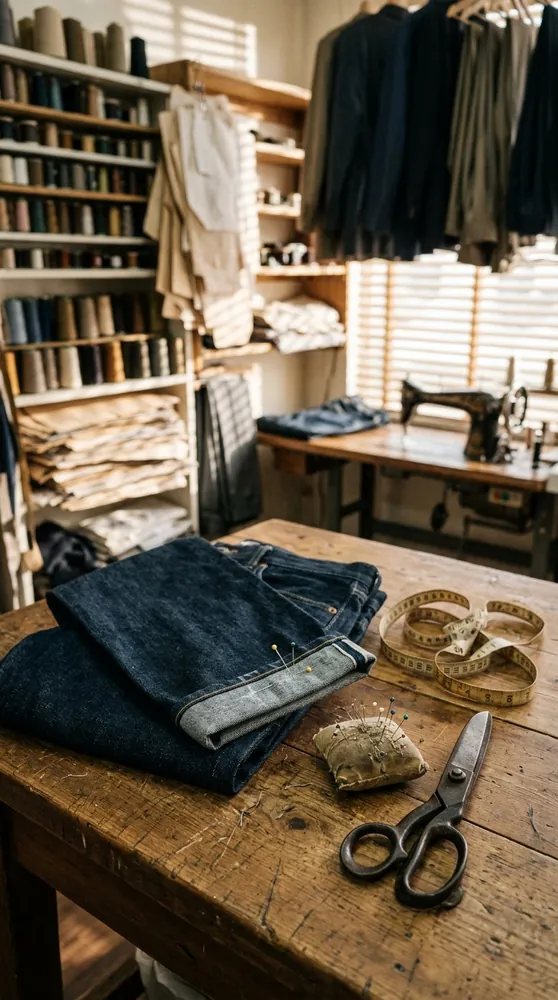
$15 to $25 per hem is the cheapest upgrade in this guide. Bring your jeans, one pair of chinos, and your best button-up.
Ask for a slight break or no break on the pants, which means the hem barely touches the shoe. Sleeves should stop at your wrist bone.
Wear the shoes you’ll pair with the pants so the length comes out right. Most shops take about 1 week.
Ask the tailor whether your trousers can be let out at the waist. Many dress pants hide 1 to 1.5 inches of extra fabric in the back seam, which can save a pair that’s almost right.
10. Lay out five outfits and photograph them
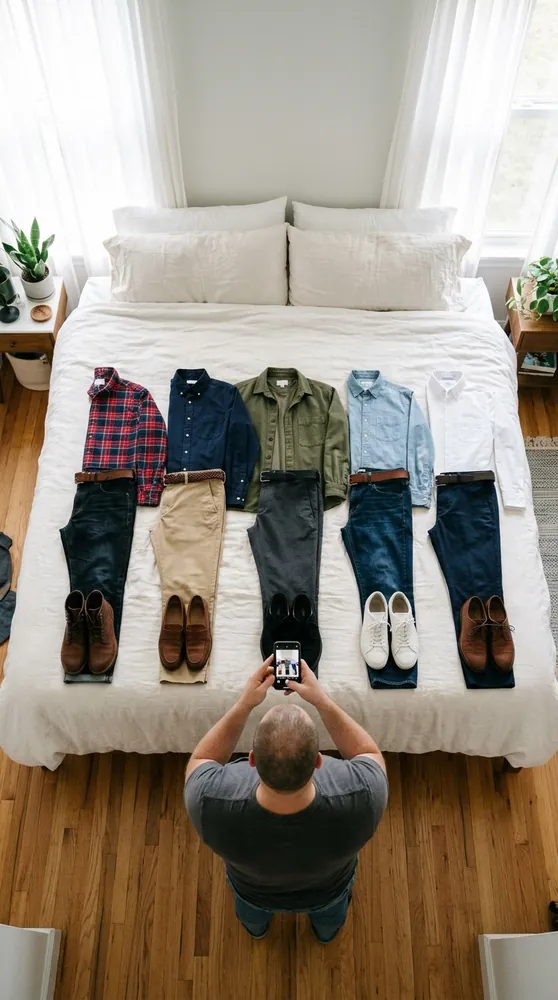
You won’t remember what works on a rushed morning, so set it up now. Lay out 5 full outfits on the bed, shoes and belt included. Try a gray tee, olive chinos, and the chore jacket.
Then an oxford shirt with dark jeans and brown shoes. Then a quarter-zip over a white tee with gray trousers. Take a photo of each from above and save them in an album called “Capsule.” That’s a full work week planned.
11. Hang your capsule in one spot and box the rest
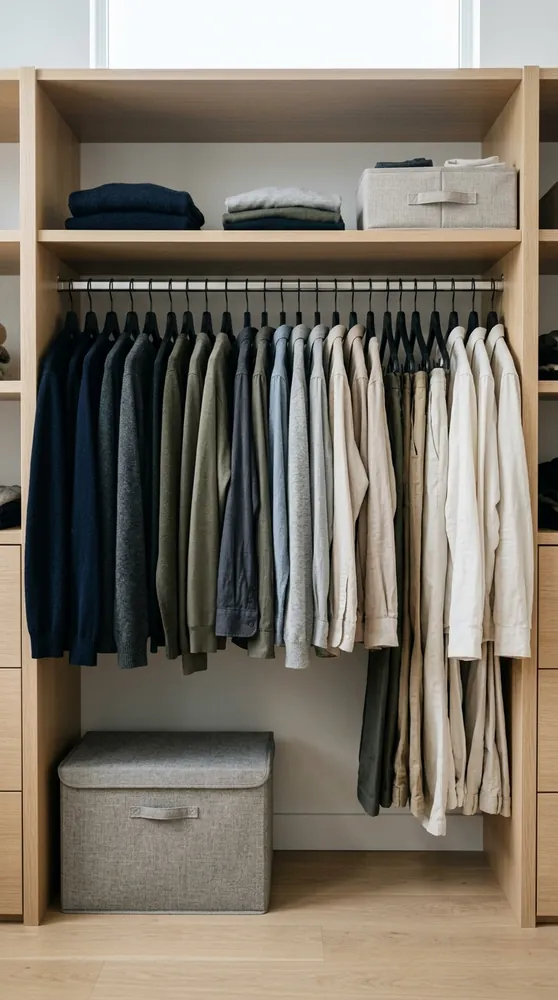
Clothes you can’t see don’t pull you back into old habits. Put your 25 pieces on matching slim hangers, grouped by type and sorted dark to light.
Pack the Maybe pile into the bin, then label it with today’s date. If you don’t open it in 90 days, donate it without looking inside. Swap in seasonal pieces every 3 months.
Yes, for one season. With matching colors, 25 pieces make well over 50 outfits. You can add a few pieces later once you see what you reach for.
Start with big and tall sections, workwear brands, and stores that list measurements for every size. Thrift stores are great for jackets and flannels once you know your numbers.
No. Navy, charcoal, and olive give the same clean line and look less flat. Black can stay as one or two pieces.
Yes. Small, low-contrast patterns like a micro-check or a soft plaid flannel work well. Big, bold prints are harder to mix with the rest of the capsule.
Buy fewer pieces at a time and lean on stretch fabrics. Pants with 1 to 2% elastane and knit tops handle small changes better than stiff cotton.
You did it. You now know how to build a capsule wardrobe for plus size men, and you have one hanging in your closet.
Every piece fits the body you have right now, and every piece works with the rest.
In 3 months, open that bin, swap in a few seasonal pieces, and see what you actually missed.
Save this pin for your next shopping trip so the list is always on your phone. 📌