
How to Wear a Men’s Headband: The Complete Style & Grooming Guide

Headbands are no longer just for athletes or 90s throwbacks. Today, they’re a practical grooming tool and a confident style statement.
From the gym to streetwear outfits, a well-chosen headband can sharpen your look while keeping your hair in place.
If you’ve ever wondered how to wear a men’s headband without looking awkward or outdated, this complete guide will walk you through everything step by step.
We’ll cover types, face shapes, hair lengths, outfit pairings, mistakes to avoid, and styling tips you can actually use.
By the end, you’ll know exactly how to make a headband work for your personal style.
Why Men Wear Headbands

Before we dive into styling, it helps to understand why headbands work so well. Men wear headbands for two main reasons: function and fashion.
Functionally, headbands keep sweat out of your eyes during workouts and sports. They also control longer hair without constantly adjusting it.
From a style perspective, headbands add personality. They can make a simple outfit feel intentional and bold.
The key difference between looking stylish and looking try-hard is how you wear it and what you pair it with.
Types of Men’s Headbands

Choosing the right headband is the first step. Different styles create completely different impressions.
1. Athletic Headbands
Athletic headbands are usually made from moisture-wicking materials. They are designed for workouts, sports, and outdoor activities.
You’ll often see these in basketball, running, or training environments. These headbands sit snug across the forehead and absorb sweat effectively.
They pair best with gym outfits like compression shirts, tank tops, and performance shorts. Avoid wearing thick athletic headbands with formal or smart-casual outfits. They look out of place outside a sporty setting.
2. Thin Elastic Headbands
Thin elastic headbands are subtle and minimalist. They work well for men with medium to long hair.
This style pushes hair back without drawing too much attention. It’s perfect for casual streetwear or laid-back outfits.
If you want a low-key grooming solution, this is your best option. They’re especially useful during growing-out phases when your hair won’t stay put.
3. Fabric Wrap or Bandana-Style Headbands
Fabric headbands make a bold statement. They often come in patterns, prints, or solid colors. This style leans heavily into streetwear and creative fashion.
You can fold a bandana into a strip and tie it around your head. This look works best with relaxed outfits like oversized tees, denim jackets, cargo pants, or layered fits.
Confidence matters here. If you feel unsure, start with neutral colors before experimenting with prints.
How to Wear a Headband Based on Hair Length
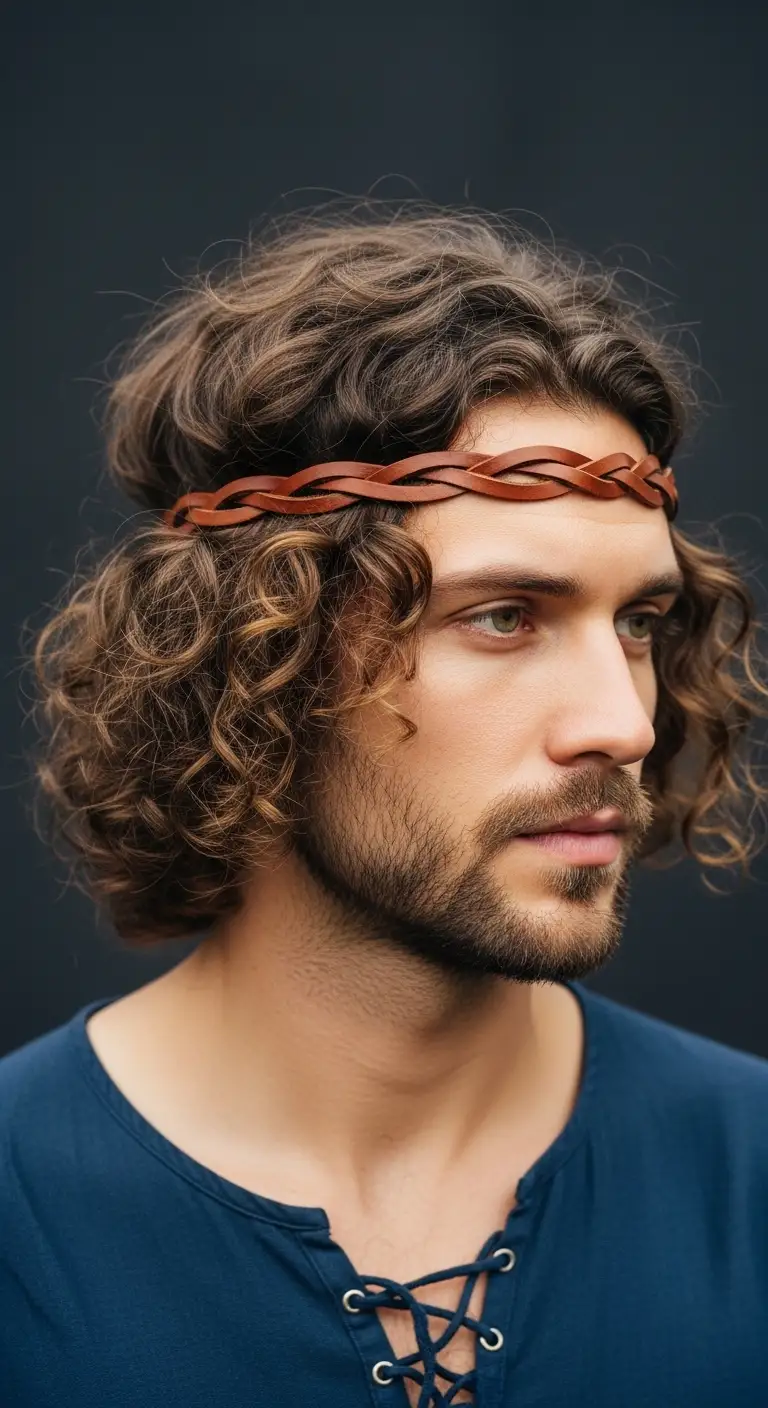
Hair length plays a major role in how your headband should sit.
Short Hair
If you have short hair, the headband becomes more visible. Wear it slightly higher on the forehead instead of pushing it too far back.
This keeps the look intentional rather than accidental. Short hair pairs best with thin or athletic styles. Avoid thick fabric wraps unless your overall outfit supports a strong streetwear vibe.
Medium-Length Hair
Medium hair gives you the most flexibility. Push your hair back naturally and place the headband just behind your hairline. Let some volume remain at the top.
Don’t flatten everything. You want controlled texture, not a slicked-down look. This works well with casual outfits and layered styles.
Long Hair
Long hair benefits the most from headbands. Pull your hair back loosely before placing the band.
You can wear your hair down, in a low bun, or in a half-up style. For a relaxed aesthetic, allow some strands to fall naturally. Avoid tying the headband too tight. Comfort always improves confidence.
How to Position a Men’s Headband Properly
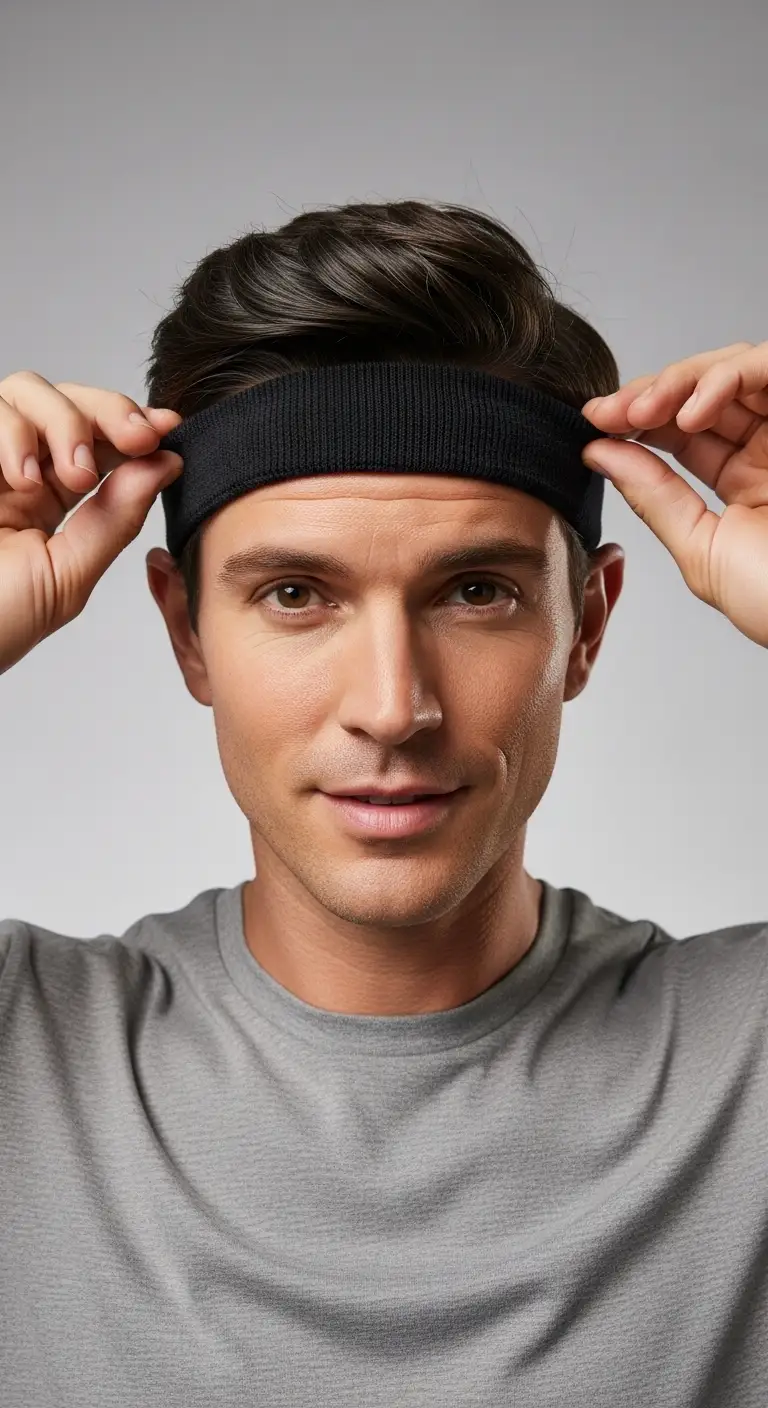
Positioning makes or breaks the look. Follow these guidelines:
- Place it just behind your hairline for a natural look.
- Keep it straight across your forehead.
- Avoid pushing it too far back unless you’re going fully athletic.
- Make sure it’s snug but not tight.
If it keeps sliding, your hair may be too silky or freshly conditioned. Use light styling product for better grip.
Matching Headbands with Outfits
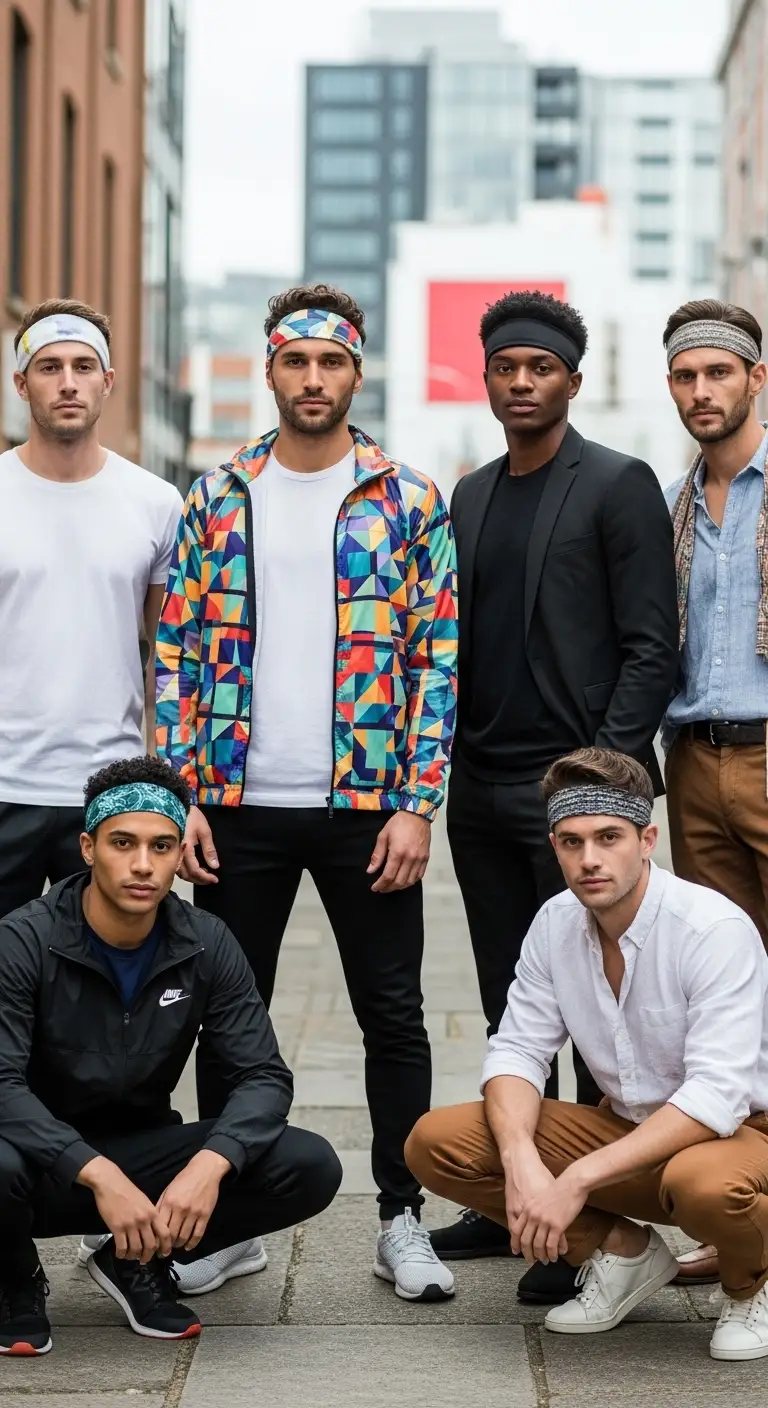
A headband should complement your outfit, not compete with it.
Gym & Athletic Looks
Stick to neutral colors like black, white, navy, or gray. Pair with performance wear and clean sneakers. Keep the overall look sharp and simple. Avoid flashy logos unless your entire outfit follows that vibe.
Casual Streetwear
Streetwear allows more creativity. Try earth tones, muted greens, or subtle patterns. Pair with oversized tees, cargo pants, distressed denim, or layered flannels.
Make sure the headband color connects with at least one other piece in your outfit. Coordination creates cohesion.
Smart-Casual (Use with Caution)
Headbands rarely work in formal settings. However, a very thin, neutral elastic headband can work for outdoor smart-casual events.
Think beach gatherings or summer festivals. Never wear a headband with suits, dress shirts, or formal shoes. It clashes with structured tailoring.
Choosing the Right Color
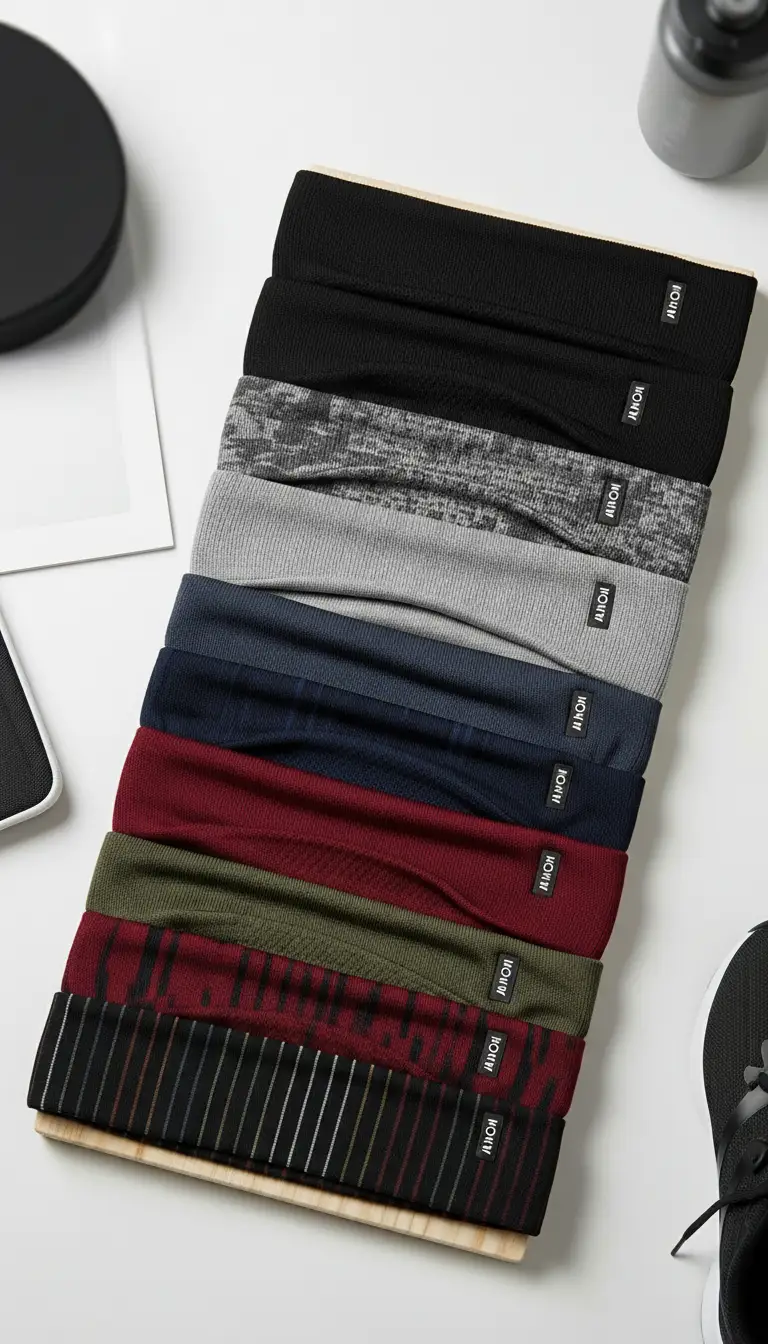
Color choice impacts the entire aesthetic.
Here’s a simple guide:
- Black: Safe, versatile, masculine.
- White: Clean, sporty.
- Neutral tones: Subtle and modern.
- Bold colors: Statement piece.
- Patterns: Creative and expressive.
If you’re new to headbands, start neutral. Once comfortable, experiment gradually.
Face Shape Considerations
Face shape affects how a headband frames your features.
Round Face
Avoid placing the headband too low. Position it slightly higher to create visual length. Volume on top helps elongate your face.
Long Face
Wear the headband slightly lower on the forehead. This balances proportions and reduces length emphasis. Avoid excessive height in your hairstyle.
Square Face
Most styles work well here. Focus on comfort and outfit coordination rather than structural adjustments.
Common Mistakes to Avoid
Even a simple accessory can go wrong.
Here are mistakes to avoid:
- Wearing overly tight headbands.
- Pairing athletic headbands with formal clothing.
- Ignoring hair texture and volume.
- Choosing loud prints without confidence.
- Letting the headband look accidental instead of intentional.
Always check the mirror before heading out. Small adjustments make a big difference.
Grooming Tips When Wearing a Headband
A headband exposes more of your face. That means grooming matters even more. Trim stray hairs around the temples and neckline. Maintain clean eyebrows.
Keep facial hair shaped and tidy. Hydrated skin also improves your overall presentation. When your face becomes the focal point, details stand out.
Can Older Men Wear Headbands?
Absolutely. Age doesn’t limit style, but context does. Older men should lean toward minimalist designs.
Avoid loud graphics or neon colors unless that matches your personality. Thin, neutral headbands paired with casual or athletic wear look mature and intentional. Confidence remains the most important factor.
Seasonal Styling Tips
Summer
Lightweight, breathable materials work best. Choose sweat-wicking fabrics for comfort. Lighter colors reflect heat and feel fresh.
Winter
Headbands can double as ear warmers. Wider knit styles work well here. Pair with coats, hoodies, and layered outfits. Just make sure the texture complements your outerwear.
How to Tie a Bandana as a Headband
If you want a DIY option, here’s a simple method:
- Fold the bandana diagonally into a triangle.
- Roll it from the pointed end toward the long side.
- Wrap it around your head.
- Tie a firm knot at the back.
- Adjust tightness and placement.
Keep the knot secure but comfortable. Practice once or twice to get it right.
Building Confidence with a Headband
If you’ve never worn one before, start small. Wear it at the gym first. Then try casual outings. Confidence grows with repetition.
Remember, style is about ownership. If you look unsure, people sense it. If you wear it naturally, it becomes part of your identity.
Final Thoughts
A men’s headband is both functional and stylish when worn correctly. The key is choosing the right type, positioning it properly, and matching it with the right outfit. Keep it simple at first.
Focus on grooming and coordination. Avoid common mistakes, and adjust based on your hair length and face shape. With the right approach, a headband becomes more than an accessory.
It becomes a confident extension of your personal style. And once you master it, you’ll wonder why you didn’t start sooner.
