
Why Men Go Bald: Understanding the Causes of Male Hair Loss

Hair loss is one of the most common concerns men experience, and for many, it begins earlier than expected. Some notice a receding hairline in their twenties, while others see thinning around the crown years later.
Although losing hair can affect confidence, understanding why it happens makes it easier to manage expectations and explore suitable treatment options.
The good news is that baldness is rarely caused by a single factor. Genetics, hormones, age, lifestyle, and certain medical conditions all play a role in determining how much hair a man keeps throughout his life.
In this guide, you’ll learn why men go bald, what causes different types of hair loss, and which treatments may help slow the process.
How Hair Normally Grows

Before understanding baldness, it helps to know how hair grows.
Each hair develops from a tiny structure in the skin called a hair follicle. Hair follows a repeating cycle made up of three stages:
- Growth phase (Anagen): Hair actively grows for two to seven years.
- Transition phase (Catagen): Growth slows for a few weeks.
- Resting phase (Telogen): Hair rests before naturally shedding, making room for new growth.
Losing around 50 to 100 hairs per day is considered normal because new hairs usually replace the ones that fall out. Baldness develops when follicles shrink, stop producing healthy hair, or fail to grow new strands after shedding.
Genetics: The Most Common Cause
The leading reason men go bald is male pattern baldness, also known as androgenetic alopecia.
This condition is inherited and affects millions of men worldwide. If close family members experienced early hair loss, your chances of developing it are significantly higher.
Male pattern baldness typically follows a predictable pattern:
- A receding hairline around the temples
- Thinning hair at the crown
- Gradual expansion of bald areas
- Hair remaining around the sides and back of the head
The speed of progression varies from person to person. Some men lose hair gradually over decades, while others experience noticeable thinning within just a few years.
The Role of Hormones
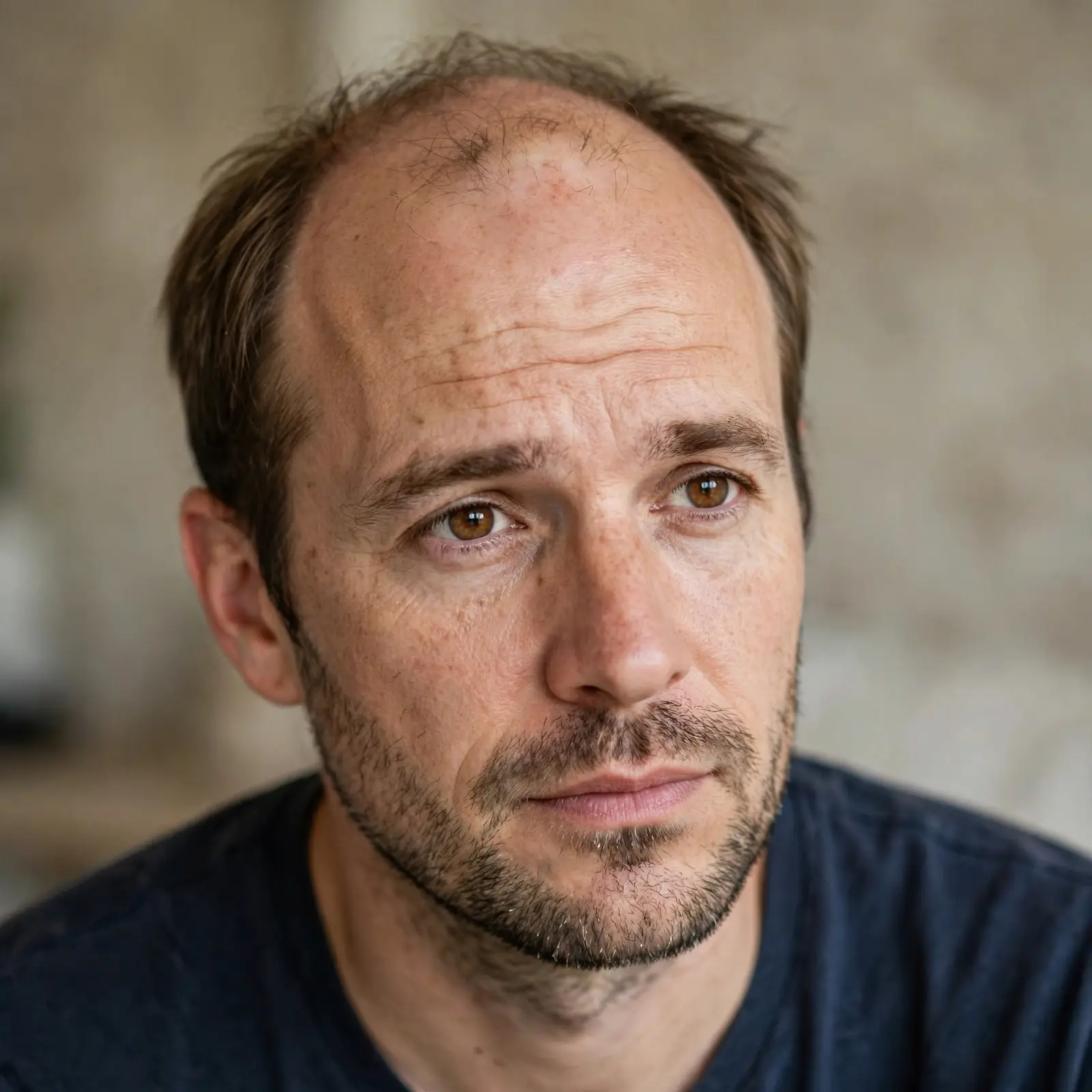
Hormones are closely connected to male hair loss.
One hormone, called dihydrotestosterone (DHT), is considered the main contributor to male pattern baldness. DHT is produced when testosterone is converted by an enzyme called 5-alpha reductase.
In men who are genetically sensitive to DHT, this hormone causes hair follicles to shrink over time. As follicles become smaller:
- Hair grows thinner.
- Growth cycles become shorter.
- New hairs become finer.
- Eventually, follicles stop producing visible hair.
Interestingly, DHT does not affect every follicle equally. Hair on the back and sides of the scalp is generally more resistant, which is why these areas often remain even in advanced baldness.
Aging Naturally Reduces Hair Growth
Age is another major factor.
As men get older, hair naturally becomes thinner because follicles become less active. Hair also grows more slowly, and each strand may become finer than before.
Not every older man becomes bald, but aging often makes existing genetic hair loss more noticeable.
Other age-related changes include:
- Reduced hair density
- Slower regrowth
- Increased shedding
- Finer hair texture
These changes are a normal part of the aging process, although genetics largely determine their severity.
Medical Conditions That Can Cause Hair Loss
Not every case of baldness is inherited.
Several health conditions can trigger temporary or permanent hair loss, including:
Thyroid Disorders
An overactive or underactive thyroid can disrupt the normal hair growth cycle, leading to noticeable thinning across the scalp.
Autoimmune Diseases
Conditions such as alopecia areata occur when the immune system mistakenly attacks hair follicles, causing smooth, round patches of hair loss.
Scalp Infections
Fungal infections, severe dandruff, or chronic inflammation may damage follicles if left untreated.
Nutritional Deficiencies
Low levels of iron, zinc, vitamin D, protein, or certain B vitamins may contribute to excessive shedding, especially when combined with other risk factors.
Treating the underlying condition often improves hair growth.
Stress Can Trigger Temporary Hair Loss
Physical and emotional stress can temporarily interrupt normal hair growth.
Major events such as surgery, serious illness, rapid weight loss, high fever, or emotional trauma may push large numbers of hairs into the resting phase. This condition is known as telogen effluvium.
Hair usually begins shedding two to three months after the stressful event.
Fortunately, this type of hair loss is often temporary. Once the body recovers and stress levels improve, hair growth typically resumes over several months.
Lifestyle Habits That Affect Hair Health

While genetics cannot be changed, certain lifestyle habits influence overall hair health.
Poor Nutrition
Hair is primarily made of protein, so diets lacking essential nutrients may weaken growth.
Eating a balanced diet rich in lean protein, fruits, vegetables, healthy fats, and whole grains supports healthier hair.
Smoking
Research suggests smoking may reduce blood flow to hair follicles and increase oxidative stress, potentially worsening hair loss in genetically susceptible individuals.
Poor Sleep
Consistently poor sleep affects hormone regulation, stress levels, and overall body function, all of which may indirectly impact healthy hair growth.
Chronic Stress
Long-term stress can increase inflammation and disrupt the natural growth cycle, making existing hair loss appear more severe.
Can Wearing Hats Cause Baldness?
This is one of the most common myths about hair loss.
The simple answer is no.
Wearing hats does not suffocate hair follicles or cause male pattern baldness. Hair follicles receive oxygen and nutrients through the bloodstream, not from the surrounding air.
Only extremely tight headwear that constantly pulls on hair over long periods could contribute to a different condition called traction alopecia, but ordinary hats are not responsible for baldness.
Can Hair Loss Be Prevented?
Genetic baldness cannot usually be prevented completely, but early treatment may slow its progression.
Healthy habits that support stronger hair include:
- Eating a balanced diet
- Managing stress
- Getting enough sleep
- Avoiding smoking
- Treating medical conditions promptly
- Using gentle hair care products
Starting treatment early often produces better results because living follicles respond more effectively before significant shrinkage occurs.
Available Treatment Options
Several treatments may help slow hair loss or encourage regrowth.
Medications
Certain medications can reduce the effects of DHT or stimulate hair growth. These treatments work best when started early and used consistently under medical guidance.
Hair Transplant Surgery
Hair transplantation involves moving healthy follicles from the back or sides of the scalp into thinning areas. Modern techniques create natural-looking results for many suitable candidates.
Low-Level Laser Therapy
Some people use low-level laser devices to stimulate hair follicles. Results vary, and this approach is often combined with other treatments.
Scalp Care
Keeping the scalp healthy by treating dandruff, reducing inflammation, and maintaining good hygiene supports optimal hair growth conditions.
When Should You See a Doctor?
While gradual male pattern baldness is common, sudden or unusual hair loss should be evaluated by a healthcare professional.
Consider seeking medical advice if you notice:
- Rapid or excessive shedding
- Bald patches appearing suddenly
- Hair loss with itching or pain
- Redness or scaling of the scalp
- Hair loss after starting a new medication
- Hair thinning accompanied by fatigue or other health symptoms
A medical evaluation can identify underlying causes and help determine the most appropriate treatment.
- Rapid or excessive shedding
- Bald patches appear suddenly
- Hair loss with itching or pain
- Redness or scaling of the scalp
- Hair loss after a new medication
- Thinning with fatigue or other symptoms
Final Thought
Hair loss is a natural experience for many men, but understanding its causes removes much of the uncertainty surrounding it.
Genetics and hormones remain the biggest reasons men go bald, while aging, stress, medical conditions, and lifestyle factors can also influence how quickly hair thinning develops.
Although there is no universal cure for male pattern baldness, early intervention, healthy habits, and appropriate medical treatments can often slow hair loss and improve overall hair health.
If your hair loss seems sudden, severe, or unusual, consulting a healthcare professional is the best way to identify the cause and discuss suitable treatment options.
