
Men’s Fall Haircuts: 12 That Look Great All Season Long

Thinking about refreshing your look this season? These men’s fall haircuts will help you find a style that matches your face shape, hair type, and personal style. Whether you prefer something classic or trendy, these haircut ideas will keep you looking sharp all season long.
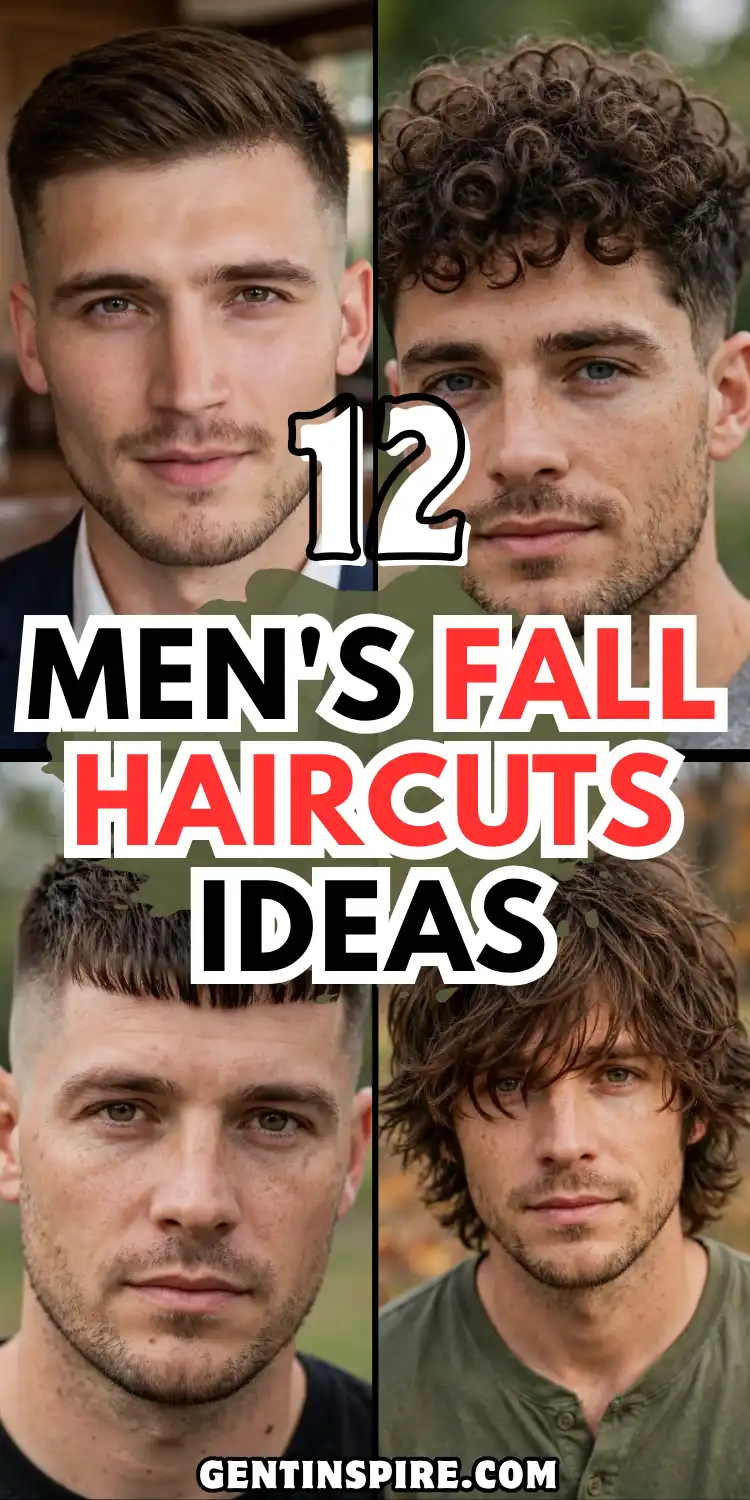
Every fall, I notice the same thing. The weather cools, sweaters come out, and my summer haircut suddenly feels out of place. It doesn’t pair as well with layered outfits or the polished look the season naturally brings.
After one visit to my barber, I realized a fresh cut could transform my entire appearance. A textured top and clean taper made even my everyday wardrobe look sharper and more put together.
That’s why Men’s Fall Haircuts are worth considering. They complement autumn style while staying practical and easy to maintain. Below, you’ll find some of the best Men’s Fall Haircuts to inspire your next look.
12 Men’s Fall Haircuts
★ Editor’s top 2 picks — lowest maintenance, work with any face shape
12 Men’s Fall Haircuts Ideas
The Classic Taper — Never Trendy, Never Wrong

This is the cut that works in every boardroom and every bar. It’s the safest choice on this list, and safe isn’t a knock — it’s a feature.
Clean sides, natural-looking top, zero explaining required.
Barber Instructions
- “Skin fade or taper fade on the sides, blended into a #2”
- “Keep 3–4 inches on top, scissor cut, not clippered”
- “Taper up behind the ears, not just at the neckline”
Comb it back or push it slightly to one side with a matte paste — nothing shiny, nothing stiff.
Two fingers of product, worked in while hair is still damp, is the whole routine. No brush required once it’s dry.
Low-maintenance version: Ask for a longer guard on the sides — a #3 instead of skin — so regrowth doesn’t read as sloppy between appointments.
The Textured Crop — Built for Movement

This cut trades polish for energy. It photographs better messy than neat, which makes it nearly foolproof day to day. Short on the sides, choppy and fringe-forward on top.
Barber Request Guide
- “Point-cut the top for texture, don’t blunt-cut it”
- “Short taper on the sides, #1.5 to #2”
- “Leave a fringe I can push forward”
Work a matte clay through towel-dried hair and scrunch upward from the roots — don’t comb it, just press it into place with your fingers.
The texture comes from the cut, not the styling, so resist the urge to overwork it.
If your hair is thicker: Ask your barber to thin the crown with thinning shears so it doesn’t puff up by midday.
The Slick Back — Fall’s Sharpest Formal Option
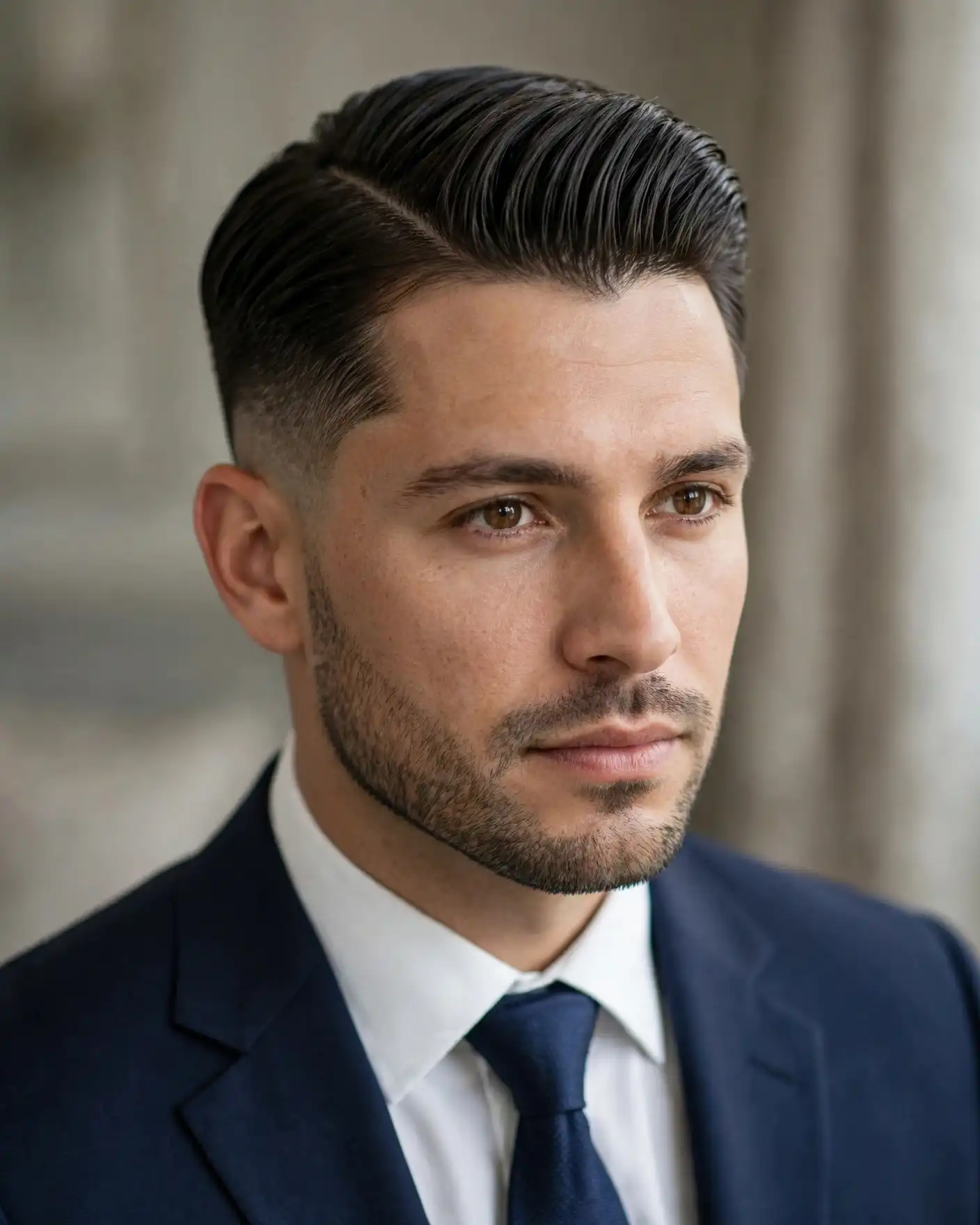
Length on top with a hard part underneath reads as deliberate in a way few cuts do. This one earns its keep at weddings, interviews, and anywhere else you need to look like you tried. Not a casual, everyday choice.
Ask Your Barber for This Cut
- “Mid taper on the sides, blending into 4+ inches on top”
- “Cut a hard part on my [left/right] side”
- “Keep the top weighty, not thinned out”
Blow-dry it back while it’s damp, then run a strong-hold pomade through with a comb, working from the part backward.
Heat first, product second — reverse that order and it won’t hold past noon.
Cool weather note: A light hairspray after styling keeps it locked through wind and hat removal.
The Buzz Cut — Zero Effort, Zero Regret

Nothing to style, nothing to grow out unevenly, nothing to think about before 8 a.m. This is the cut for anyone who wants their hair off the list of daily decisions entirely. It works with a beard or without one.
Talking to Your Barber
- “All-over #2, no fade, even length”
- “Line up the neck, not just the sides”
- “Keep it consistent, no scissor work on top”
There’s no real styling here — a dab of pomade adds a bit of sheen if you want it. A drop of beard oil rubbed over the scalp does more for the look than any hair product will.
Grow-out tip: At the three-week mark, a #2.5 buzz all over resets it cleanly without going shorter than you started.
The Faux Hawk — Controlled, Not Flashy
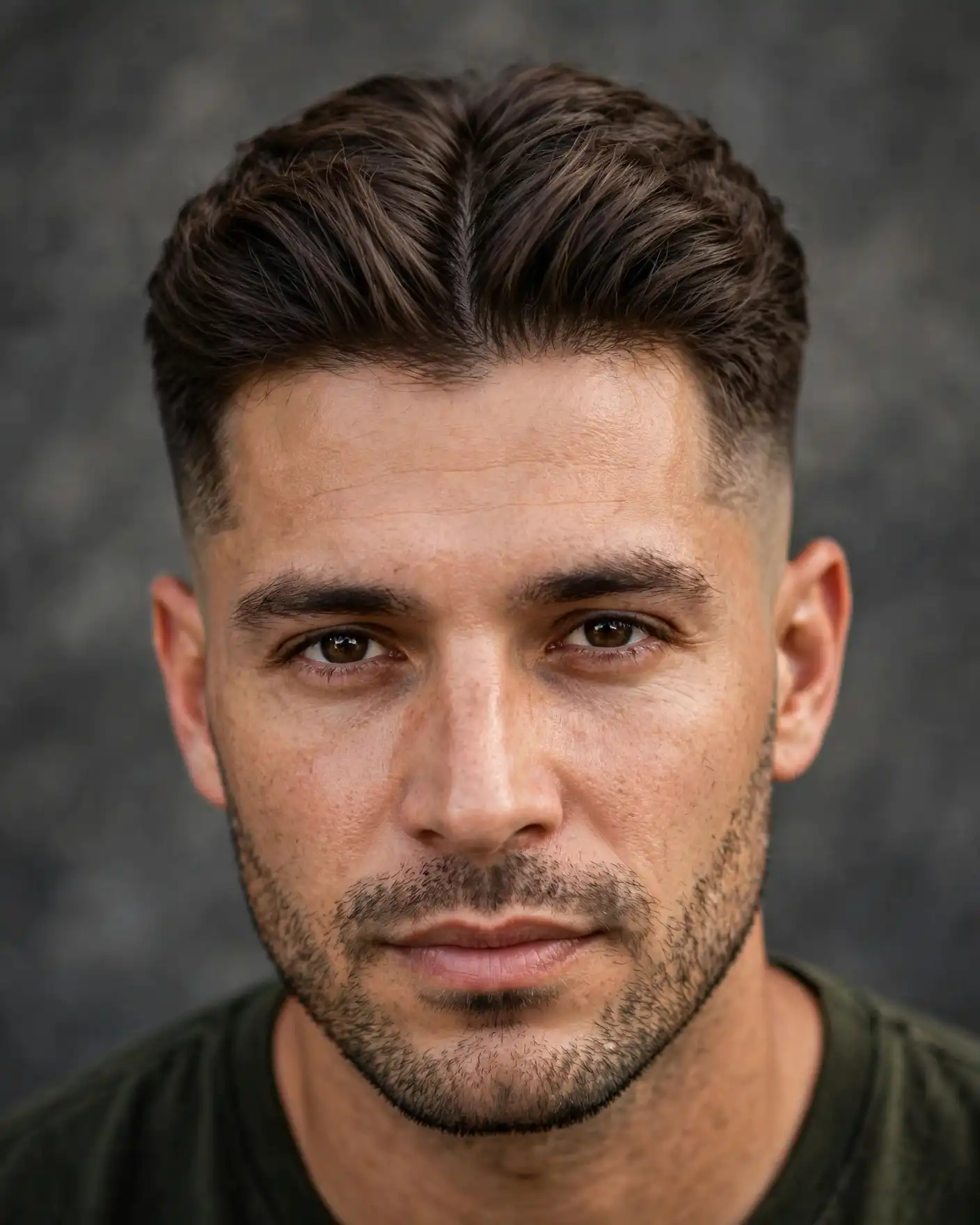
This isn’t the spiked-up version from a decade ago. The modern faux hawk is subtle — a slight ridge of height down the center, not a statement piece. It reads as sharp rather than try-hard when it’s cut right.
What to Tell Your Barber
- “High skin fade on the sides”
- “Leave the center strip longer, blended, not choppy”
- “No hard line between the fade and the top — I want it seamless”
Apply a matte wax to damp hair and pull straight up through the center section with your fingers, letting the sides lie flat naturally.
Less product than you think — overdoing it flattens the ridge instead of defining it.
Low-maintenance version: Ask for a slightly lower fade so the contrast is softer and forgives a few extra days between cuts.
The Curly Crop — Working With What You’ve Got

If your hair curls naturally, fighting it is a losing battle. This cut shapes the curl instead of suppressing it, which is why it looks better the less you touch it. Shorter sides frame the volume up top.
What to ask your barber
- “Cut the curls dry, not wet, so you see the actual shrinkage”
- “Taper the sides to a #2, don’t clipper through the curl pattern on top”
- “Remove weight but keep the curl shape intact”
Scrunch a curl cream into damp hair and let it air-dry — touching it while drying breaks up the pattern and causes frizz.
Hands off until it’s completely dry, then a light finger-comb is all it needs.
Humidity note: A leave-in conditioner before the curl cream helps it hold shape through wet fall weather.
The French Crop — Fringe-Forward and Low-Fuss
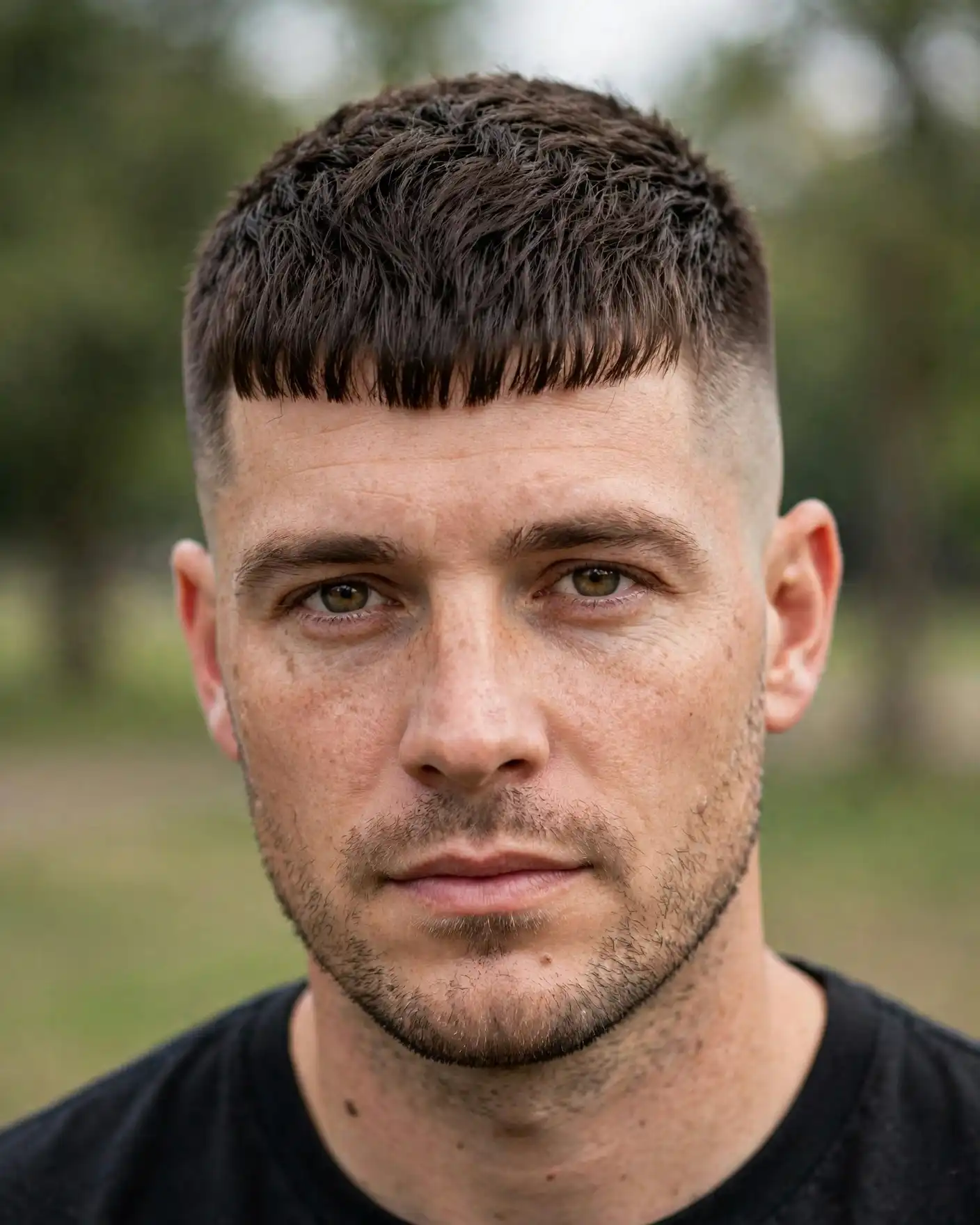
A short, blunt fringe paired with tight sides. It’s one of the few cuts that looks intentionally undone the moment you walk out of the shop, no styling required. Works especially well on straighter hair.
Barber Instructions
- “Skin fade or short taper on the sides”
- “Blunt fringe, cut straight across, not layered”
- “Keep the top short — an inch to an inch and a half”
Towel-dry and press a small amount of clay forward with your palm — you’re aiming for texture, not a shine.
Don’t part it; the fringe should look like it fell that way naturally.
If this feels too short: Ask for an extra half-inch on top so you can push the fringe to the side on days you want a change.
The Pompadour — Volume Done Right
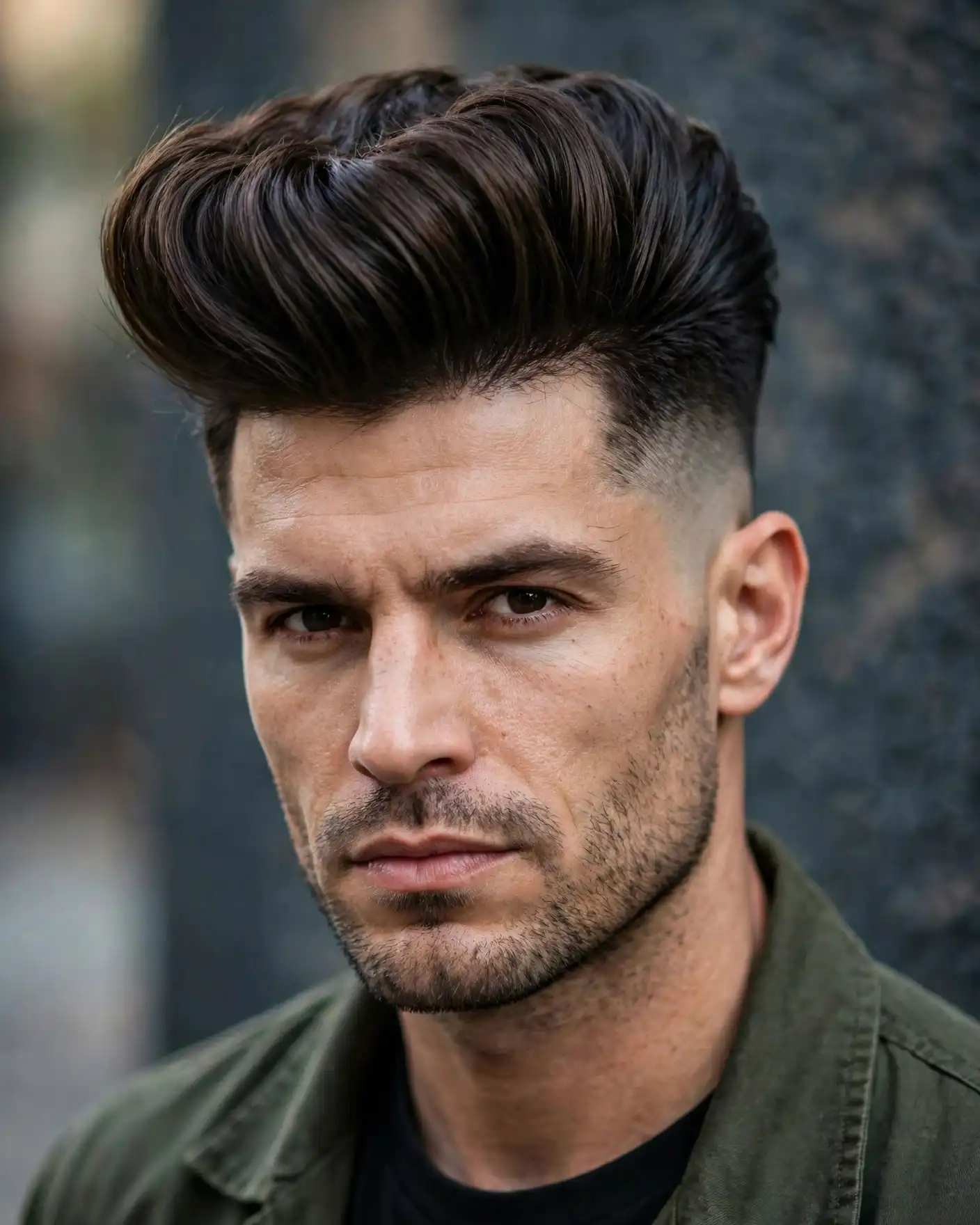
Big on top, tight on the sides, and unapologetic about it. This cut needs commitment — both to the length and to the daily styling — but nothing else on this list has the same presence. Best suited to thicker hair that holds a shape.
What to ask your barber
- “High fade or taper, aggressive contrast with the top”
- “Leave 4–5 inches at the front, tapering shorter toward the crown”
- “Cut the front with enough weight to hold height”
Blow-dry upward and back using a round brush, then set with a strong pomade while hair is still warm.
Product goes in before it fully cools — once it sets, reworking it just deflates the volume.
Footwear note — kidding. Rain note: Carry a small comb; humidity is this cut’s only real enemy.
The Undercut — Maximum Contrast

Disconnected sides, long top — this is the boldest fade on the list. It’s not subtle, and it’s not meant to be, so only pick this if you actually want people to notice the cut. Best on those comfortable standing out slightly.
Get the Perfect Cut
- “Disconnected undercut — no blend between the sides and the top”
- “Skin fade or clipper-short sides, #0 to #1”
- “Leave the top long enough to slick, sweep, or tousle”
Style depends on mood: slick it back for structure, or work a texturizing spray through for a looser, undone finish.
The disconnection is the point — don’t let a barber accidentally blend it into a normal taper.
Low-maintenance version: A mid-fade undercut instead of skin softens the contrast and stretches time between visits.
The Ivy League — American Prep, Updated

A step down in length from the pompadour, with a side part and clean taper. It’s the cut that looks equally at home under a suit jacket or a flannel, which is exactly why it works through fall. Understated, not boring.
Barber Tips for This Look
- “Taper fade on the sides, #2 to #3”
- “2–3 inches on top, enough to comb and part”
- “Cut a defined side part, not just a natural fall”
Comb through with a light pomade while damp, directing hair off the part in one clean motion. One pass with the comb — repeated combing just breaks down the hold.
Cool weather swap: Add a touch more length on top for fall so a beanie doesn’t flatten it past recovery.
The Shag — Fall’s Texture-First Statement

Longer, layered, and deliberately imperfect. This is the one cut here that actually improves with a little neglect — overstyling kills the entire point. Best suited to hair with some natural wave or texture.
What to ask your barber
- “Heavy layering throughout, especially around the crown”
- “Point-cut the ends for texture, not a blunt finish”
- “Leave the fringe long enough to fall into the eyes slightly”
Apply a sea-salt or texturizing spray to damp hair and let it air-dry, tousling occasionally with your fingers. No brush, no comb — brushing this cut erases the layering you paid for.
If your hair is finer: Ask for a volumizing mousse instead of salt spray, since salt spray can make fine hair look flat rather than textured.
The Comb Over Fade — The Reliable Middle Ground
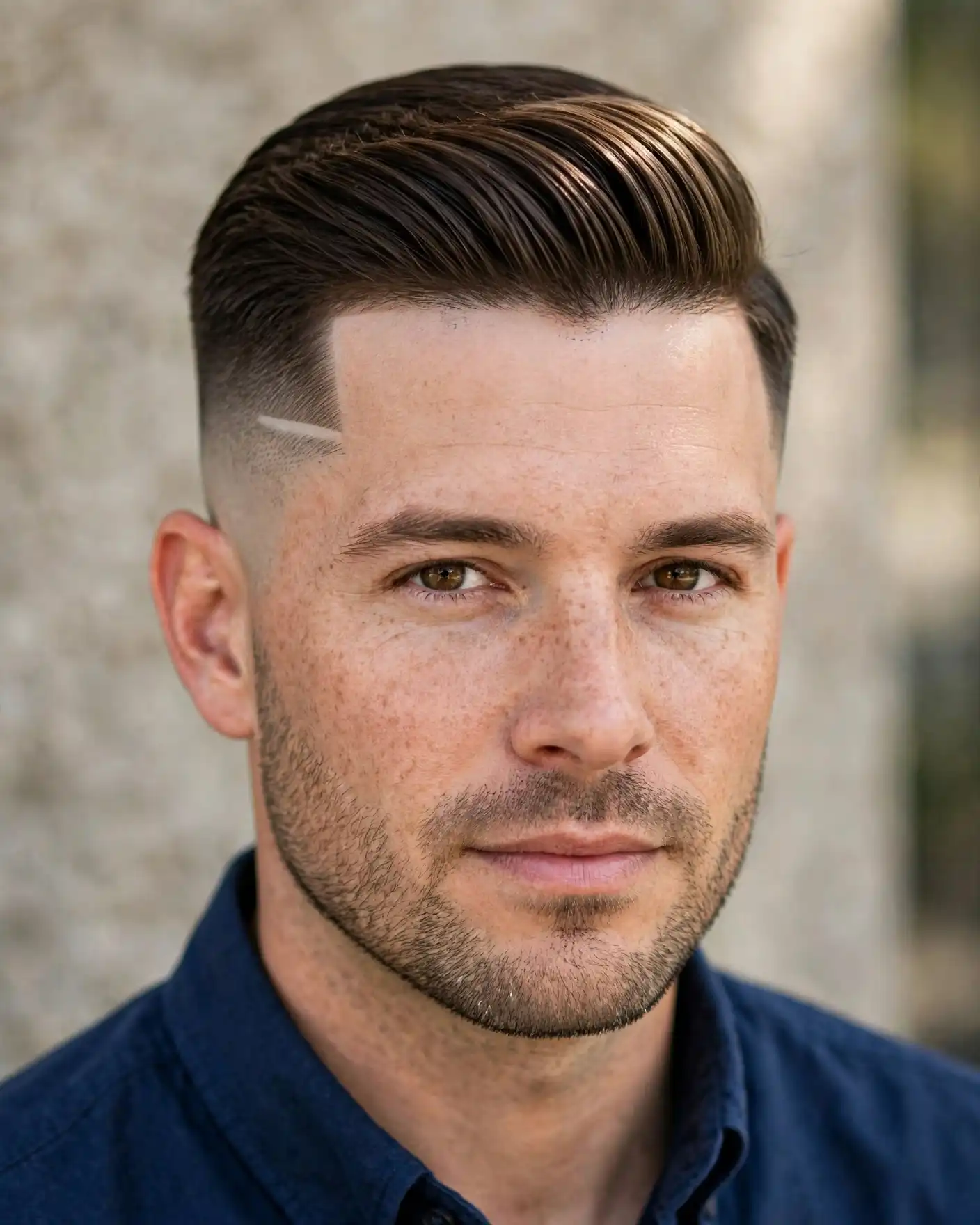
Between the Classic Taper and the Ivy League sits this one: a defined part with a hard fade underneath, offering more polish than a taper but less commitment than a pompadour. A genuinely versatile pick for someone who wants one cut for everything.
Barber Consultation Tips
- “Mid or high fade on the sides”
- “3 inches on top, tapering toward a defined part”
- “Hard part line, razor-etched if you want extra sharpness”
Blow-dry the part in first, then comb a light-hold pomade through to set it without stiffness. Style it the same direction every time — switching the part disrupts how the cut grows in.
Budget alternative — this is a haircut, not a watch, but here’s the equivalent: Ask for a slightly longer fade guard so touch-ups can wait an extra week without the part losing definition.
Final Thoughts
Three things separate a good fall cut from a forgettable one: it holds shape without daily babysitting, it matches your actual hair texture instead of fighting it, and it grows out in a way that still looks like a haircut, not an accident.
IMO, the Classic Taper and the French Crop are the two best bets if you only want to commit to one this season — both forgive a missed barber appointment and both work with almost any face shape.
Pick the cut that fits your maintenance tolerance first, your face shape second, and your Pinterest board last. Everything else is just detail.
