
How to Pick the Best Color Combinations for Dark Skin Men (Without Guessing)

You open your closet, see clothes you like, and still feel like the outfit looks off. Most guys blame the fit or the brand. Often the real problem is color.
Learning the best color combinations for dark skin men is a skill you can pick up in one afternoon, and you do not need a stylist or a big budget.
Deep skin tones handle strong contrast better than almost any other. Crisp white, cobalt, mustard, and rich olive all look sharp against it. A few shades work the other way.
Pale gray, or a beige close to your skin color, can make your face look flat. Knowing which is which keeps you from buying shirts that sit in the closet.
In this guide, you will check your undertone, sort what you own, and build a small base of neutrals.
Check your undertone in daylight
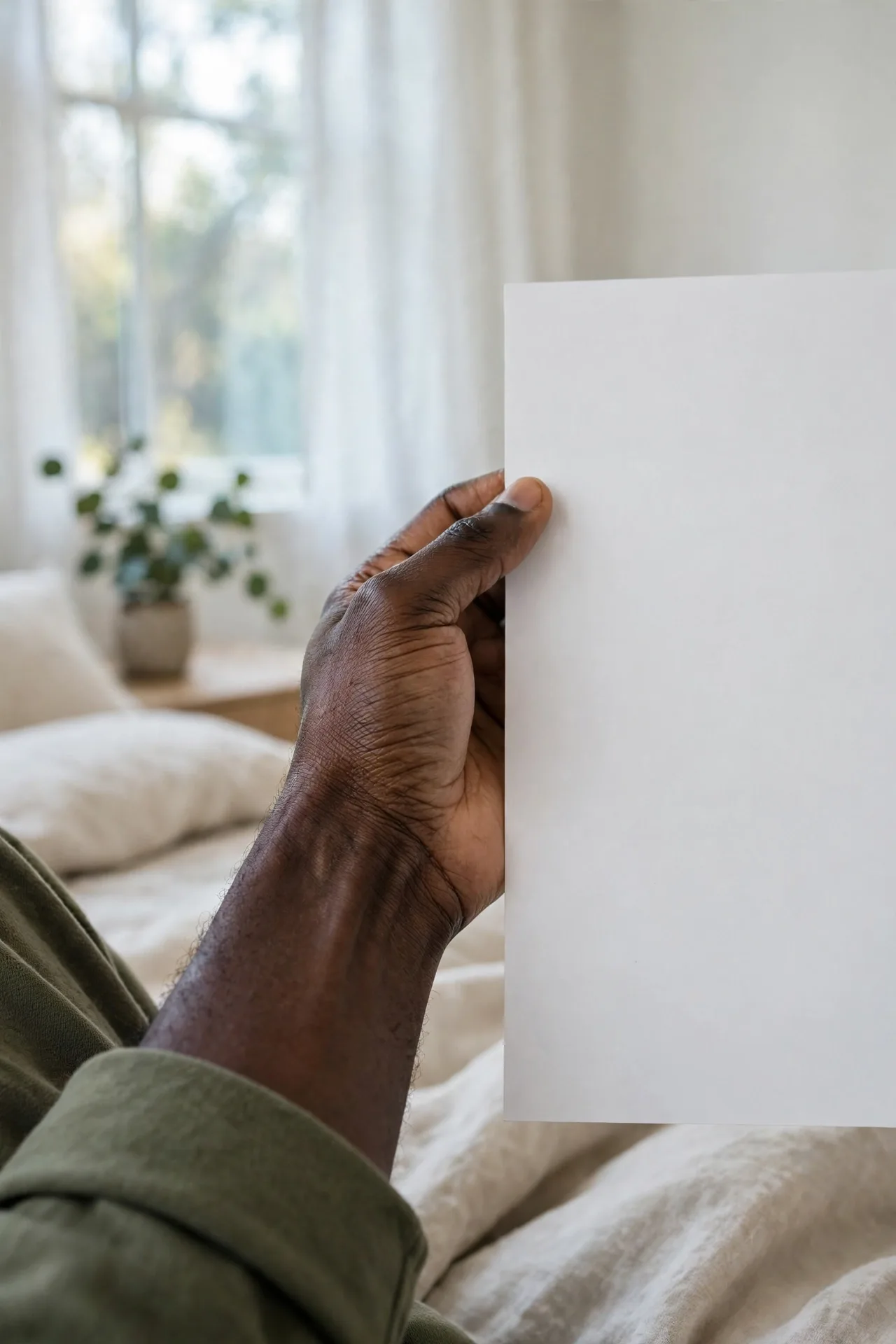
Indoor bulbs shift warm or blue and fool your eyes, so stand by a window in the morning. Hold the inside of your wrist next to a white sheet of paper.
Does your skin look golden, red, or chestnut? That is warm. Does it look plum, blue, or ashy? That is cool. Not sure? You are likely neutral, and most colors will work.
(If the paper test confuses you, hold a gold ring and a silver ring near your jaw. Whichever one glows against your skin is your side.) Write your answer down.
Sort your closet by color
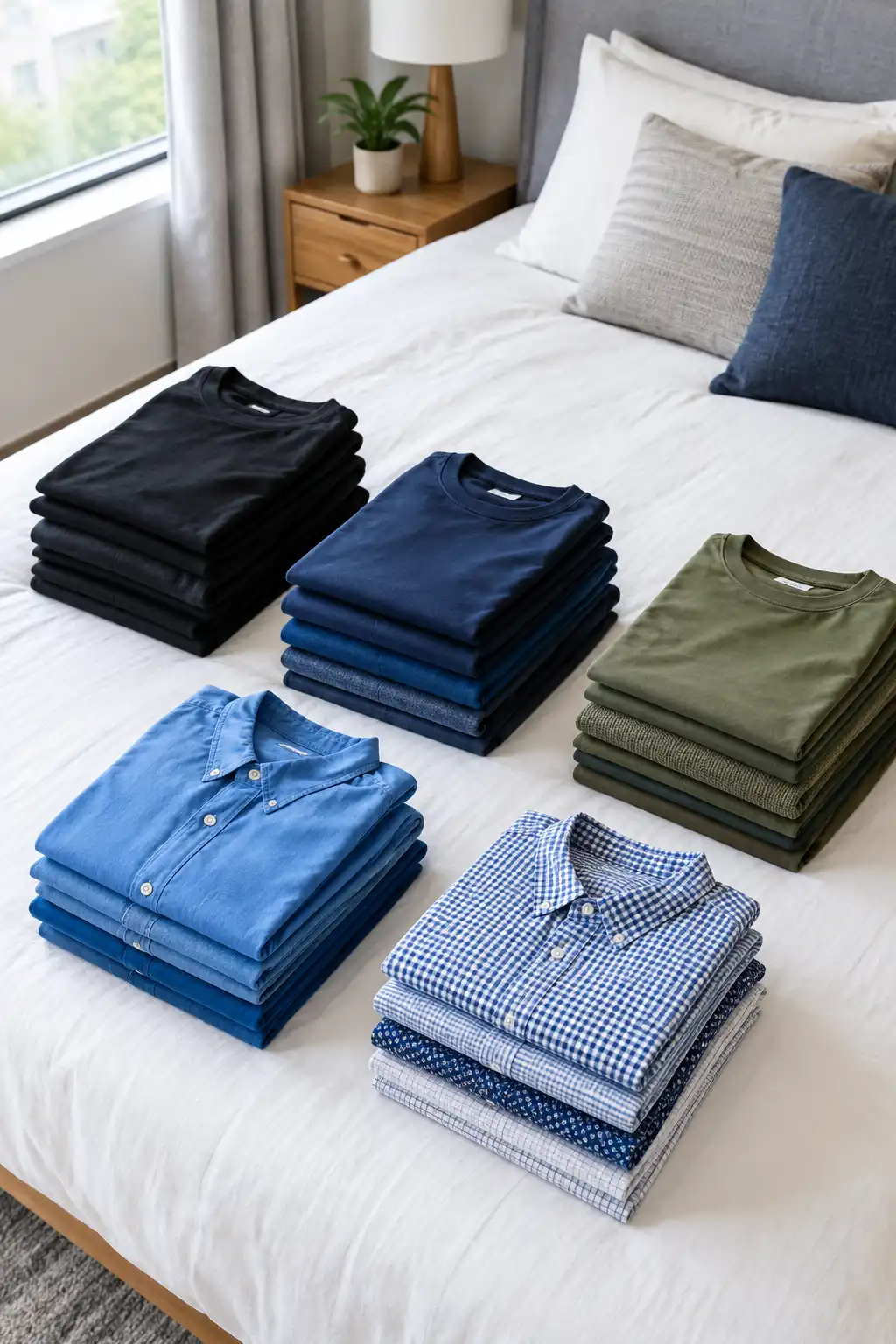
If your closet is sorted by clothing type, you will never see your color patterns. Break that habit for 10 minutes. Lay every shirt, tee, and sweater on your bed and make five piles:
- Black, white, and gray
- Navy, brown, and tan
- Olive and other greens
- Bright colors (red, orange, yellow, blue)
- Prints and patterns
Count each pile. The biggest one shows what you already buy. The smallest one shows what is missing. Snap a photo of each pile so you can check them later.
Choose three neutrals as your base
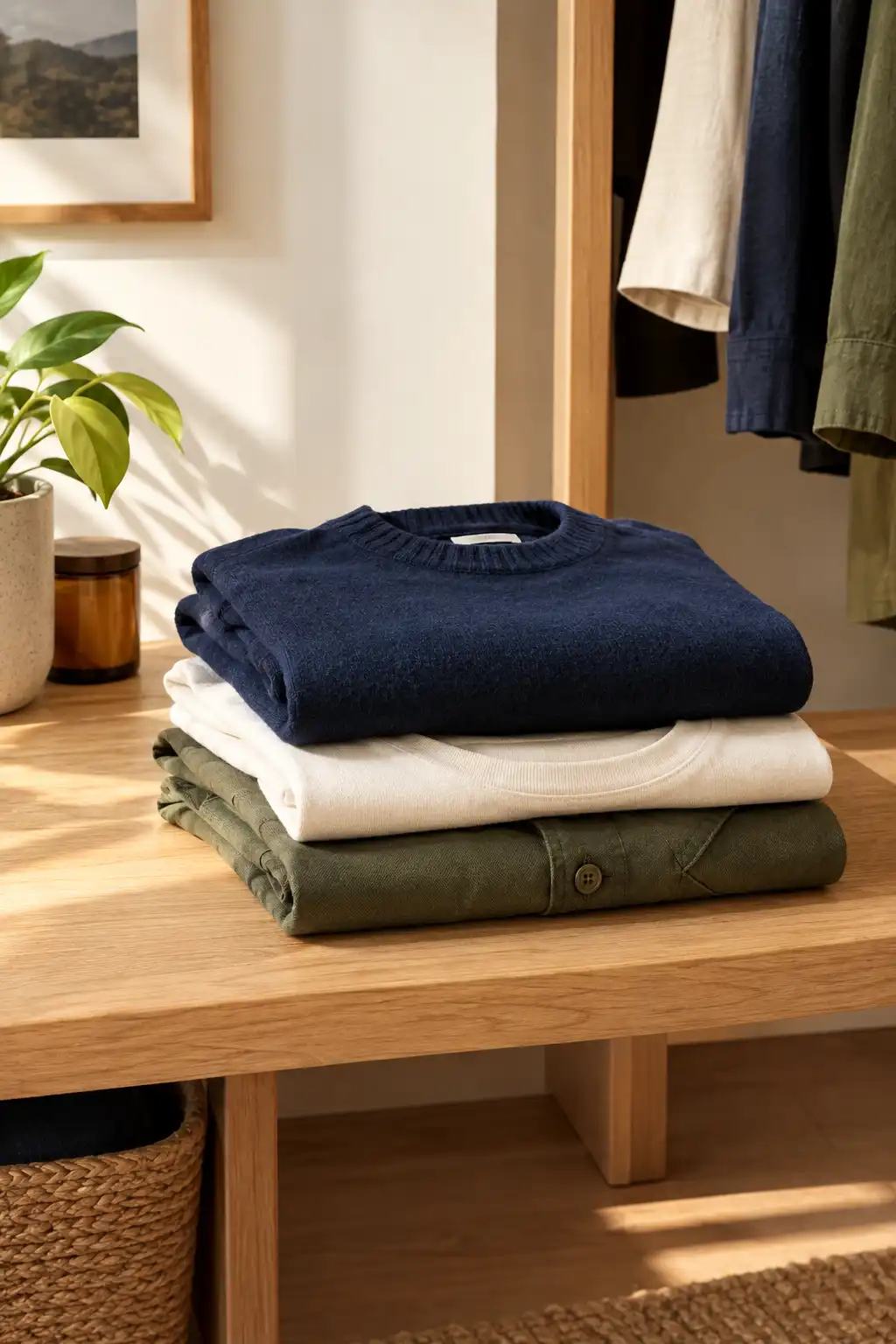
Three colors should carry most of your outfits. Pick one dark shade (navy or charcoal), one light shade (white or cream), and one middle shade (olive, tan, or mid-gray).
They work on dark skin because they give clean contrast without fighting your skin tone, and they mix with almost anything.
Skip any neutral that matches your skin too closely, like a muddy brown tee, since it makes your face blend into the shirt.
Pick one or two bold accent colors

Your bright pile from Step 2 already holds clues, so check which pieces you actually reach for. Choose one or two colors from this list and stop there:
- Cobalt blue
- Emerald green
- Mustard yellow
- Burnt orange
- Burgundy
Rich, saturated shades hold their own against deep skin. Pale, chalky versions can look washed out when they sit close to your face.
Follow the 60-30-10 rule for every outfit
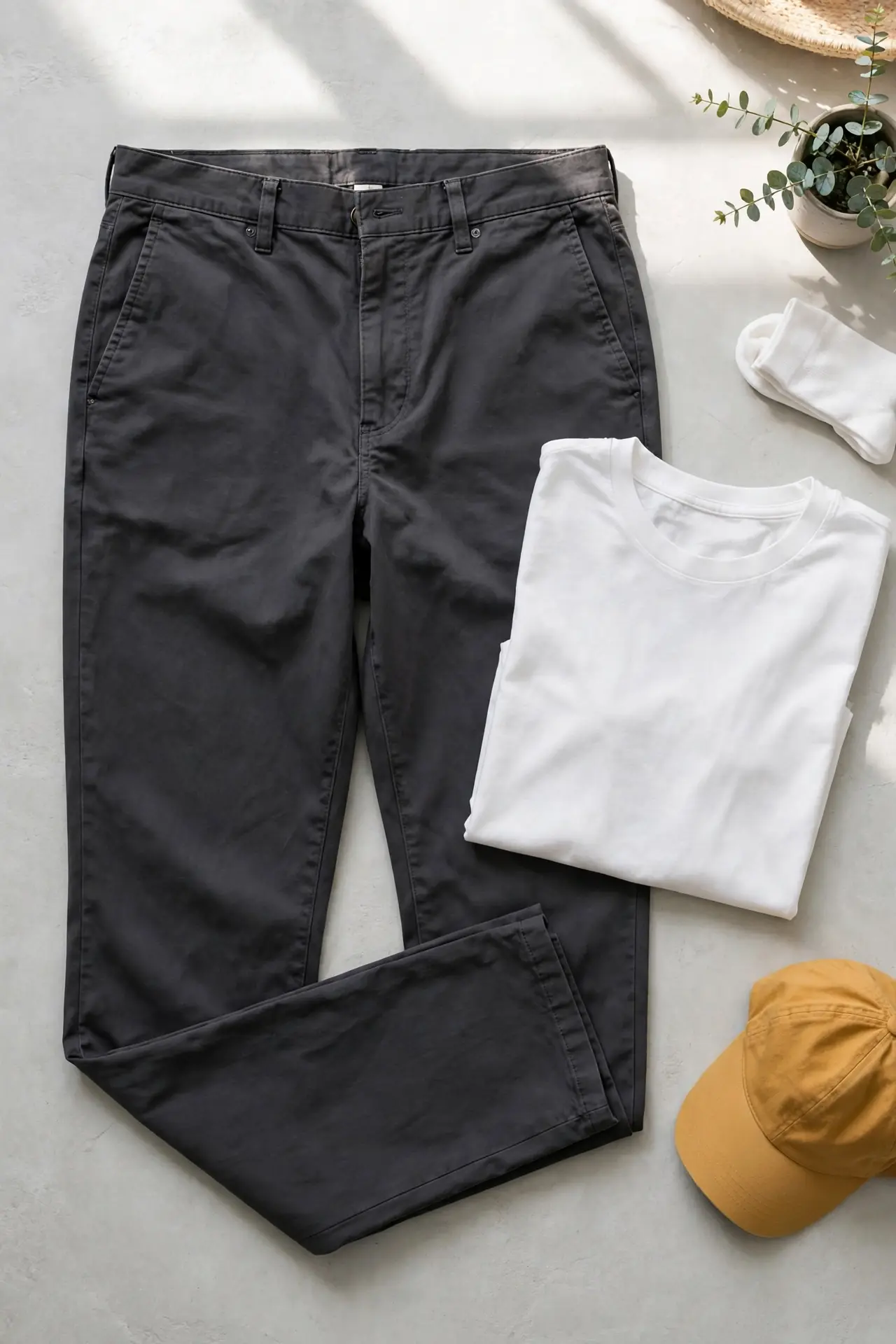
60% of what you wear should be your main neutral, usually pants. Give 30% to a second color, usually the shirt or jacket.
Save the last 10% for an accent like a cap, watch strap, or socks. The eye needs a calm area and one spot to land. Try charcoal pants, a white tee, and a mustard cap.
Build the best color combinations for dark skin men with five tested pairings

Each pairing below pairs a dark color with a light one, which gives the contrast deep skin tones carry well. Pick one tonight and wear it this week:
- Navy and cream
- Olive and camel
- Charcoal and mustard
- Cobalt blue and white
- Burgundy and black
Run each one through the 60-30-10 rule from Step 5. If a pairing feels too bold, swap the loud color for a neutral and keep it as a small accent.
Hold each shirt near your face before you commit
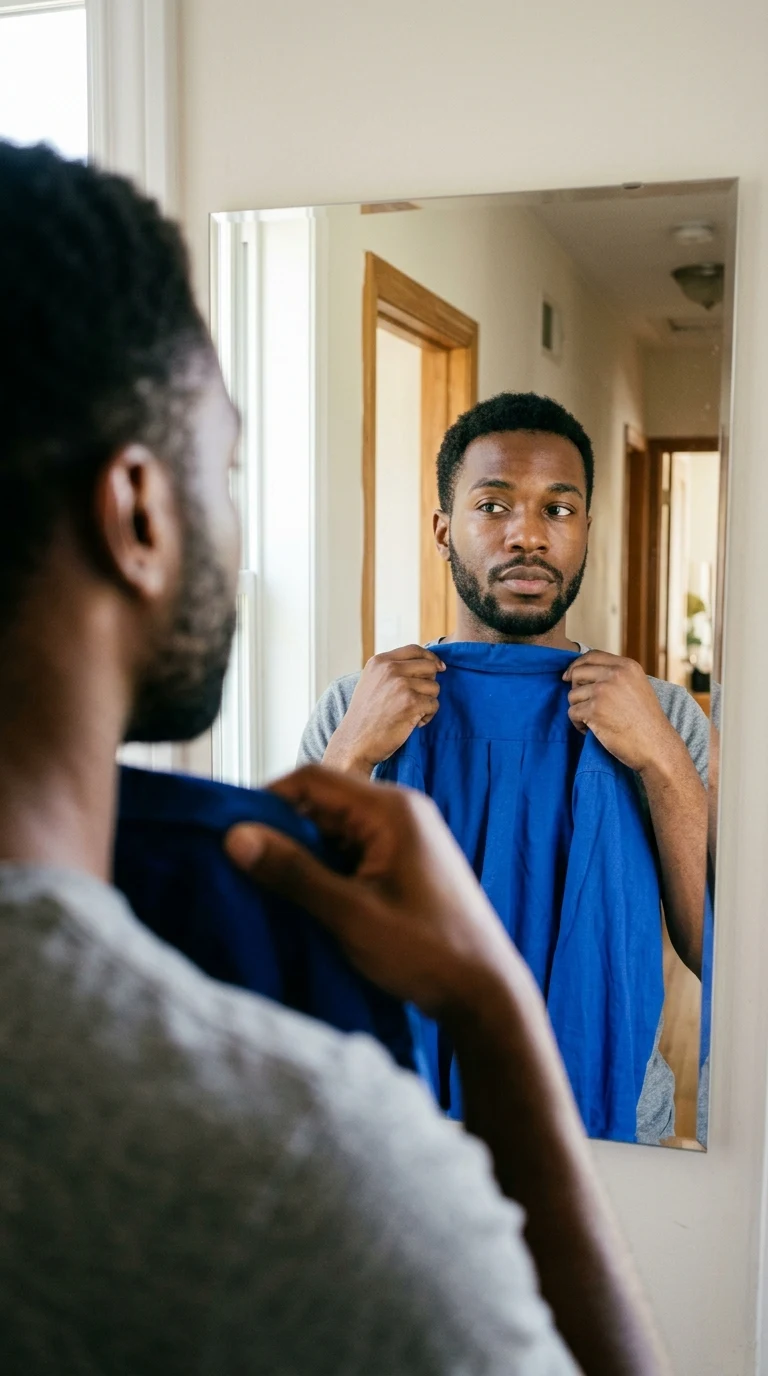
Look at your face, not the shirt. A good color makes your eyes and teeth look brighter and your skin look even. A bad one leaves you looking tired or gray.
Give each shirt 10 seconds under your chin by the window. In a store, skip the fitting room, since those bulbs run yellow, and check the color near the front door.
Match your shoes and belt to the outfit
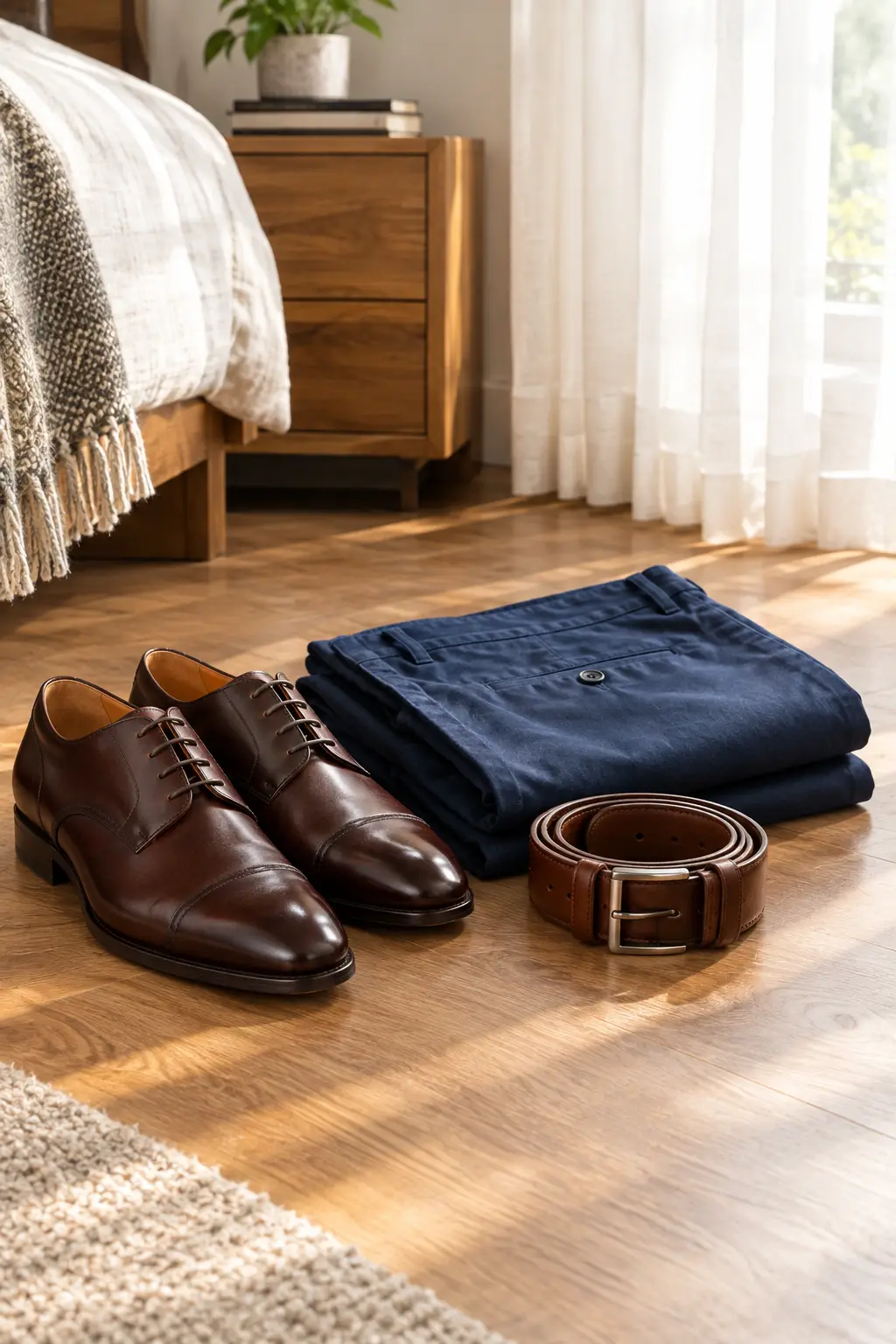
Two rules cover most outfits. Your belt should match your shoes, and your shoes should match the warmest or darkest color in the outfit. Brown leather goes with navy, olive, and camel. Black goes with charcoal and burgundy.
White sneakers work with every pairing from Step 6. Own only one pair of dress shoes? Make them dark brown, because they work with more of your base colors than black does.
Check the full look in daylight and in a photo

Your mirror shows one view, and your phone shows what everyone else sees. Stand by the window and take a full-length photo from about 6 feet away.
A friend can take it if you have no tripod. Then switch the photo to black and white. If your shirt and face blend into one gray block, the contrast is too low, so swap in a lighter or darker top. This takes 5 minutes and saves you a bad day out.
Troubleshooting: Fix Common Color Problems
| If This Happens | Try This |
|---|---|
| Your face looks gray or tired in a shirt | Swap to a richer, deeper shade. Pale gray and chalky pastels are the usual cause. |
| Your outfit looks flat or boring | Add one accent color from Step 4, like a cap, socks, or a watch strap. |
| Your outfit feels too loud | Keep the bright color on one piece. Switch everything else to your neutrals. |
| A color looks great in the store but dull at home | Store lights change colors. Check it by a window, and take a photo before you cut the tags. |
| Your tan or beige top blends into your skin | Choose camel, olive, or cream instead. Or wear the tan piece with a dark jacket on top. |
| You cannot tell your undertone | Treat yourself as neutral. Most colors in this guide will work, so test with Step 7. |
Frequently Asked Questions
Conclusion
You now know your undertone, your base neutrals, and your accent colors. You also have a rule that keeps every outfit balanced. That is a real system, and it works every time you open your closet.
Pick one of the best color combinations for dark skin men from Step 6 and wear it this week. Take a photo and see how it feels.
Save this pin to your style board so the Quick Reference Card is easy to find on your next shopping trip.
