19 Interview Hairstyles for Men That Get You Hired

Getting ready for a job interview? Your hairstyle can say just as much as your resume. These men’s interview hairstyles will help you look polished, confident, and ready to impress from the moment you walk in.
The morning of a big interview feels a lot like hosting a dinner party for the first time. You want everything to be just right, your clothes, your confidence, and especially your hair.
I’ve learned that choosing the right interview hairstyle for men isn’t about chasing trends. It’s about looking polished, approachable, and professional without seeming like you tried too hard.
I’ve seen talented people second-guess themselves over small details, wondering if their hair looked too messy or too stiff.
The truth is, a clean, well-styled haircut can quietly boost confidence before you even walk through the door.
Just like a well-organized kitchen makes cooking easier, the right hairstyle sets the tone before you say a single word.
Whether your hair is short, curly, wavy, or somewhere in between, a thoughtful style can help you look prepared and put-together. Because in an interview, first impressions start long before the handshake.
1. Slicked Back Taper With a Glossy Finish
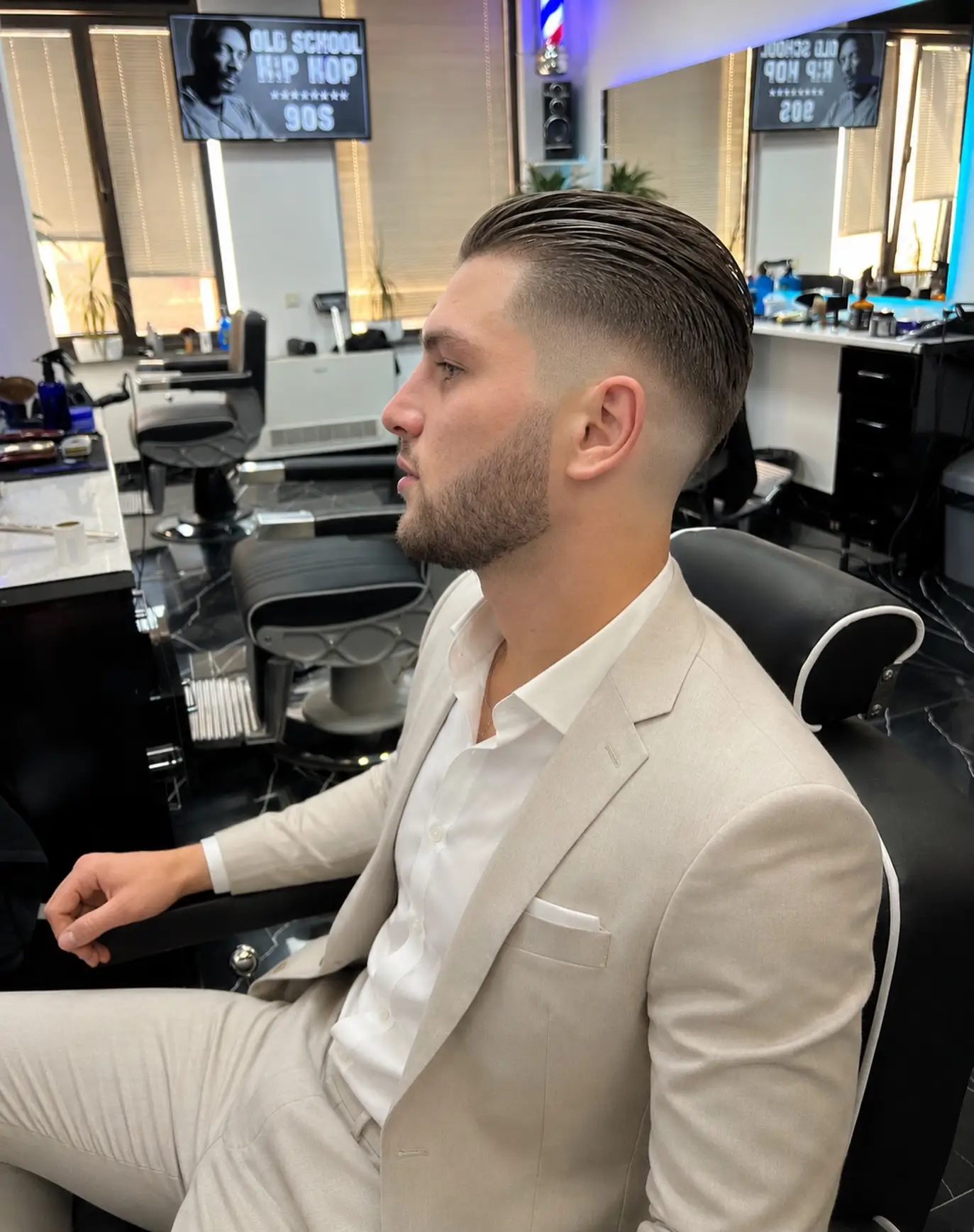
This look starts with hair pushed straight back into deep grooves. Every strand catches light from the wet, glossy finish. The sides drop into a low skin fade that hugs the head.
A slicked back cut like this reads sharp under office lighting and camera flashes alike. Short stubble frames the jaw without looking rough. Nothing about the shape pulls focus from the face.
Soft beige suiting and an open white collar keep this outfit warm. Skin tones like this one work best with a suit close to the same shade. Pair it with a simple silver watch and you have a solid interview hairstyle for the day.
2. Classic Side Part With a Deep Line
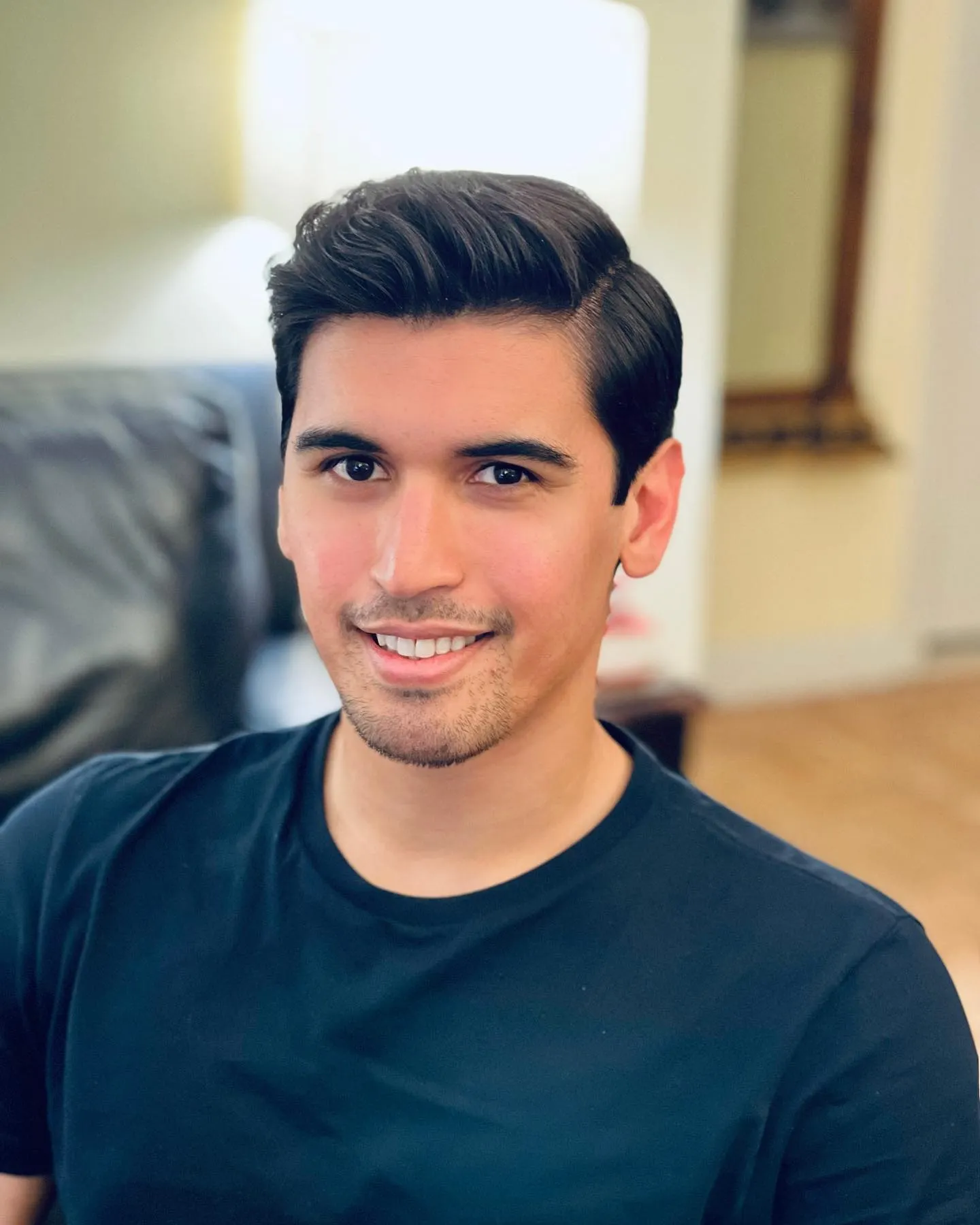
Outfit formula: Navy blazer, white oxford shirt, dark denim, and brown leather shoes.
This cut uses a deep side part that splits thick, dark hair into two clean sections. Waves fall softly across the top without looking messy. A light shine on the strands shows a touch of product, not grease.
Faces with strong jawlines suit a part this defined. It draws a straight line that balances a square shape.
Younger candidates in finance or law often lean on this style because it looks composed on camera.
Fit note: Keep the sides trimmed close so the part stays the visual focus, not the length.
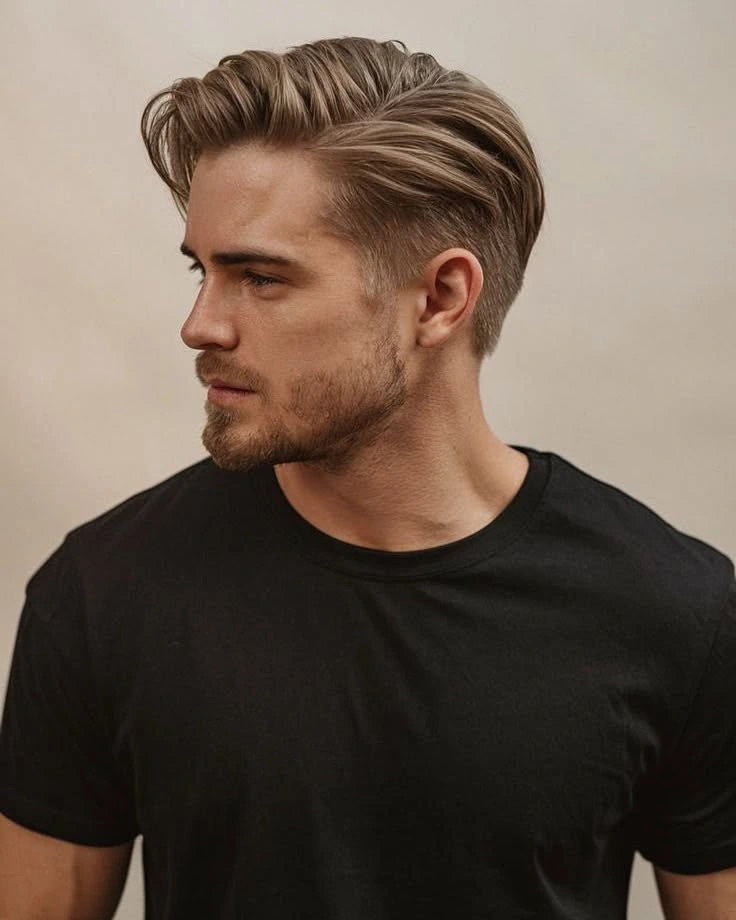
3. Brushed Back Undercut With Light Waves
- Top: Charcoal fitted blazer
- Bottom: Slim grey trousers
- Shoes: Black leather derbies
- Finishing touch: Thin silver tie bar
Light brown hair sweeps back off the forehead here, with a soft wave running through the top. The sides drop into a short undercut that sits well above the ear.
This shape suits round faces because it adds height without bulk. Men heading into a job interview hairstyle consult often ask for this exact brush back look.
Texture note: A matte paste holds the wave without flattening it, so ask your barber for that finish over a glossy gel.
4. Textured Crop With a High Skin Fade
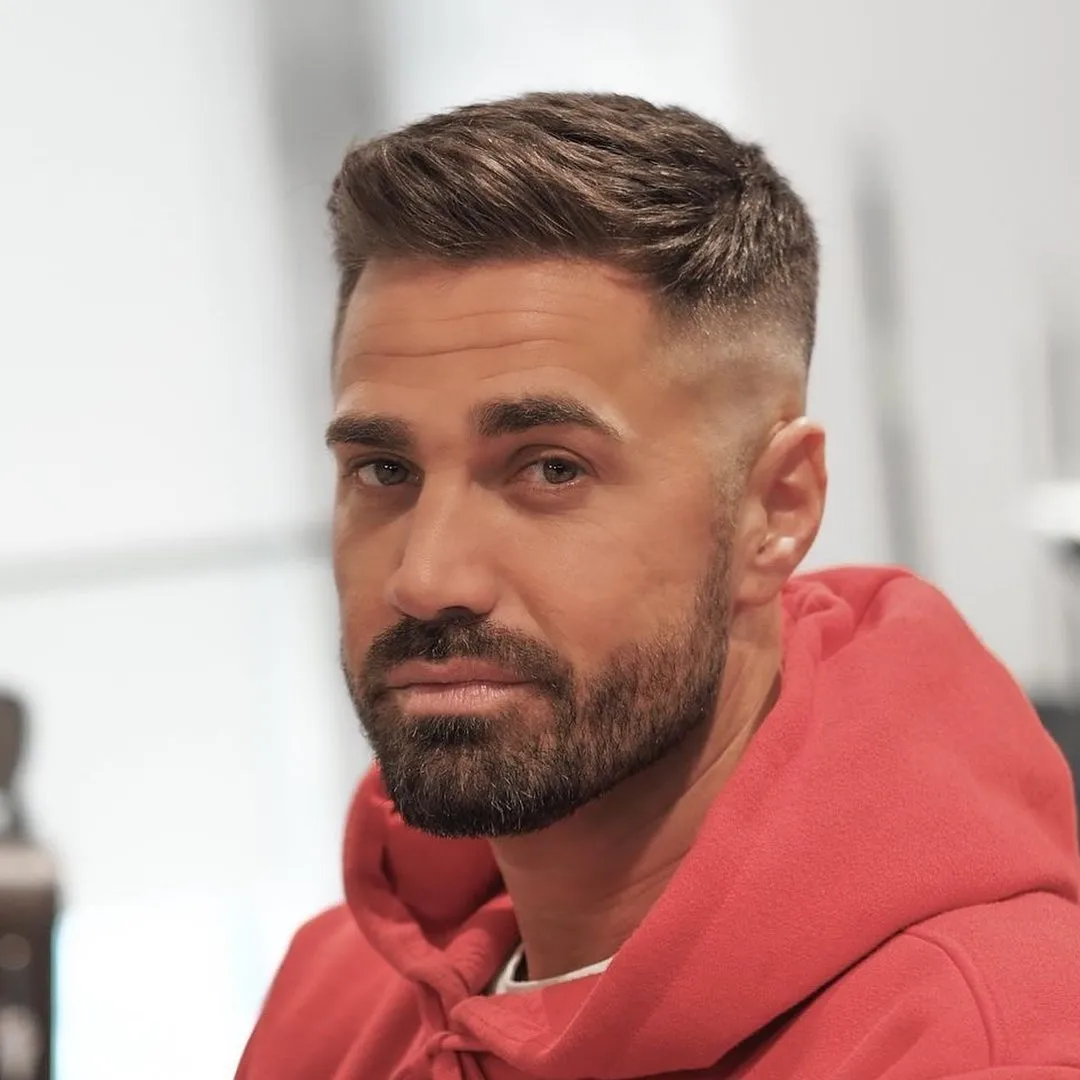
This crop keeps hair short on top with plenty of texture through the crown. A high skin fade cuts in sharp above the ear. The beard stays full and rounded, matching the shape of the jaw below.
Why it works:
- Short length needs almost no daily styling
- The fade keeps the eye moving upward toward the face
- A full beard balances a strong crop up top
Care tip: Ask for a matte clay so the texture stays rough instead of shiny under fluorescent office lights.
5. Volume Quiff With a Low Fade
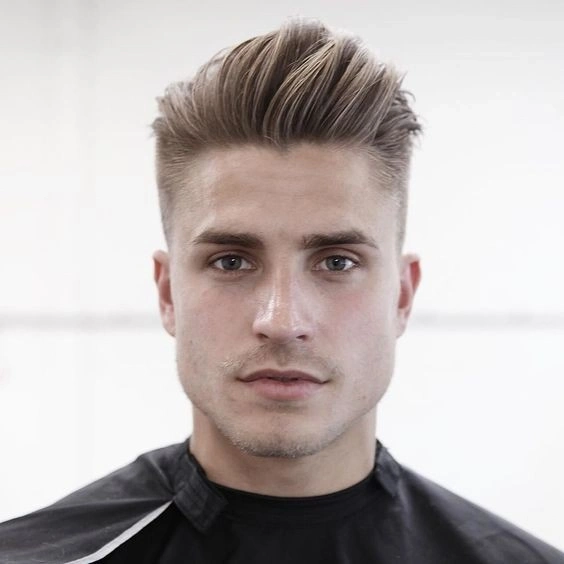
Best for: Creative roles that still want a groomed, professional edge.
Hair stands tall at the front here, brushed up and slightly back. A low fade tightens the sides without shaving too close. Ash blonde tones catch light and give the style extra dimension.
Round or oval faces gain length from this much height on top. The fade keeps things neat near the collar and ears.
Guys picking interview hairstyles for men often choose this exact shape because it feels modern but still buttoned up.
Styling tip: Swap the blow dry for a quick diffuser round brush if your hair leans wavy instead of straight.
6. Voluminous Pompadour With a Full Beard
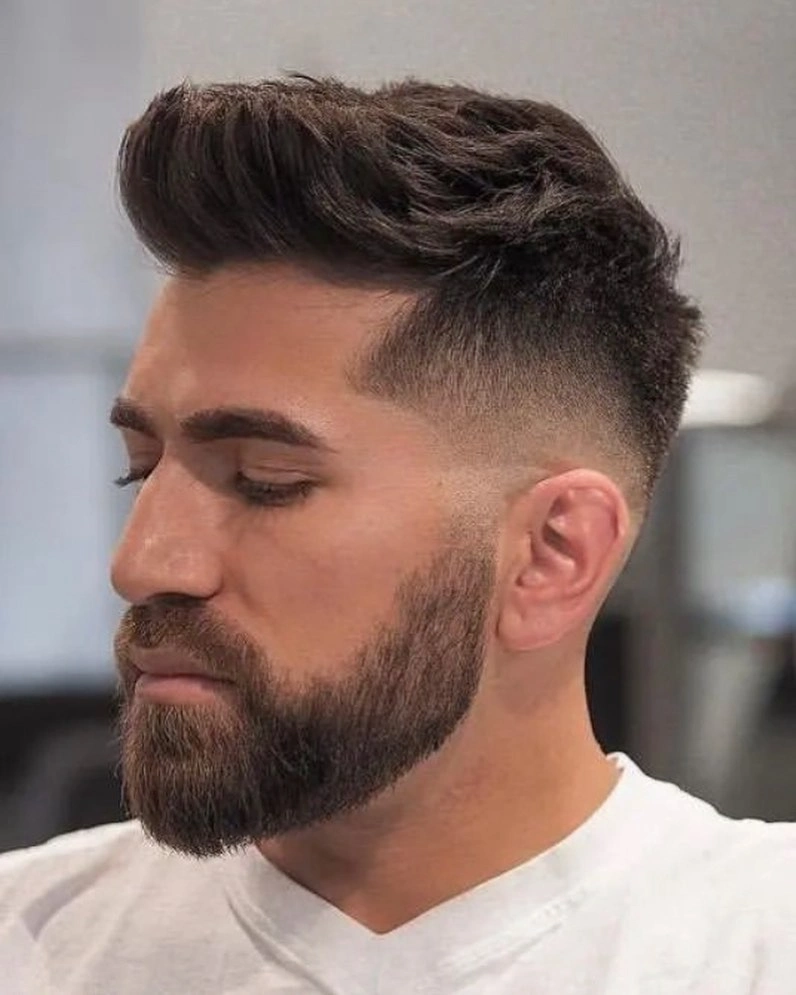
This pompadour rises high off the forehead in soft, dark waves. A mid fade tapers the sides down to nearly bare skin.
The beard below grows thick and full, shaped close along the cheek line and neck.
Proportion note: A beard this full needs a pompadour with real height, or the face can look bottom heavy.
Fabric note: The crisp white shirt underneath keeps the whole look sharp, so save patterned shirts for casual days.
7. Side Swept Comb Over With a Low Taper
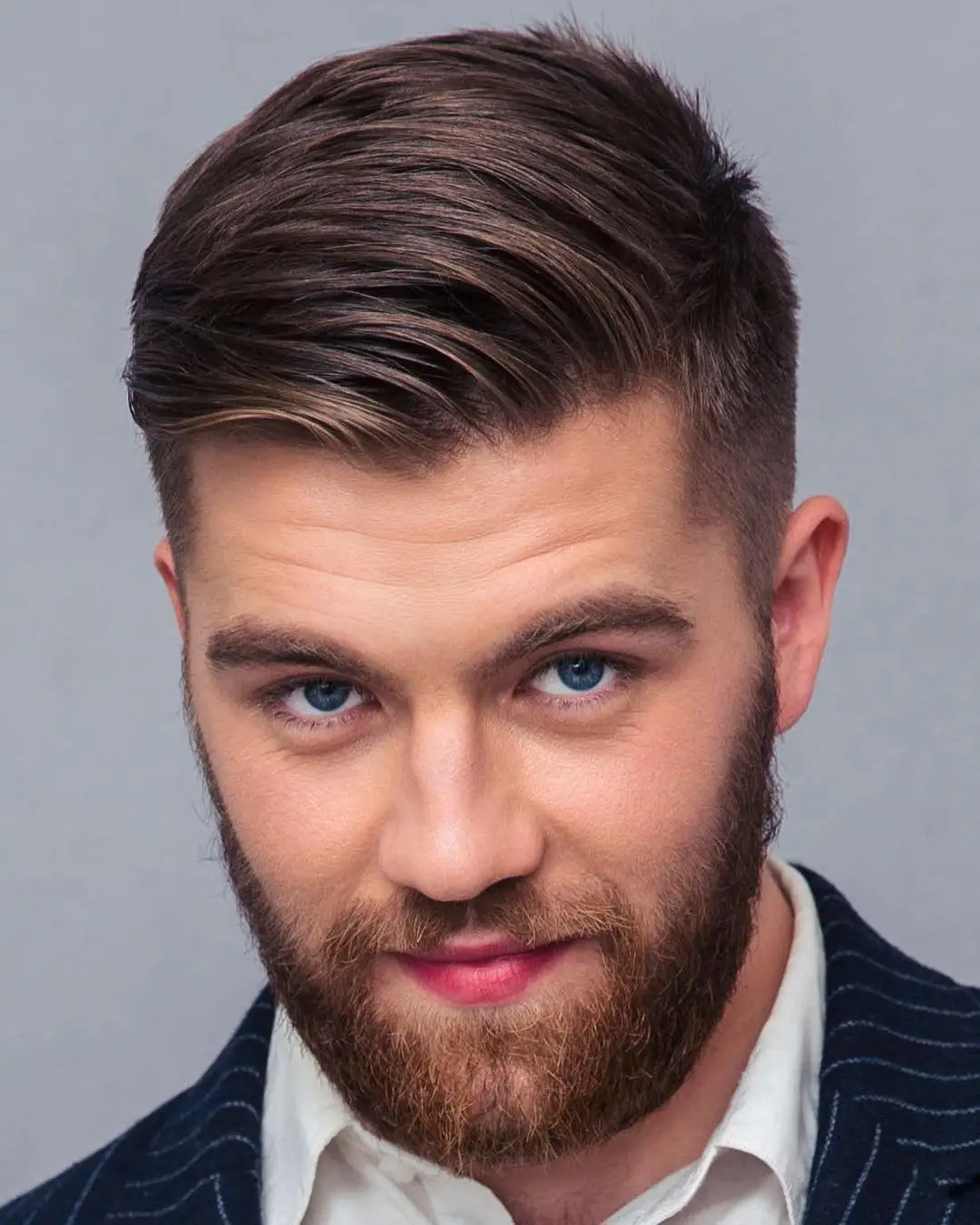
Dark brown hair sweeps to one side here, combed with a soft wave through the front. The taper stays low and tight near the ear. Blue eyes and light stubble give the whole face a clean, sharp look.
A pinstripe blazer over a white shirt turns this into a full interview ready outfit. Comb overs like this suit oval and heart shaped faces best. Waves up top keep things from looking too stiff or formal.
Ask your barber to leave enough length on top for the wave to sit naturally.
Too short and the comb over loses its shape by midday. This cut works for finance, law, or any role where a tailored look matters.
8. Curly Textured Top With a Low Fade
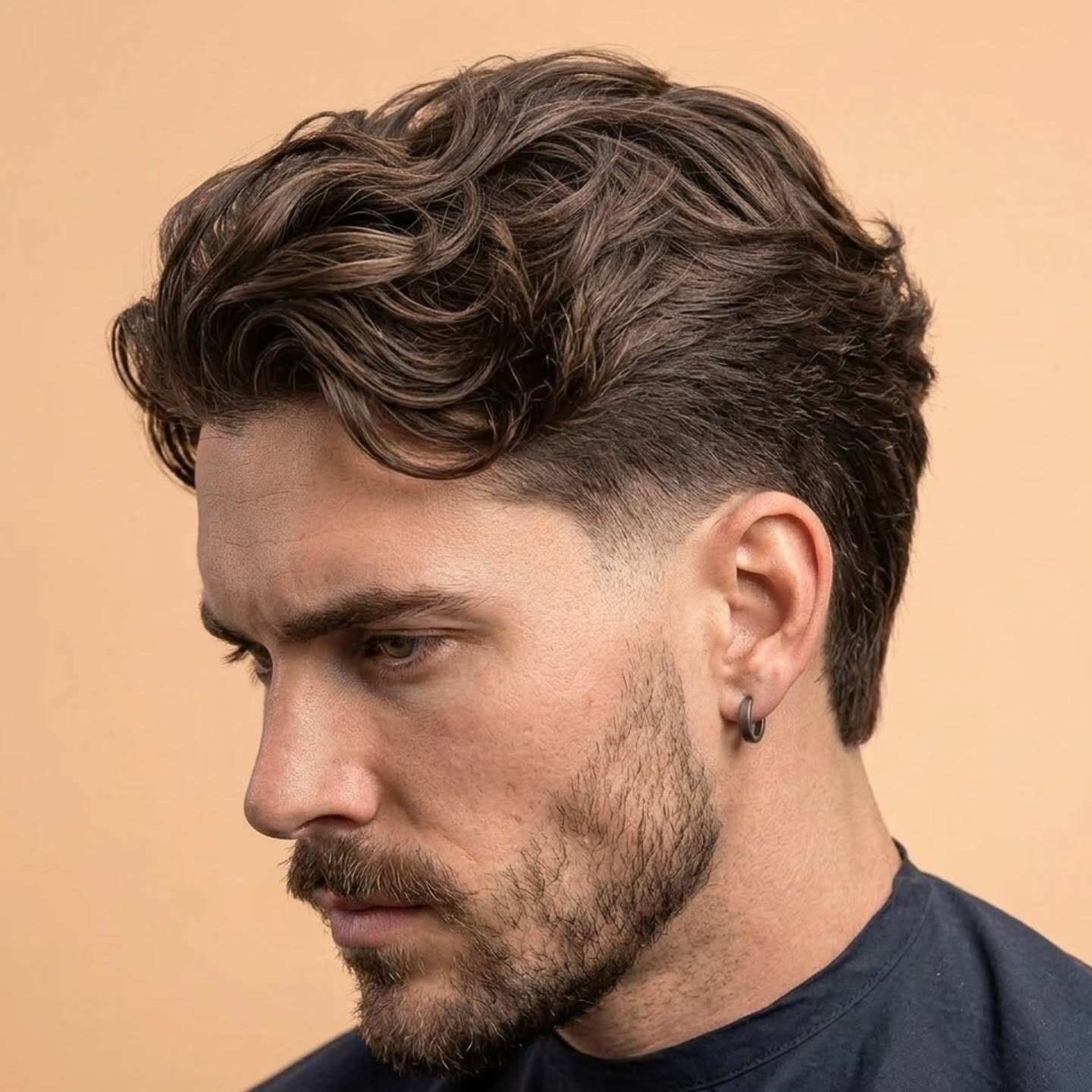
Outfit formula: Charcoal turtleneck, black wool trousers, and suede chelsea boots.
Thick curls pile high across the top of this cut, falling loosely to one side.
A low fade trims the sides close but keeps some length near the ear. Small hoop earrings add a modern edge to the whole shape.
Curly hair like this needs length on top to keep its natural bounce. Shorter sides stop the curls from turning into an untamed puff.
This balance makes it one of the more relaxed interview hairstyles for men who want texture over stiffness.
Curl note: Scrunch in a light cream while hair is damp, then let it air dry so the curl pattern holds without frizz.
9. Short Textured Crop With a Clean Fade
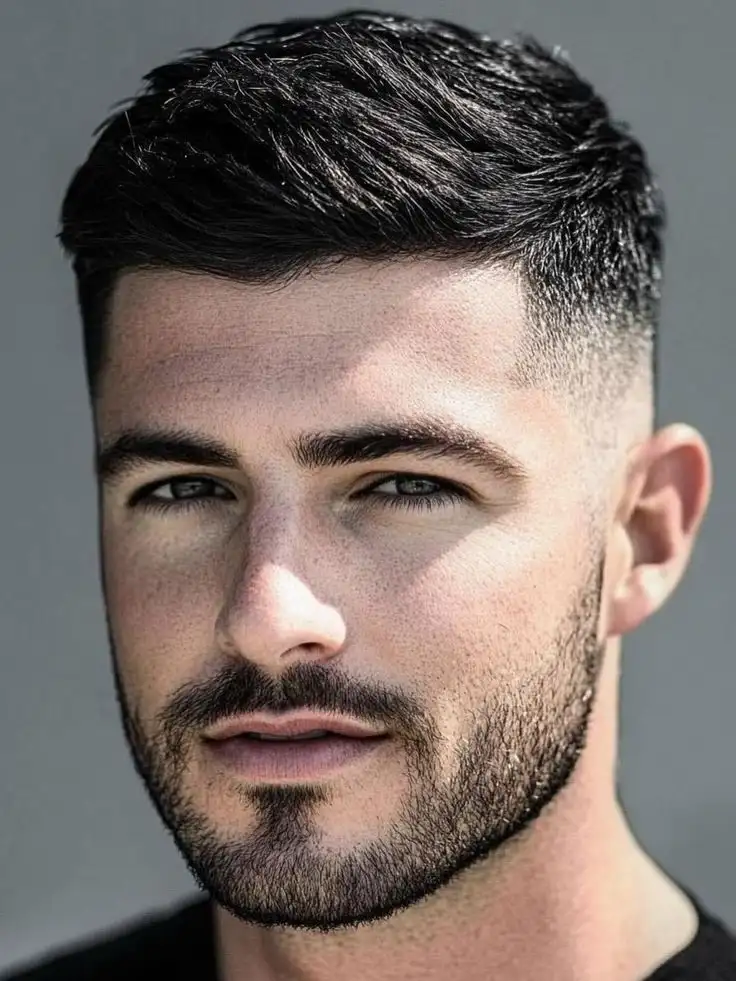
- Top: Slim navy suit jacket
- Bottom: Tailored grey trousers
- Shoes: Brown leather oxfords
- Finishing touch: Matte leather belt
Dark hair sits short and choppy on top, with texture pushed forward toward the brow.
The fade drops fast from the crown down to the skin. Light stubble along the jaw keeps the face grounded and sharp.
This crop suits nearly every face shape, which makes it a safe pick for a first interview haircut.
Shoe swap: Trade the oxfords for black derbies if your suit runs on the darker side.
10. Deep Side Part With a Vintage Wave
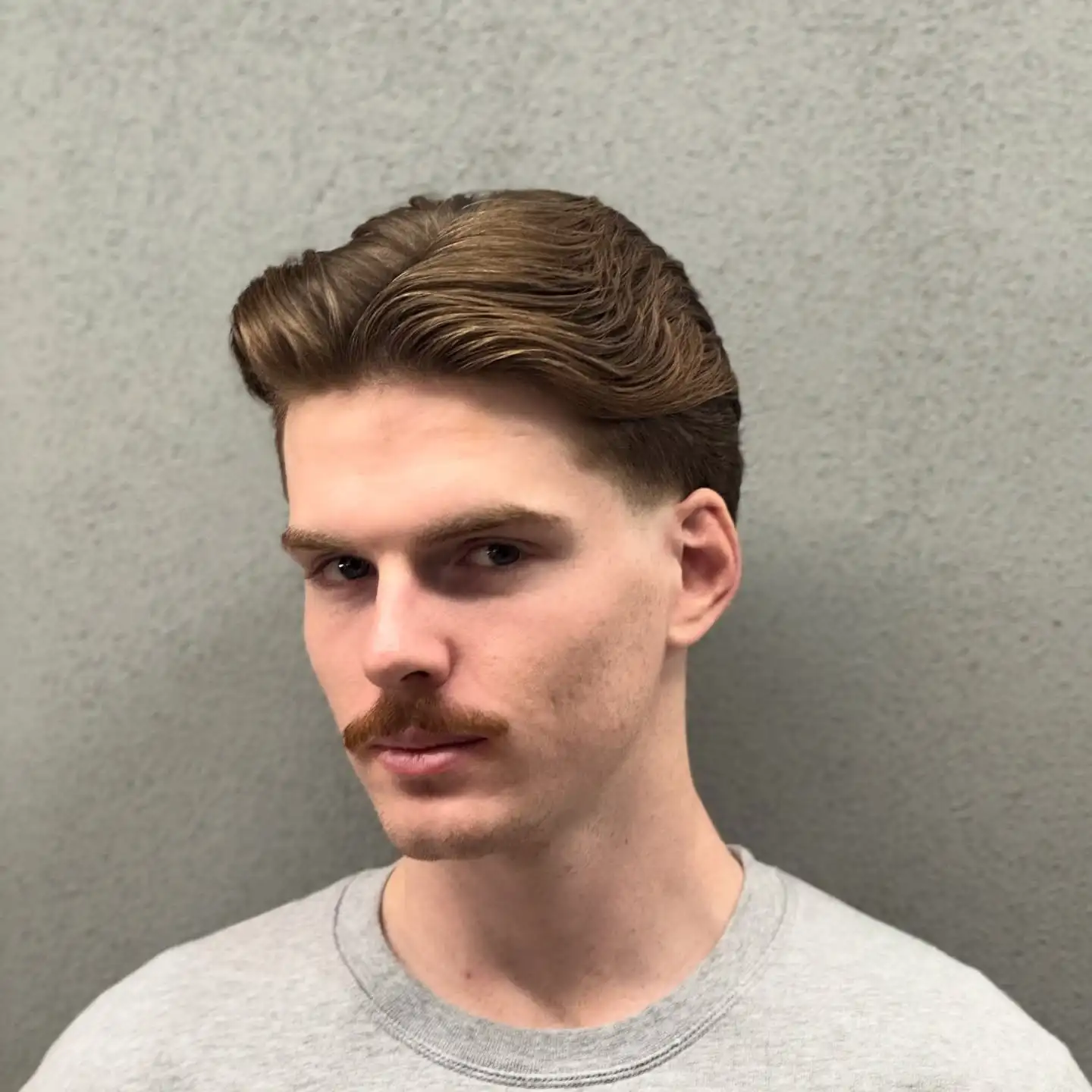
Golden brown hair combs into a deep side part here, with a full wave rolling across the top.
The sides taper low and stay close to the head. A thin mustache adds a retro touch without looking costume like.
Why it works:
- The deep part creates instant structure for any face shape
- Waves add movement so the style avoids looking stiff
- The low taper keeps the focus on the top, not the sides
Grooming tip: Keep the mustache trimmed tight and even, since an uneven line will pull attention away from the haircut itself.
11. Classic Side Part (The Trust Builder)
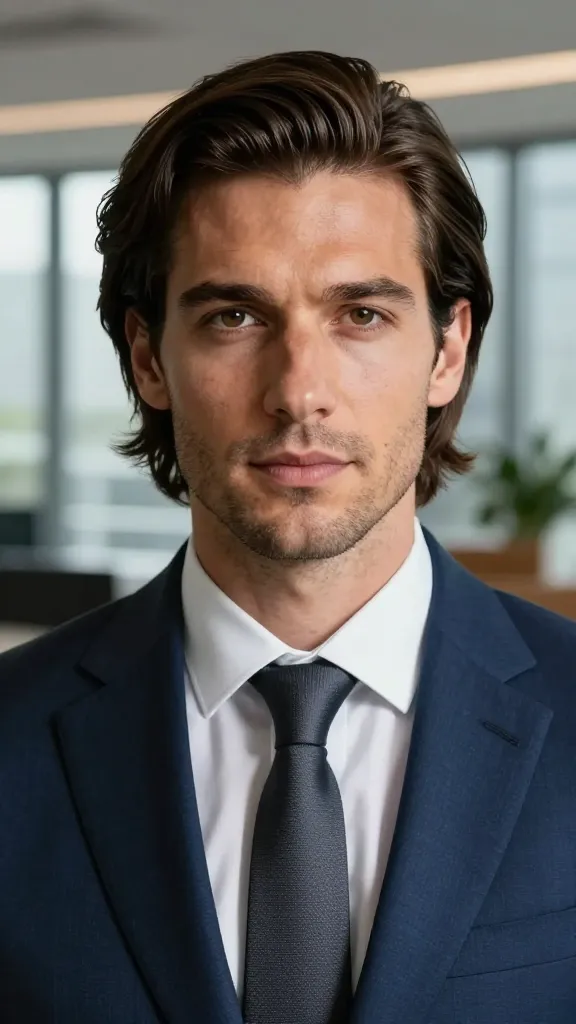
This one wins interviews across industries because it looks polished without trying too hard. It frames your face, keeps everything tidy, and works on straight or slightly wavy hair.
Why It Works
- Clean part gives structure and symmetry.
- Low shine finish feels professional, not greasy.
- Timeless appeal signals reliability.
Use a fine-tooth comb to set a natural part just off-center. Work in a light cream or matte pomade and comb everything into place—no helmet vibes.
Best for roles where polish matters: finance, consulting, client-facing gigs.
12. Tidy Crew Cut (The Zero-Drama Option)
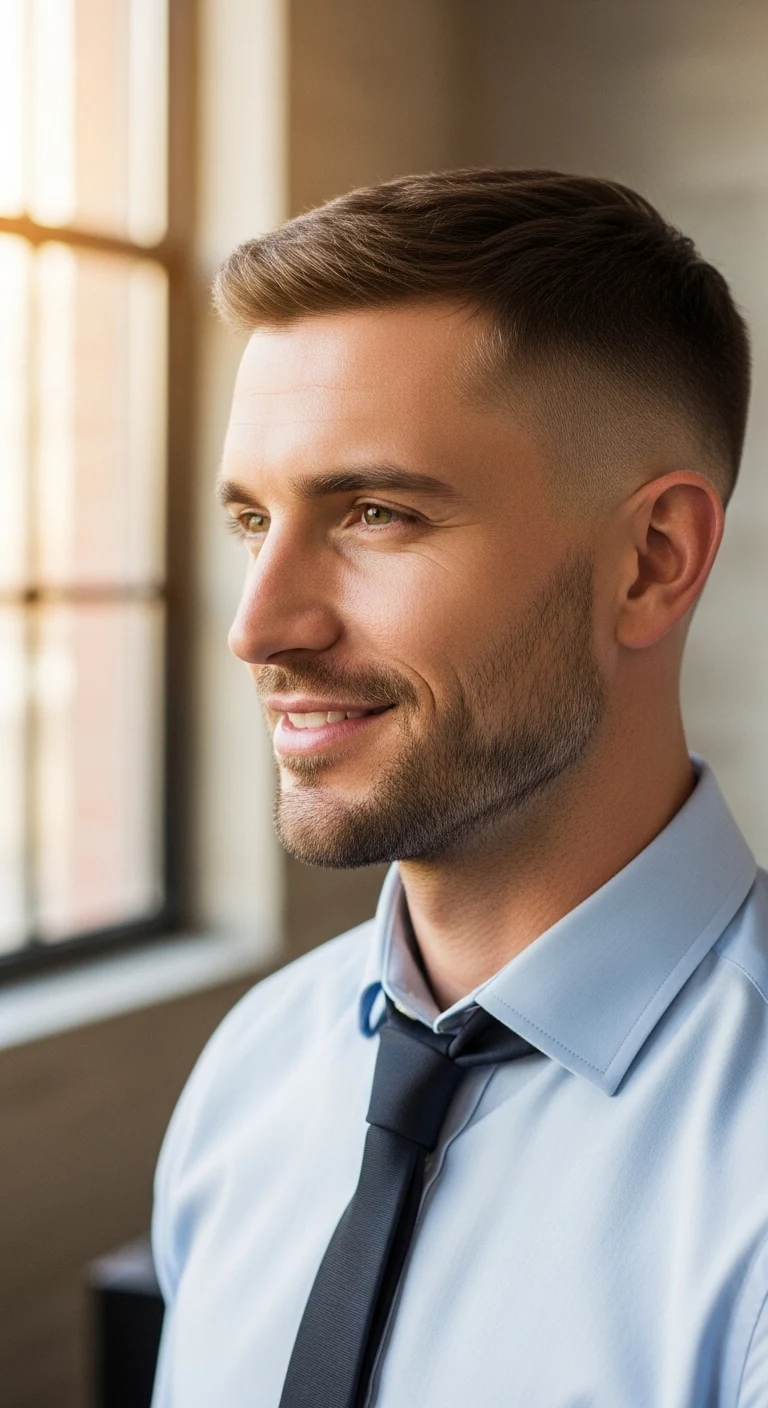
Want fuss-free confidence? Go crew cut. It’s neat, low maintenance, and shows you keep things sharp even on a Monday morning.
Tips
- Ask for a tapered neckline, not a block, for a cleaner finish.
- Keep the top slightly longer than the sides for shape.
- Use a light styling paste just to tame any stubborn bits.
This look says you’re organized and practical. FYI, it also holds up under stress, humidity, and bad office lighting.
13. Modern Quiff (The Confident Flair)
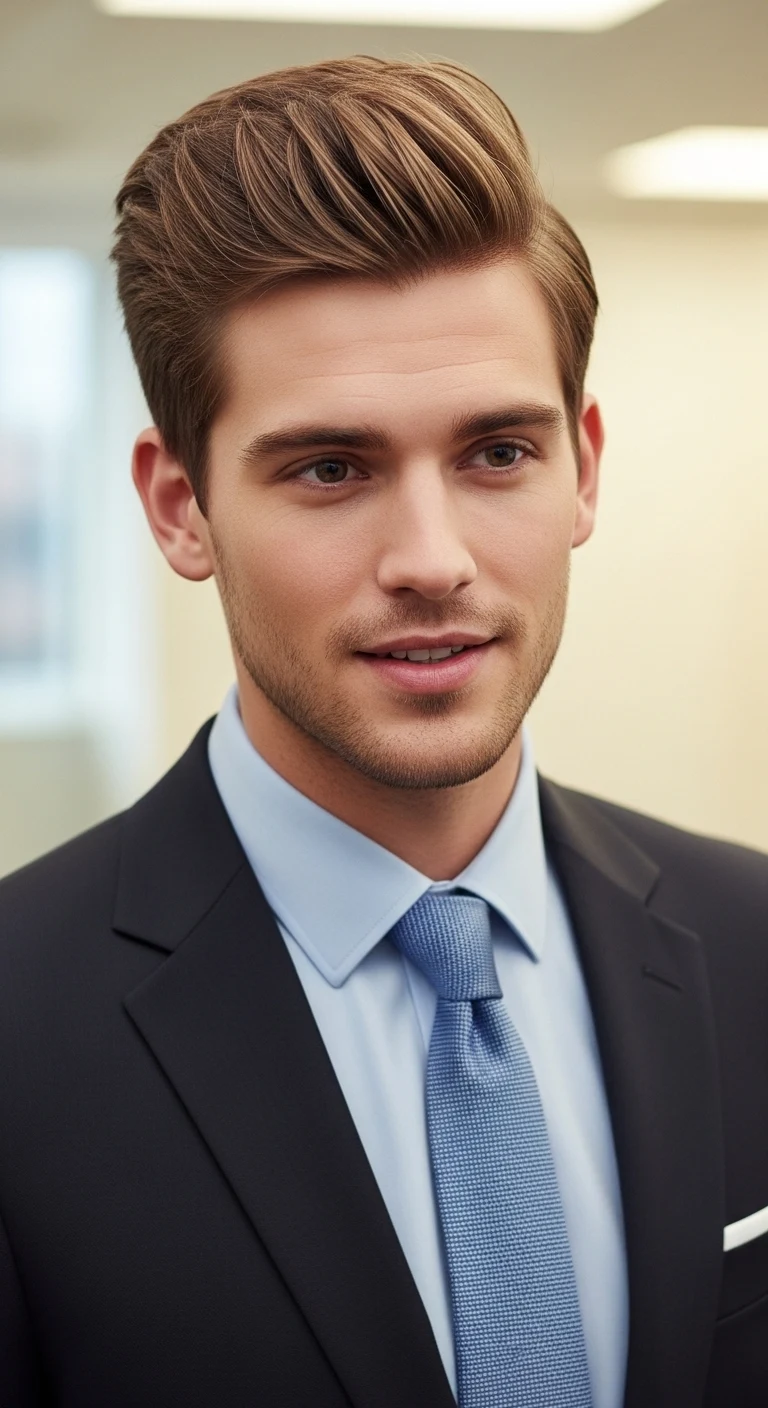
The quiff adds height and personality while staying interview-approved. It shows taste without screaming “I spent an hour on this.”
How To Nail It
- Blow-dry the front up and back with a vent brush.
- Use a matte clay for texture and control.
- Keep the sides tidy—no puffy mushroom silhouette.
Great for creative, tech, or marketing roles where a little style gets bonus points. It photographs well for those “quick headshot” requests too.
14. Clean Buzz Cut (The Bold Minimalist)
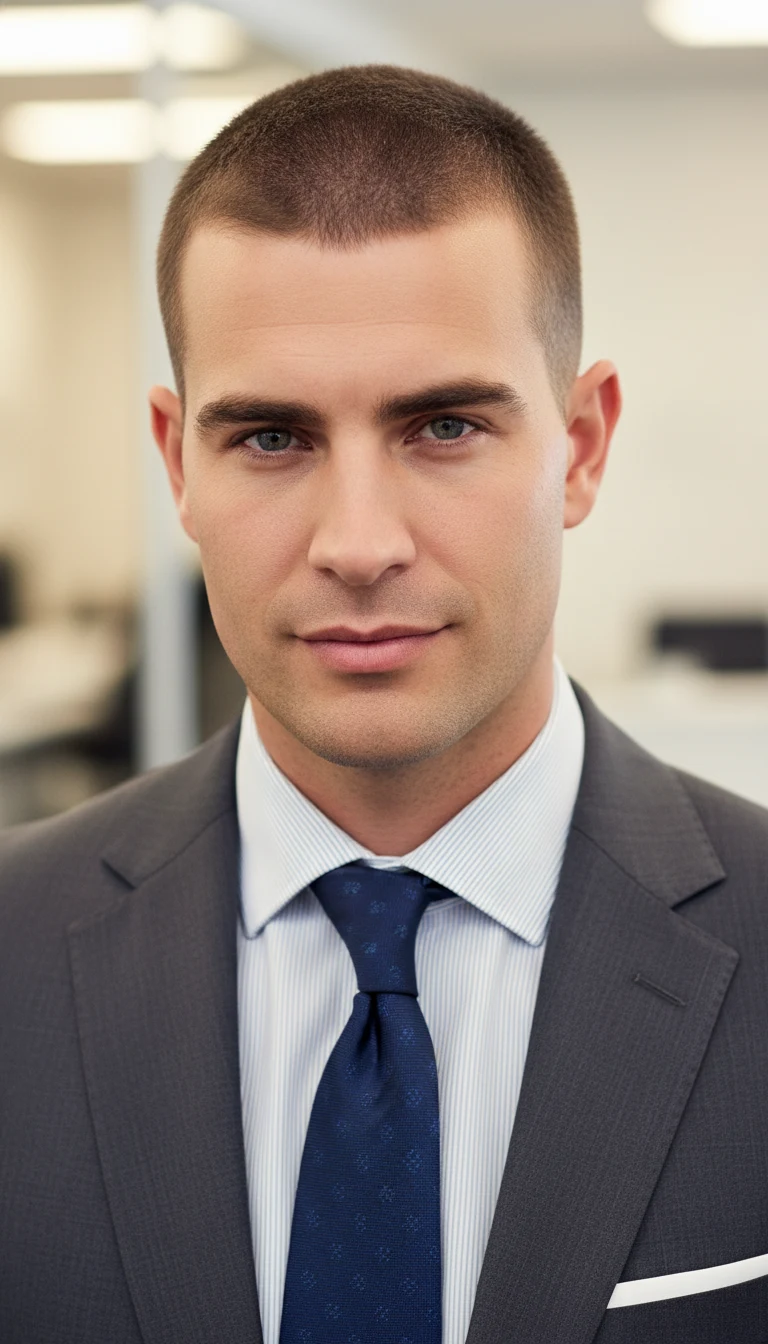
Buzzed hair projects focus and confidence. With tight edges and an even finish, you look like you deliver results and keep things simple.
Key Points
- Choose a length that flatters your head shape (often #2–#4 guard).
- Clean up edges around ears, sideburns, and neckline.
- Moisturize your scalp for a healthy, non-ashy finish.
Perfect if you want zero maintenance and maximum sharpness. Pair it with a crisp collar and you’re golden.
15. Short Pompadour (The Sleek Show-Stopper)
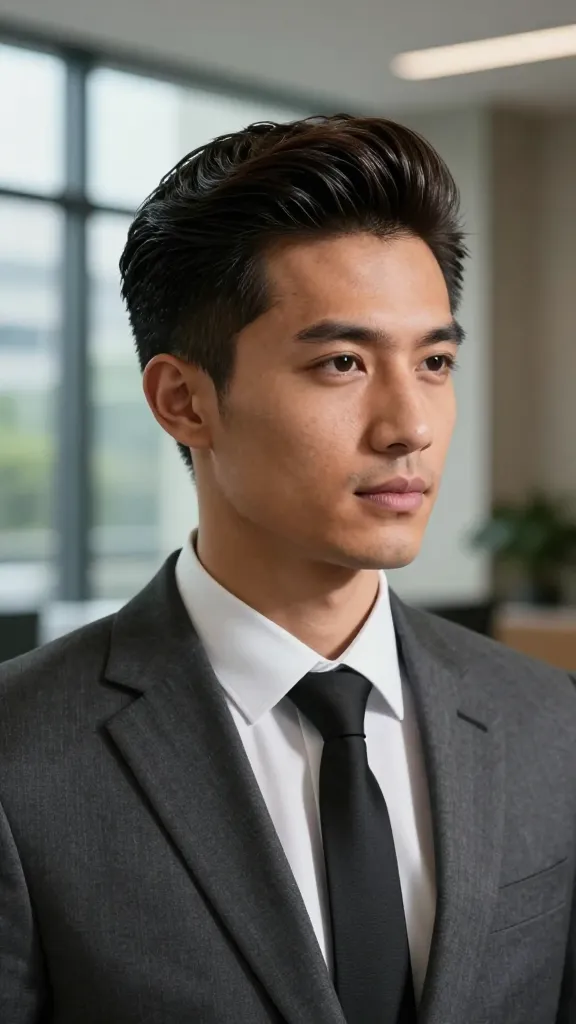
Think controlled volume with sharp sides. The short pompadour gives that “I care” energy without tipping into nightclub territory.
Styling Snapshot
- Blow-dry upward with tension for lift.
- Use a medium-hold pomade or paste—avoid super high shine.
- Comb the front back with a slight arc, not a mountain.
Use this when you need charisma without chaos—sales, leadership, or any role where presence matters.
16. Textured Crop (The Easygoing Pro)
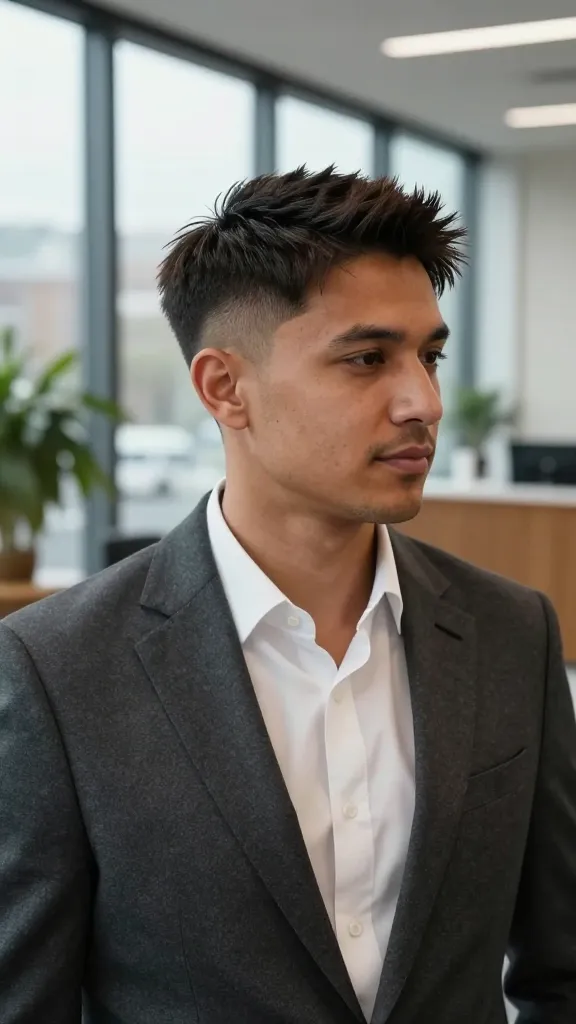
Short sides, slightly longer top, and lived-in texture—this look says “I’m adaptable and efficient.” It handles wind, rain, and awkward small talk with equal skill.
Pro Moves
- Ask your barber for point cutting on top for natural texture.
- Apply a dry texture powder or matte clay and rake with fingers.
- Keep the fringe short enough to stay off your brows.
Ideal for casual-to-smart environments and long interview days. It’s low effort with high payoff, IMO.
17. Slicked-Back (Soft) (The Executive Mood)
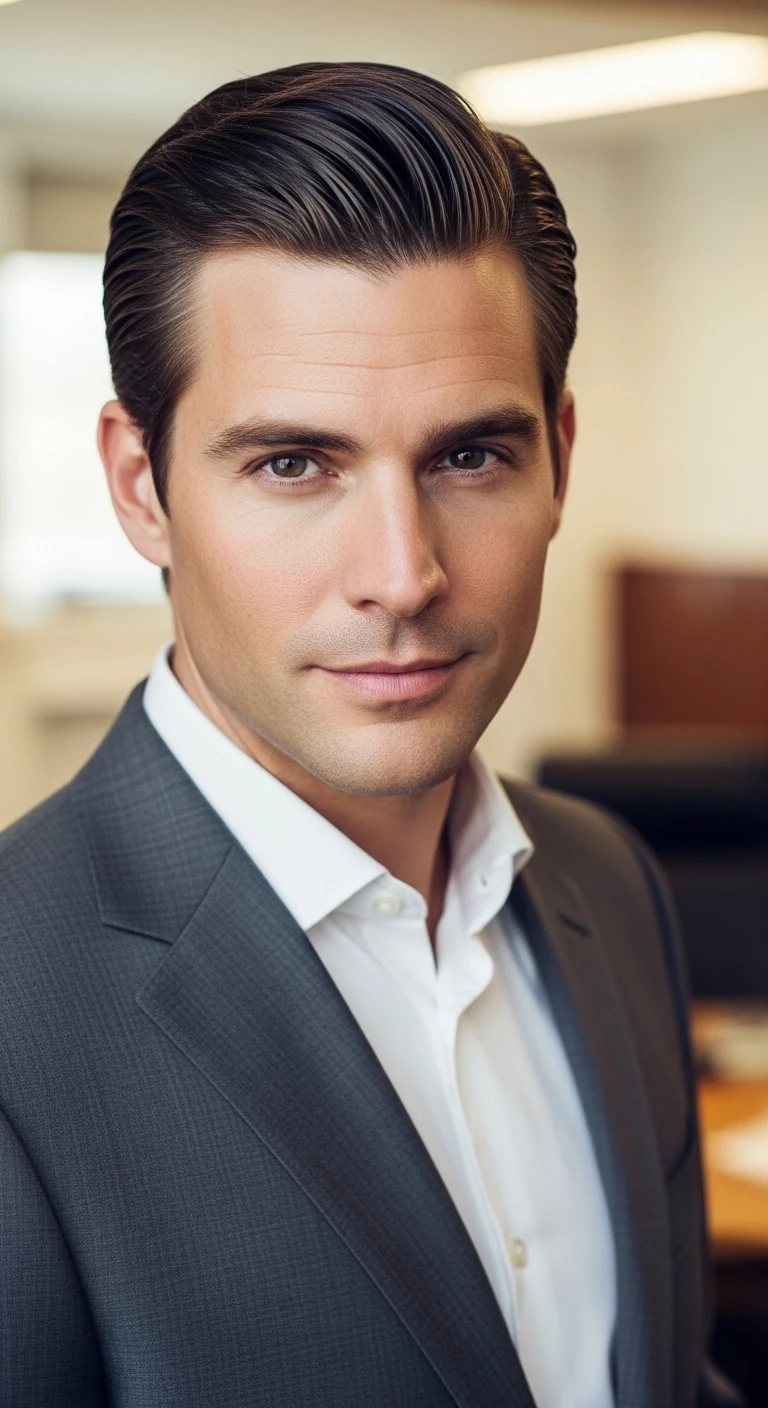
Not the greasy nightclub slick-back—think soft, controlled, and modern. It gives authority while keeping you approachable.
How To Keep It Classy
- Use a cream or light pomade for a natural sheen.
- Comb back and slightly off-center to avoid looking severe.
- Finish with a touch of hairspray if your hair fights you.
Great for leadership roles or when you need to look like you’re ready to manage a team on day one. Trust me, it reads “decisive.”
18. Natural Curls, Defined (The Charisma Play)
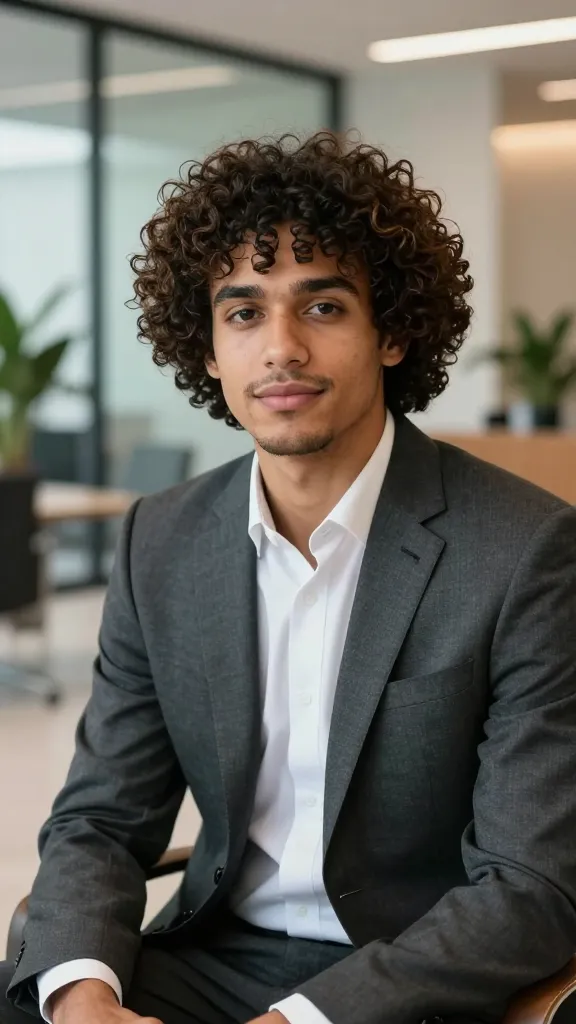
Curly guys, don’t hide your texture—define it. Controlled curls look confident, stylish, and memorable in the best way.
Steps
- Wash and apply a curl cream or light gel on damp hair.
- Scrunch and diffuse on low heat or air-dry with minimal touching.
- Use a small amount of matte product to tame flyaways at the sides.
This shines in creative or people-focused roles. It’s your personality, but polished. Seriously, it’s a vibe.
19. Side-Swept Medium (The Thoughtful Creative)
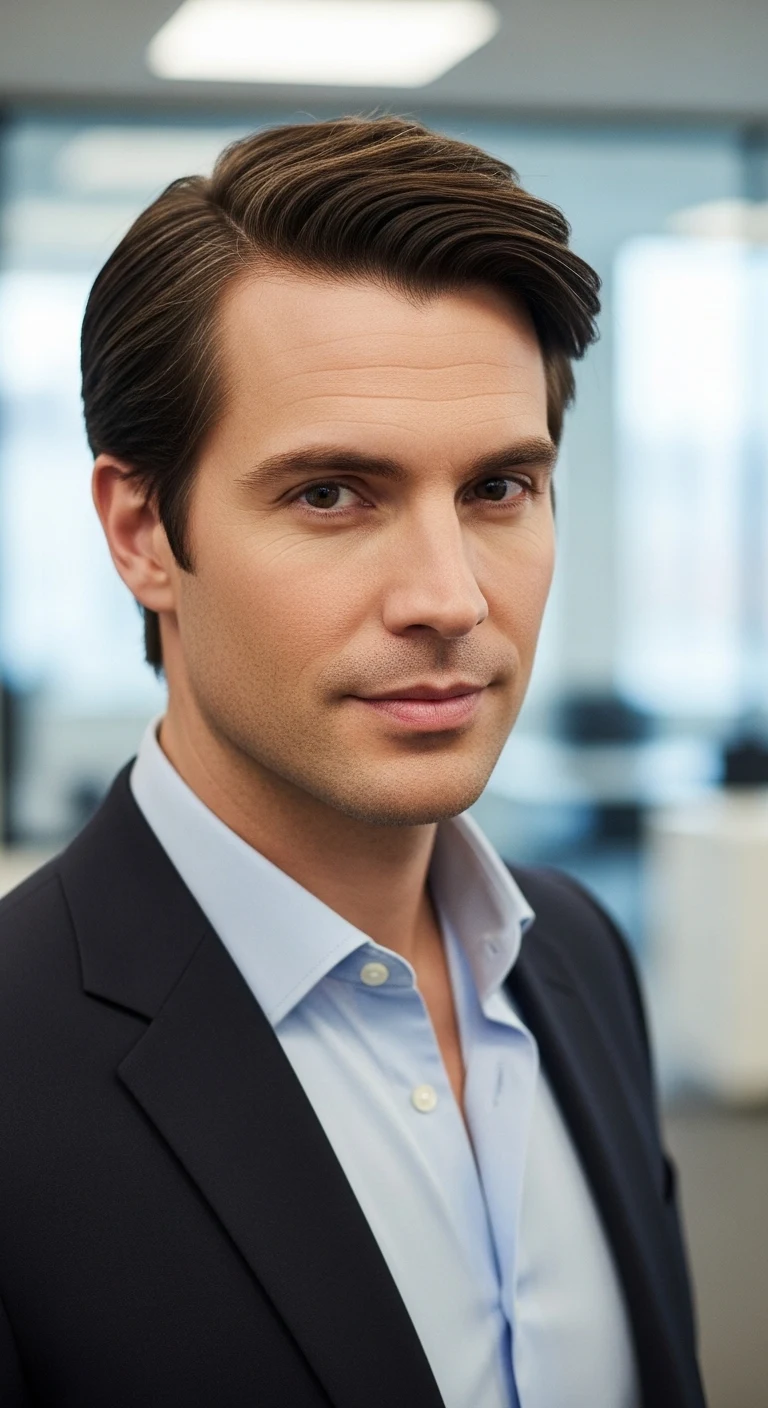
Got medium length? Sweep it to one side with a clean part and smooth finish. It’s relaxed yet smart—perfect for interviews that aren’t suit-and-tie strict.
What To Do
- Blow-dry with a brush to guide the direction.
- Work in a lightweight cream for movement and control.
- Tuck or trim around ears to avoid bulk.
Use this when you want to look approachable and capable—think product, design, startups, or academia.
Final Thoughts
The most effective interview hairstyles for men combine neat grooming, balanced styling, and awareness of professional expectations.
A well-chosen haircut supports your confidence and allows interviewers to focus on your qualifications rather than distractions.
Matching your hairstyle to your industry, face shape, and comfort level creates a natural and authentic appearance.
Preparation, grooming habits, and subtle styling choices often matter more than chasing bold or short-lived trends.
When your hair looks controlled and intentional, you project readiness, discipline, and respect for the opportunity.
Ultimately, the right hairstyle works quietly in your favor, strengthening your presence before the conversation even begins.
